
Buy anything from 5,000+ international stores. One checkout price. No surprise fees. Join 2M+ shoppers on Desertcart.
Desertcart purchases this item on your behalf and handles shipping, customs, and support to Portugal.
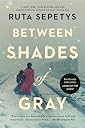
desertcart.com: Between Shades of Gray: 9780142420591: Sepetys, Ruta: Books Review: Powerfully written, heartbreaking and dramatic story based on true events. - Although this most impressive novel was written using fictional characters (the plot created) the events on which it is based are most certainly true. In her Author's Note Ruta Sepetys explains that in 1939 the Soviet Union occupied the Baltic states of Lithuania, Latvia and Estonia. Not long after, the Kremlin drew up lists of people considered anti-Soviet who Sepetys accurately states "would be murdered, sent to prison, or deported into slavery in Siberia. Doctors, lawyers, teachers, military servicemen, writers, business owners, musicians, artists, and even librarians were all considered anti-Soviet and were added to the growing list slated for wholesale genocide. The first deporations took place on June 14, 1941." This is a particularly meaningful story to me because my own family had members who were forcibly deported to Siberia and suffered the deaths of people they dearly loved. Fortunately for the author's father (and my own parents) they (and their families) were able to escape to refugee camps set up in the American occupied zone of Germany. My maternal great aunt and her family with four daughters, however, were not so lucky. They did end up getting deported to Siberia, the two oldest girls literally worked to death dying of cold and starvation. I love the incredibly empathic way in which this novel was written. It is written in the first person ("as told by") a 15-old-girl named Lina, who instead of heading for art school found herself forced into a train heading into the far reaches of the Soviet Union. Packed into railroad cars, starved for food, fresh air, even bathroom facilities these people, like the Jews in many parts of Europe, were stripped of their homes, their possessions, their very lives. It was painful to realize that, in many cases, the oppressors themselves were being fed and supplied by Americans who were too uninformed, too naive or simply had no wish to know what was going on. As they made their way east young children and the elderly started to die. Their bodies were literally tossed from train cars "swept clean" not even given the dignity of a burial. Before the journey begins Lina risks death by trying to find her father who has been placed into another train car headed for a prison where later she finds out he is shot. It is at this time she meets another teenager, a young man named Arvydas, for whom she develops a liking. Her group of people were first sent to one forced labor camp and then to another. In the second camp, located near the Arctic circle where the weather is especially harsh, Lina suffers the loss of her own mother. This part of the book is written particularly well because it evokes such deep emotion that the tears cannot help but fall. Although Hitler's mass destruction of six million Jews (and at least three million non-Jewish individuals) is a most unquestionably horrible set of events, I have often wondered why more attenton has not been given to the TWENTY million that Stalin murdered in his own country. Again the author reminds me that "Upon returning in the mid-1950's, the Lithuanians found that Soviets had occupied their homes, were enjoying all of their belongings, and had even assumed their names. Everything was lost. The returning deportees were treated as criminals. They were forced to live in restricted areas, and were under constant surveillance by the KGB, formerly the NKVD. Speaking about their experience meant immediate imprisonment or deportation back to Siberia. As a result, the horrors they endured went dormant, a hideous secret shared by millions of people." As a Lithuanian-American I am so DEEPLY grateful that Ruta Sepetys wrote this book. She explains how carefully she researched it by several visits to Lithuania where she interviewed survivors of this horrible ordeal. My only regret is that someone had not written this book YEARS earlier. These people's (MY people's) story needed to be told. The author honored their memory by doing just that.. Sirdingai aciu. (My sincerest thank you). Tegul Dievas tave palaimina Ruta (May God bless you Ruta). Review: Very important piece of history! - This was a wonderful novel and although it was written for a young adult audience, it can be enjoyed by all ages. This book depicts another crime against humanity from our world history that was unknown to me before reading this book. Young Lina is our narrator that we follow on her treacherous journey of survival. We see events through Lina's eyes-one moment she is safe at home with her family, and the next she is rounded up with others and sent off on a journey that will change her life forever. Not knowing where they are going, when or if they will ever return, and a suitcase filled with their meager belongings, they unwillingly follow their captors directions. When they are first led to a train station I imagined they were definitely being sent to a concentration camp with death impending soon. This wasn't the case as Stalin planned for the majority of his prisoners to serve work detail under inhumane conditions. The train journey is only the beginning of their torture as they are given barely any food to eat and conditions are hardly liveable for livestock, let alone people. As more people are crammed into the train cars along the way, they must learn to live together in the closed quarters, allowing them to create friendships and relationships that will help them in the months to come. The first destination for Lina and her family is a work camp, where slave labor is put into full force. Much of this novel reminds me of the Holocaust, and treatment of the prisoners falls into this category. Everyone is worked until they have no strength left and daily food rations are minimal. Everyone learns to do what they need to do in order to get by, and many use the relationships that were developed on the train to assist them in their daily living. We learn throughout the novel from Lina's flashbacks that the reason for their imprisonment is political. Anyone who had a different motive or ideal from Stalin was captured and either sent to a prison or a work camp. It was interesting to see this revelation through Lina's young eyes since she did not truly understand the motives. This was a wonderful story even though it was difficult to read at times. It read very quickly and smoothly for me as it only took me a few days to complete it. With themes of family, love, war, and morals, there is so much more to this story than I described above. I don't hesitate in recommending this novel for either personal leisure or as a book club discussion.


| Best Sellers Rank | #6,647 in Books ( See Top 100 in Books ) #3 in Teen & Young Adult European Historical Fiction #4 in Teen & Young Adult Holocaust Historical Fiction #8 in Teen & Young Adult Fiction on Prejudice & Racism |
| Customer Reviews | 4.6 out of 5 stars 11,260 Reviews |
C**W
Powerfully written, heartbreaking and dramatic story based on true events.
Although this most impressive novel was written using fictional characters (the plot created) the events on which it is based are most certainly true. In her Author's Note Ruta Sepetys explains that in 1939 the Soviet Union occupied the Baltic states of Lithuania, Latvia and Estonia. Not long after, the Kremlin drew up lists of people considered anti-Soviet who Sepetys accurately states "would be murdered, sent to prison, or deported into slavery in Siberia. Doctors, lawyers, teachers, military servicemen, writers, business owners, musicians, artists, and even librarians were all considered anti-Soviet and were added to the growing list slated for wholesale genocide. The first deporations took place on June 14, 1941." This is a particularly meaningful story to me because my own family had members who were forcibly deported to Siberia and suffered the deaths of people they dearly loved. Fortunately for the author's father (and my own parents) they (and their families) were able to escape to refugee camps set up in the American occupied zone of Germany. My maternal great aunt and her family with four daughters, however, were not so lucky. They did end up getting deported to Siberia, the two oldest girls literally worked to death dying of cold and starvation. I love the incredibly empathic way in which this novel was written. It is written in the first person ("as told by") a 15-old-girl named Lina, who instead of heading for art school found herself forced into a train heading into the far reaches of the Soviet Union. Packed into railroad cars, starved for food, fresh air, even bathroom facilities these people, like the Jews in many parts of Europe, were stripped of their homes, their possessions, their very lives. It was painful to realize that, in many cases, the oppressors themselves were being fed and supplied by Americans who were too uninformed, too naive or simply had no wish to know what was going on. As they made their way east young children and the elderly started to die. Their bodies were literally tossed from train cars "swept clean" not even given the dignity of a burial. Before the journey begins Lina risks death by trying to find her father who has been placed into another train car headed for a prison where later she finds out he is shot. It is at this time she meets another teenager, a young man named Arvydas, for whom she develops a liking. Her group of people were first sent to one forced labor camp and then to another. In the second camp, located near the Arctic circle where the weather is especially harsh, Lina suffers the loss of her own mother. This part of the book is written particularly well because it evokes such deep emotion that the tears cannot help but fall. Although Hitler's mass destruction of six million Jews (and at least three million non-Jewish individuals) is a most unquestionably horrible set of events, I have often wondered why more attenton has not been given to the TWENTY million that Stalin murdered in his own country. Again the author reminds me that "Upon returning in the mid-1950's, the Lithuanians found that Soviets had occupied their homes, were enjoying all of their belongings, and had even assumed their names. Everything was lost. The returning deportees were treated as criminals. They were forced to live in restricted areas, and were under constant surveillance by the KGB, formerly the NKVD. Speaking about their experience meant immediate imprisonment or deportation back to Siberia. As a result, the horrors they endured went dormant, a hideous secret shared by millions of people." As a Lithuanian-American I am so DEEPLY grateful that Ruta Sepetys wrote this book. She explains how carefully she researched it by several visits to Lithuania where she interviewed survivors of this horrible ordeal. My only regret is that someone had not written this book YEARS earlier. These people's (MY people's) story needed to be told. The author honored their memory by doing just that.. Sirdingai aciu. (My sincerest thank you). Tegul Dievas tave palaimina Ruta (May God bless you Ruta).
A**R
Very important piece of history!
This was a wonderful novel and although it was written for a young adult audience, it can be enjoyed by all ages. This book depicts another crime against humanity from our world history that was unknown to me before reading this book. Young Lina is our narrator that we follow on her treacherous journey of survival. We see events through Lina's eyes-one moment she is safe at home with her family, and the next she is rounded up with others and sent off on a journey that will change her life forever. Not knowing where they are going, when or if they will ever return, and a suitcase filled with their meager belongings, they unwillingly follow their captors directions. When they are first led to a train station I imagined they were definitely being sent to a concentration camp with death impending soon. This wasn't the case as Stalin planned for the majority of his prisoners to serve work detail under inhumane conditions. The train journey is only the beginning of their torture as they are given barely any food to eat and conditions are hardly liveable for livestock, let alone people. As more people are crammed into the train cars along the way, they must learn to live together in the closed quarters, allowing them to create friendships and relationships that will help them in the months to come. The first destination for Lina and her family is a work camp, where slave labor is put into full force. Much of this novel reminds me of the Holocaust, and treatment of the prisoners falls into this category. Everyone is worked until they have no strength left and daily food rations are minimal. Everyone learns to do what they need to do in order to get by, and many use the relationships that were developed on the train to assist them in their daily living. We learn throughout the novel from Lina's flashbacks that the reason for their imprisonment is political. Anyone who had a different motive or ideal from Stalin was captured and either sent to a prison or a work camp. It was interesting to see this revelation through Lina's young eyes since she did not truly understand the motives. This was a wonderful story even though it was difficult to read at times. It read very quickly and smoothly for me as it only took me a few days to complete it. With themes of family, love, war, and morals, there is so much more to this story than I described above. I don't hesitate in recommending this novel for either personal leisure or as a book club discussion.
K**Y
Unforgettable, beautifully written historical fiction
In 1941, three countries disappeared from local and world maps. The Russian invasion had begun. Stalinโs Russia. Terror reined. This is the story of Lina, a 15 year old Lithuanian girl and the horrific years she endured following the night the Soviet Secret Police (NKVD) took her, her ten year old brother Jonas, and their mother, Elena, away. They were given twenty minutes to pack. A warm loaf of bread appeared on Linaโs window sill, but she didnโt think to pack it - which later filled her with deep regret. As Lina was soon to learn, the Secret Police removal focused on the people of Lithuania as teachers, military service men, librarians, doctors, lawyers, and other professional men, women, and their children were rounded up and stuffed into box cars labeled Prostitutes and Thieves. They were sentenced to death at hard labor in Siberia. Elena and Lina begged for information as to where their husband and father Kostas Vilkas, provost of the university, was taken.The hope being reunited kept mother and children focus on surviving. Though suffering from a lack of food, unsanitary conditions, and warmth from the cold, these strong people were able to endure imprisonment and grueling hardships.They found joy and laughter where they could as they helped each other survive. They kept hope alive as death surrounded them. After Stalinโs reign of terror, the people rebuilding Lithuania were forbidden to talk about any part of what they had been through. If they spoke of it, they would be killed. A nation of people kept silent. This award winning YA novel is based on drawings found in a glass jar on a construction site in 1995. The story is based on truth but the characters, with the exception of Dr Samodurov, are fictional. I could not put this novel down. As the story unfolds, most chapters include memories of their former lives written in italics. The story is both heart rendering and beautiful. A story of love, heartbreak, hope, unspeakable horrors, and survival. A story long hidden yet begging to be told. Read the authorโs notes. A five star book and I cannot wait to read more of the authorโs work. Well done, Ruta Sepetys, well done.
6**R
Masterpiece. Belongs with the "classics."
I read this book 5 years ago but forgot to leave a review, so to the best of my memory, here goesโฆ This is one of the best books I've ever read in my life. I've recommended it and bought it for others. The characters were fully alive in this novel. Rarely do I pick up a book that is so heartrending and gut-wrenching that it pulls extreme visceral emotions from me, bringing me to tears multiple times or making me clench my fists and want to strangle these antagonists. And I'm a very gentle, peaceful guy :). Knowing that this was based on real history, no doubt, intensifies emotions. Yet, true facts alone can't do that--that is a product of a skilled writer. The works of Ruta Sepetys are frequently cited by other authors in numerous instructional books on writing, a testament to her craft. In short, this book is a masterpiece, a classic everyone should read. This should definitely be right beside the so-called "classics." (Are you listening, literary snobs?)
J**S
Between the Shades of Gray
This is one of my favorite books. I have been looking for this book for as long as i can remember. I would recommend this book to anyone that loves history, but also likes to hear the story from a different point of view.
K**T
An unknown part of our history
Most of the information and books I have read about World War II is focused mainly on Western Europe and the plight of the Jewish people. So when I saw that Between Shades of Gray was set in Lithuania, I was intrigued - sure, I had heard the figures of how many Lithuanian and Estonian civilians died in WWII, but I had no idea what had actually happened to all those millions of people. Between Shades of Gray tells a harsh, heartbreaking story of one family and their treatment at the hands of the soviets who invaded their country, stole their homes and used them for cheap forced labour in some of the most isolated and harsh locations in the world. Lina is a wonderful character - strong, family-oriented and talented. Her love and dedication to her family is particularly moving, as is her inner strength and determination, and the conditions in which they live are truly horrifying. This is an intense page-turning story - well written, emotional and compelling, with great characterisation. But (yeah, could you see that one coming?) I think that unfortunately this one was just a little too hyped up for me, and the book didn't exactly meet my expectations - it is certainly moving, but I have read several other accounts of WWII that were more terrifying and emotional. Perhaps it was 'edited' for the audience - although this is a great read as an adult, it is marketed as a YA book, and that is probably why it didn't resound with me as deeply. Although I'm probably sounding quite negative, I'm not at all - this is just my personal opinion - there's nothing at all wrong with this book, and I found myself returning to read 'just one more chapter' whenever possible.
B**A
Excellent, Fantastic, Amazing
I read Between Shades of Gray this weekend, and couldn't put it down. It was captivating and heart-breaking, and touched on a subject that isn't touched on a lot. The story was interrupted with Lina's flashbacks to happier times, and made the story seem more real than fictional. Sepetys's Between Shades of Gray follows Lina's deportation to Siberia during World War Two. Her country, Lithuania, has been annexed into Soviet Russia under Stalin's reign. One night, Soviet officers burst into her home, and give Lina, her mother and her young brother twenty minutes to pack. They are brought to a train station, where they are loaded into a filthy train car with dozens of other people. Locked in, they make their way North to the coldest part of Siberia. During their journey, they meet Andrius, a young boy, a cynical bald man, and Ona and her newborn baby girl. The group ends up in a Siberian village, digging for beets and being abused by soldiers. Lina survives through her drawings, as she sketches the horrors and kindness she sees. Despite the cruelty and hardships of life in this village, hope and love live on. I loved everything about this book. The prose was smooth and flowing, and the characters' emotions rung deep and clear. It made me cry and laugh and want to know more about Stalin's work camps. It's a story about World War Two you don't hear very often. I cared about all of the characters and was connected to them in a way I haven't been in a long time. Lina was a strong, sympathetic character who was real and relatable. This novel was one of the best I've read in very long while. Even after I finished it, I couldn't stop thinking about it. I wish I had savored every moment of it. The only thing lacking from this novel was the end. I wish I could have known more about Lina's life after the work camps and how she was released. It would've been nice to know if she had found her father and (SPOILER) how she located Andrius. But the ending was tastefully done and answered most of my questions. Though this novel is intended for teens, adults will enjoy it too. It is a great book, no matter your age. I recommend it for anyone who is even slightly interested in Soviet Russia, or anyone who is looking for a beautifully written page turner. [...]
E**O
My Review of Between Shades of Gray by Ruta Sepetys
My Review of Between Shades of Gray by Ruta Sepetys- This book was: borrowed from the library, but I loved it so much as soon as I turned the last page I ordered it from Amazon. I rate this book: 5 out of 5 stars Publication Date: March 22, 2011 Summary: Lina is just like any other fifteen-year-old Lithuanian girl in 1941. She paints, she draws, she gets crushes on boys. Until one night when Soviet officers barge into her home, tearing her family from the comfortable life they've known. Separated from her father, forced onto a crowded and dirty train car, Lina, her mother, and her young brother slowly make their way north, crossing the Arctic Circle, to a work camp in the coldest reaches of Siberia. Here they are forced, under Stalin's orders, to dig for beets and fight for their lives under the cruelest of conditions. Lina finds solace in her art, meticulously - and at great risk - documenting events by drawing, hoping these messages will make their way to her father's prison camp to let him know they are still alive. It is a long and harrowing journey, spanning years and covering 6,500 miles, but it is through incredible strength, love, and hope that Lina ultimately survives. Between Shades of Gray is a novel that will steal your breath and capture your heart. My Review: Wow. This book really did take my breath away and steal my heart- the first 20 pages, I read then put it down, I was like, Oh, it's fine. Then, last night, well, this morning at 1 AM I picked it up to read a chapter or two. And didn't put it down till 4 AM, when I had finished it. It tells the story of Lina, whose on 'The List' a mysterious list of deportees. She sees people die, people get murdered, and much more cruelty, at the hands of Stalin and the NKVD. I was literally about to burst into tears the entire book, the entire time I was like 'Oh my god, even though the author looks like she's going to kill them off, I really hope she has a happy ending!' and I loved all the character's, whom we slowly unravel from tangled balls of yarn with motives we don't understand to find the good inside. It was an amazing book- i'm trying not to giveaway anything, so I won't even tell you if it has a happy ending- i'll just tell you this- it made me want to cry, but I cry even at happy parts, and felt like crying through the entire book, and was haunted by it afterwards. An AMAZING book I recommend to everyone, about a smaller, forgotten, version of the holocaust, seen through a fifteen year old's, a child's, eyes, with flashbacks that add a special something to the whole book, so you feel like you truly know the characters, and are disappointed when you turn the last few pages. I bought this book as soon as I was finished, at 4 AM, and am going to read this book again, since none of the other books on my TBR pile can live up to this book, and it's amazing standards. Everyone should read this! -Emily at onemilysbookshelf.blogspot.com
Trustpilot
2 days ago
3 weeks ago