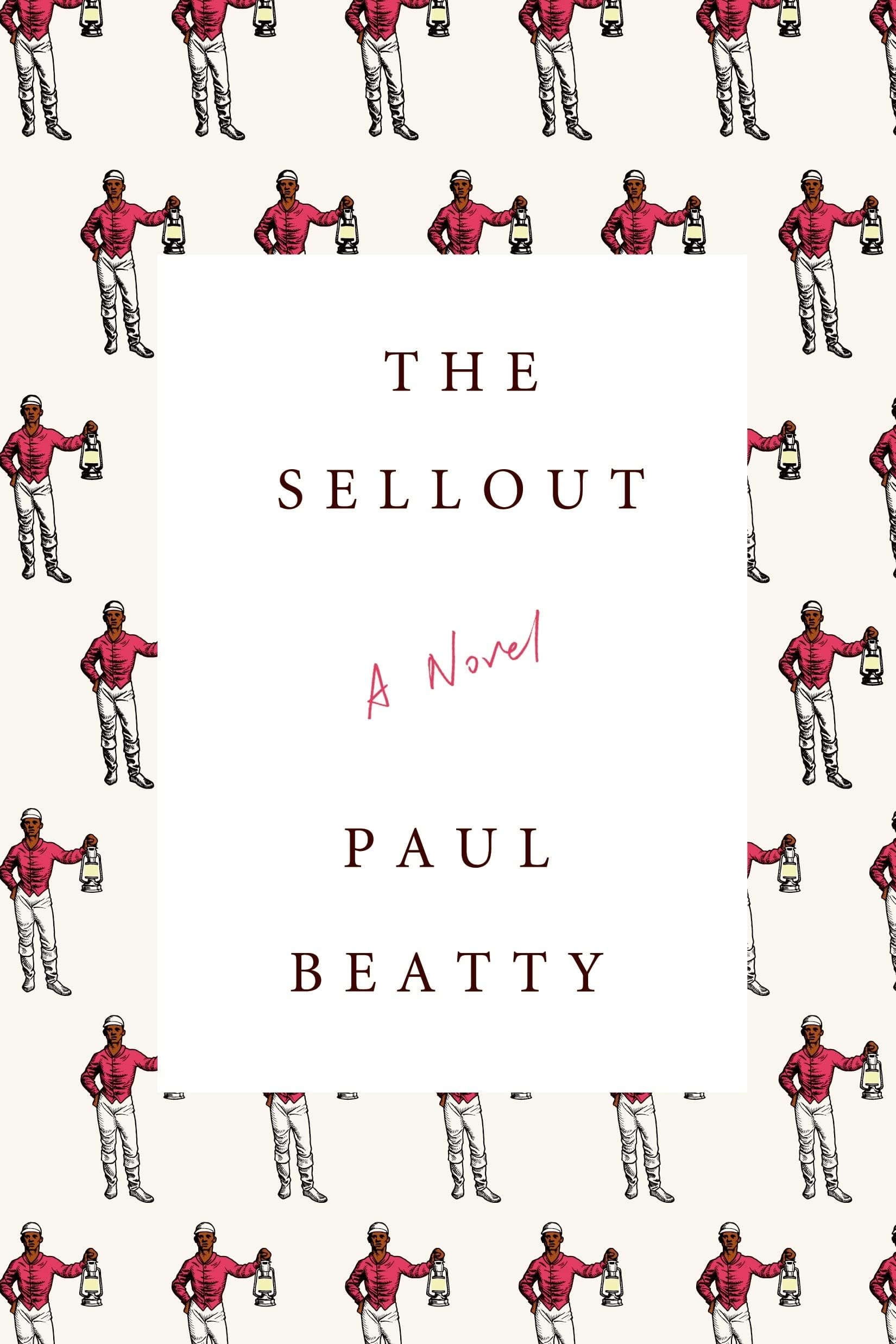
The Sellout: A Novel
Product ID: 13030349
Desertcart purchases this item on your behalf and handles shipping, customs, and support to Portugal.
The Sellout: A Novel [Beatty, Paul] on desertcart.com. *FREE* shipping on qualifying offers. The Sellout: A Novel Review: Wild ride story with an honest assessment of racism in the USA - I must admit, it took some time for me to connect with this story. It didn't help that the author posted from the ending scenes as the first chapter, and then backs up to tell the story - that seemed unhelpful and unnecessary. The writing style is in hyperdrive from the opening lines and I found myself swimming in a sea of explosive verbiage. It was disorienting and disconcerting at first, but when the scene shifts back in time to Dickens, CA, it smoothes out and begins to cohere better. As I noted, the writing style is uniquely over-the-top, as in he starts a fire, adds gasoline, throws in a hand grenade, fires off a Tomahawk cruise missle, and drops an H-bomb to make sure you see the light. Funny, funny, funny! But what the hell is he doing/saying in this audacious story? You begin to realize that it is an unbounded yet incisive portrayal, satirical and painful, of everything in the history of race in the Americas. It's a big canvas, but it gives the author free range to make rich, startling connections. He looks at "post-racial" society and mocks it thoroughly. He pillories blacks and whites with generous punchlines. The story is about being honest about racism instead of pretending we've made such progress that it is a lesser problem. The author looks at it in culture, media, literature, education, law, psychology, public plannning, and a dozen more ways. It is scathing, biting, outrageous, ridiculous, and laugh-out-loud raucous, and of course, it's revealing. Other reviewers will go into greater depth, but I'll simply invite you take a truly wild ride into this story. Don't get frustrated; stick with it and you'll be hooked. You'll laugh your ass off, for sure. You won't look at racism in the USA the same again, either. Thank you, Paul Beatty. Review: The Sellout by Paul Beatty: A review - A book about racism, segregation, slavery that is laugh-out-loud funny? Yep, that would be The Sellout in a nutshell! It's easy to see why this book won all those awards last year, including the first Man Booker for a work by an American author. It is a tour-de-force of writing, a biting social satire that makes its point not with a bludgeon but with a delicate literary sensibility firmly based in historical authenticity. Beatty has given us a protagonist/narrator who is a young black man from the "agrarian ghetto" of Dickens, a neighborhood on the outskirts of southern Los Angeles. He was raised by a single father, a sociologist who used his son as the subject of his weird, often outlandish psychological studies of the roots of fear and of racism. The son grew up to become a farmer who raised delicious fruit of many kinds, the most delicious of all being satsuma oranges. He also grew watermelons and weed, one of the finest varieties of which he called "Anglophobia." He lost his father along the way to a policeman's gun. The man was shot essentially for driving while black, a sad and familiar story in our country. At least, the resulting financial settlement with the city of Los Angeles made life a bit easier for the son. Over time, our narrator watches the decline of his neighborhood, until, finally, Dickens no longer even appears on California maps, at which point our hero decides on a social and psychological experiment of his own, one that will put Dickens back on the map. With the help of the town's most famous resident, the last surviving Little Rascal, Hominy Jenkins, he comes up with an outrageous plan; he will reinstitute slavery and segregation in Dickens. That should get California's - and the world's - attention! Thus it is that Hominy becomes his willing - even eager - slave and he begins a stealth campaign to reinstitute segregation in the local school. His plan is a roaring success! Soon the students at the all black - well, black and Hispanic and Asian - school are doing better than ever, succeeding as never before. Sure enough, this does bring him and Dickens attention and he winds up before the Supreme Court in a very funny scene, which I can't even begin to describe. Along the way, the author pricks the hot air balloons of just about every black American cultural icon and cliche that one could think of - from Mike Tyson to Bill Cosby to George Washington Carver to Tiger Woods to Clarence Thomas and so many more. They are all here. Also lawn jockeys, cotton picking, Saturday morning cartoons, as well as the American liberal agenda all come in for a skewering. The comic writing sometimes made me wince or shrug wryly, but mostly it just made me grin. This is a zany book that employs racist terms in the service of humor - words that are never spoken in polite society. It's a way to shock the reader and get his/her full attention. Suffice to say if you are one who is offended by the language in Huckleberry Finn, you'll be absolutely appalled by the language in The Sellout.
| Best Sellers Rank | #115,978 in Books ( See Top 100 in Books ) #807 in Black & African American Literature (Books) #1,097 in Literary Fiction (Books) |
| Customer Reviews | 4.2 4.2 out of 5 stars (11,650) |
| Dimensions | 5.75 x 1.04 x 8.6 inches |
| Edition | First Edition |
| ISBN-10 | 0374260508 |
| ISBN-13 | 978-0374260507 |
| Item Weight | 14.4 ounces |
| Language | English |
| Print length | 304 pages |
| Publication date | March 3, 2015 |
| Publisher | Farrar, Straus and Giroux |
B**N
Wild ride story with an honest assessment of racism in the USA
I must admit, it took some time for me to connect with this story. It didn't help that the author posted from the ending scenes as the first chapter, and then backs up to tell the story - that seemed unhelpful and unnecessary. The writing style is in hyperdrive from the opening lines and I found myself swimming in a sea of explosive verbiage. It was disorienting and disconcerting at first, but when the scene shifts back in time to Dickens, CA, it smoothes out and begins to cohere better. As I noted, the writing style is uniquely over-the-top, as in he starts a fire, adds gasoline, throws in a hand grenade, fires off a Tomahawk cruise missle, and drops an H-bomb to make sure you see the light. Funny, funny, funny! But what the hell is he doing/saying in this audacious story? You begin to realize that it is an unbounded yet incisive portrayal, satirical and painful, of everything in the history of race in the Americas. It's a big canvas, but it gives the author free range to make rich, startling connections. He looks at "post-racial" society and mocks it thoroughly. He pillories blacks and whites with generous punchlines. The story is about being honest about racism instead of pretending we've made such progress that it is a lesser problem. The author looks at it in culture, media, literature, education, law, psychology, public plannning, and a dozen more ways. It is scathing, biting, outrageous, ridiculous, and laugh-out-loud raucous, and of course, it's revealing. Other reviewers will go into greater depth, but I'll simply invite you take a truly wild ride into this story. Don't get frustrated; stick with it and you'll be hooked. You'll laugh your ass off, for sure. You won't look at racism in the USA the same again, either. Thank you, Paul Beatty.
P**N
The Sellout by Paul Beatty: A review
A book about racism, segregation, slavery that is laugh-out-loud funny? Yep, that would be The Sellout in a nutshell! It's easy to see why this book won all those awards last year, including the first Man Booker for a work by an American author. It is a tour-de-force of writing, a biting social satire that makes its point not with a bludgeon but with a delicate literary sensibility firmly based in historical authenticity. Beatty has given us a protagonist/narrator who is a young black man from the "agrarian ghetto" of Dickens, a neighborhood on the outskirts of southern Los Angeles. He was raised by a single father, a sociologist who used his son as the subject of his weird, often outlandish psychological studies of the roots of fear and of racism. The son grew up to become a farmer who raised delicious fruit of many kinds, the most delicious of all being satsuma oranges. He also grew watermelons and weed, one of the finest varieties of which he called "Anglophobia." He lost his father along the way to a policeman's gun. The man was shot essentially for driving while black, a sad and familiar story in our country. At least, the resulting financial settlement with the city of Los Angeles made life a bit easier for the son. Over time, our narrator watches the decline of his neighborhood, until, finally, Dickens no longer even appears on California maps, at which point our hero decides on a social and psychological experiment of his own, one that will put Dickens back on the map. With the help of the town's most famous resident, the last surviving Little Rascal, Hominy Jenkins, he comes up with an outrageous plan; he will reinstitute slavery and segregation in Dickens. That should get California's - and the world's - attention! Thus it is that Hominy becomes his willing - even eager - slave and he begins a stealth campaign to reinstitute segregation in the local school. His plan is a roaring success! Soon the students at the all black - well, black and Hispanic and Asian - school are doing better than ever, succeeding as never before. Sure enough, this does bring him and Dickens attention and he winds up before the Supreme Court in a very funny scene, which I can't even begin to describe. Along the way, the author pricks the hot air balloons of just about every black American cultural icon and cliche that one could think of - from Mike Tyson to Bill Cosby to George Washington Carver to Tiger Woods to Clarence Thomas and so many more. They are all here. Also lawn jockeys, cotton picking, Saturday morning cartoons, as well as the American liberal agenda all come in for a skewering. The comic writing sometimes made me wince or shrug wryly, but mostly it just made me grin. This is a zany book that employs racist terms in the service of humor - words that are never spoken in polite society. It's a way to shock the reader and get his/her full attention. Suffice to say if you are one who is offended by the language in Huckleberry Finn, you'll be absolutely appalled by the language in The Sellout.
L**N
A laugh-out-loud slap in the face
The Sellout is one of the most original novels I've read in 20 years. A very funny, dystopian look at being black in white America. No one is spared Beatty's critical eye, his philosophical musings or accusatory hip hop cadences that tell the story of The Sellout who wants to reinstitute segregation (to uplift the neighborhood schools), be left alone to farm his weed (in an LA ghetto) as he tries to disencumber himself of Hominy, the slave he never bought but has given himself over to him. And who want to discuss reparations. For all the hilarity, the truths of white bigotry and black hypocrisy are painful to read. Beatty reminds us why there are never seems to be "a coversation about race." Probably because whites would look like monsters and black better only because they lack the power to enforce their individual prejudices. Southern belles, white libs, a Ku Klux influx and LouisGates/BarrackObama/TavisSmiley types are all scathingly observed. It's truly impressive, if imperfect. The problem with The Sellout is that the tempo and rant about cant (of every shade) is hard to sustain. At times, it did seem like Beatty lost control of his narrative and had to reset. Other parts felt somewhat repetitious. Others will have their own quibbles. But make no mistake these are quibbles. The Sellout is fresh, bracing, brilliant and more than a bit painful.
B**M
'The Sellout' is one of the those books that proves you shouldn't restrict your reading too much with rules and generalisations. I often avoid Booker prize winners/shortlisted books as I tend to find them pretentious and not very enjoyable - but I did decide to give this one a go based on the description. And it is brilliant. It's not the easiest novel to capture in a short summary, but essentially it's a satirical story about race and belonging. The narrator, Bonbon, starts the story on trial in front of the Supreme Court in the USA for unspecified but serious crimes. The novel then fills in the backstory, which centres on Bonbon's efforts to reinstate his neighbourhood - a (fictional) suburb of LA called Dickens which is unincorporated and removed from maps. As part of this project, Bonbon decides to reinstate racial segregation, in order to give the town's majority Black and Latino population a reason to unite and strive. Hence his eventual arrest and trial. It is really difficult to write humorously about a topic as important, serious and emotionally sensitive as race without trivialising it. Most authors couldn't pull it off. Beatty can. The novel is consistently funny and surprising, but never undermines the truth that racism and inequality are fundamentally wrong and have no place in society. I did read somewhere that the author does not consider it/intend it to be seen as comic - but nevertheless it made me laugh. But that doesn't mean it didn't also make me think - it did. Sometimes humour is a really good way to engage readers in serious topics and to view them in a way they may not have done before. The wording is just brilliant - it's one of those books where at least once every chapter there is a line, paragraph or even a whole page that I just wanted to copy out and quote somewhere. The section where Bonbon tries to identify a twin town for his newly reincorporated (in his eyes at least) neighbourhood is one such example. I have the feeling Beatty could write about any topic well, because he just has a great way with words. I'd highly recommend this novel to anyone who enjoys literary fiction, particularly those that verge on the surreal and satirical. It would also be a good book club choice as there are many interesting discussions triggered by the text.
C**N
Meravigliosa opera di satira. Richiede comunque un dizionario perche contiene slang afro-americano e una capacita descrittiva minuziosa. Un vero capolavoro, il migliore da anni nel panorama americano di questo livello.
L**A
Very, very funny but like all good satire it will make you think...a lot. Required reading for anybody who thinks black lives matter.
A**A
Não consigo imaginar um escritor norte-americano, nesse momento, mais incendiário do que Paul Beatty em seu THE SELLOUT, uma sátira sem pudor, amarras ou qualquer outra coisa sobre a questão racial em seu pais. O narrador-protagonista é um jovem afro-americano nascido no gueto de Dickens, em Los Angeles, foi criado pelo pai solteiro, um sociólogo pouco convencional, com ideias controversas que usava o garoto em seus experimentos. Quando Dickens é literalmente tirada do mapa, sua jornada é por reconhecimento do lugar. Beatty mergulha num assunto controverso com o qual escritores pisam em ovos, e cria praticamente todos os tipos imagináveis de estereótipos dos negros nos EUA. É engraçado? É. Mas também pode ser assustador ao nos darmos conta de quão povoada é a literatura (e o cinema) dita séria por essas figuras. Um dos personagens, por exemplo, não quer apenas varrer a palavra negro (e seus sinônimos) da literatura clássica americana, quer a reescrever. Até porque, comenta o narrador, é mais fácil reescrever do que discutir o uso daquelas palavras e a sua significação histórica. THE SELLOUT é extremamente engraçado e perspicaz em seu retrato de um país cujas políticas raciais não dão conta – se é que aspiraram realmente a dar – da questão. A prosa de Beatty é enfurecida e reveladora em seu humor ácido que desvenda a ironia da suposta igualdade de possibilidades prometida pelo sonho americano.
K**A
A radical literary rollercoaster, seems like a constant stream of consciousness except for the social truths that cut through the text to sting and the brilliant wit that gave me many laugh out loud moments. A similar style: "a fraction of the whole" by Australian author, Steve Toltz - just as brilliant although the storyline not quite as tightly composed as "the sellout"
Trustpilot
2 days ago
1 week ago