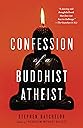
Confession of a Buddhist Atheist
Product ID: 1693425
Desertcart purchases this item on your behalf and handles shipping, customs, and support to Portugal.
Does Buddhism require faith? Can an atheist or agnostic follow the Buddha’s teachings without believing in reincarnation or organized religion? This is one man’s confession. In his classic Buddhism Without Beliefs , Stephen Batchelor offered a profound, secular approach to the teachings of the Buddha that struck an emotional chord with Western readers. Now, with the same brilliance and boldness of thought, he paints a groundbreaking portrait of the historical Buddha—told from the author’s unique perspective as a former Buddhist monk and modern seeker. Drawing from the original Pali Canon, the seminal collection of Buddhist discourses compiled after the Buddha’s death by his followers, Batchelor shows us the Buddha as a flesh-and-blood man who looked at life in a radically new way. Batchelor also reveals the everyday challenges and doubts of his own devotional journey—from meeting the Dalai Lama in India, to training as a Zen monk in Korea, to finding his path as a lay teacher of Buddhism living in France. Both controversial and deeply personal, Stephen Batchelor’s refreshingly doctrine-free, life-informed account is essential reading for anyone interested in Buddhism. Review: A surprising book - At the end of "Confession of a Buddhist Atheist", Stephen Batchelor speaks briefly of the collage art he creates from found materials. This book is something of a collage, pieced together with three major themes, the whole forming a work that is complete and beautiful, with a wholly admirable integrity. The first theme is expressed as a memoir. Batchelor tells us, with just enough detail to bring the story to vivid life without distracting us from its narrative course, how he journeyed from a childhood in provincial England, raised without religious indoctrination by a single mother, through a classic '60s-style road trip, with plenty of drugs, little money and no clear end in mind, Eastward through Afghanistan and Pakistan to Daramsala, where the young Dalai Lama had recently settled with his community of exiled Tibetans, and where Batchelor first encountered the Buddhist thinking that would inform his life. He learned Tibetan, ordained as a monk in the Dalai Lama's Gelug tradition, and discovered the first of a series of teachers who would, through the next 30 years, conspire, albeit unknowingly, to form the person who has emerged as Stephen Batchelor, a very different person than any of them sought to form, but a person whose goodness and honesty would compel their admiration, being themselves good and honest people. In addition to Geshe Rabten, with whom Batchelor studied in India and later in Switzerland, those teachers included S.N. Goenka, from whom he learned the technique of mindfulness meditation (the fundamental practice of the Theravadin school of Buddhism), and Kusan Sunim, the Korean Zen master under whom Stephen practiced for seven years as a monk when his emerging doubts about the dogmatism of the Tibetan schools no longer allowed him, in good conscience, to stay with Geshe Rabten. Kusan Sunim, like Geshe Rabten, and like the Dalai Lama himself, with whom Batchelor was privileged to have close contact several times through those years, turned out to be attached to the rituals and texts of his particular tradition with an intensity that did not allow him to understand or accept the validity of the Dharma as Batchelor was increasingly coming to experience it. That first part of Batchelor's life ends with his decision to disrobe. He married Martine, a French woman whom he had met and come to love as the nun Songil at the monastery in Songgwangsa, and the two have been creating, ever since, a new way of being Buddhist teachers, without the protective authority of either a traditional sangha or an academic institution, but working from their continually deepening understanding of Buddhism, informed by meditative practice and far-ranging scholarship. The continuity of the memoir theme pretty much ends with Stephen and Martine's move back to the West. We learn some details of their life, the friends they've made, the work they do, and the influences they've felt, but the thrust of the book turns to the second and third themes: first Stephen's cogent articulation of what he has come to understand as the fundamental message of Buddhism and the urgent relevance of that message to our lives; and, second, his long and perceptive attempt to recreate the biography of Siddhattha Gotama, the wealthy and privileged son of a Sakiyan nobleman who Awakened as the Buddha. Each theme--memoir, Dharma teaching, and historical biography--is present from the beginning and throughout, but, as in a collage, as the book proceeds, each theme, in turn, assumes a dominance that completes it as a theme and gives the whole book structure and thrust. In " Buddhism Without Beliefs: A Contemporary Guide to Awakening ", Stephen Batchelor explained the Buddha's Dharma so simply, so persuasively, in such an approachable idiom, that it evoked my recognition that I was, in fact, a Buddhist, and no longer simply someone "interested in Buddhism" or "studying Buddhism". Now, in this book, the explanation is very much deeper, very much more tied to the phenomena we experience in the course of our noisy and surprising lives, but still clear, still free of jargon, even more persuasive. As the first book invited me to adopt it, this book invites me to reject the label "Buddhist", even as I realize that there is nothing to do, as each new surprise arrives and death comes every minute closer, but follow the Dharma that the Buddha elaborated with lively detail and remarkable subtlety in the teachings we find in the Pali Canon. In elaborating the theme within which his understanding of the Dharma is clarified, Batchelor explains his method for creating that understanding, which involves examining the canonical texts for elements which were part of Siddhattha Gotama's cultural environment, and those other elements, standing out from the rest of the texts, that could have been inserted later to justify the various orthodoxies that formed after the Buddha's death. Then, without necessarily rejecting those elements, we set them aside; what is left must be considered new and original, even radical. That is the Buddhadharma. Batchelor's method leads directly to the third major theme of the book, the author's story of the Buddha's life as an individual human being. Without understanding that, one cannot separate the extraordinary experience that the Buddha awakened to after deep examination from the experience that all other human beings of his time saw as ordinary, needing no examination. Recreating the Buddha's life is no simple task; much of what's been handed down is clearly myth, and the community of monks who remembered the Buddha's teachings with such deliberate effort, in such remarkable detail, and with such probable fidelity, were simply not interested either in the parts of the story that presented fairly the views of those with whom the Buddha held debate, or in any narration of events that we today would identify as "historical". So Batchelor is left to tease a plausible story from brief segments found here and there in the texts, from what we know about the men and women with whom the Buddha associated and whose way of life he shared, and from uncommonly well-informed guessing. The figure that Batchelor sculpts of the man Siddhattha Gotama looks real to me; that figure could very well be the man who delivered the teachings that have come to inform my life. It is certainly truer to that man than the fat happy Buddhas in Chinatown gift shops or the austere Hellenic statues in museum galleries. Beyond that, who can know? And that brings us to the essential message of "Confession of a Buddhist Atheist": the impossibility of knowing, and the freedom we gain from that impossibility--the freedom to trust our experience and follow that to an understanding of the Dharma that works on our lives, the freedom to create those lives, the freedom to cultivate a path that allows me to awake tomorrow morning (barring the inevitable surprises) a better person than the person who woke this morning. This is an important book. Batchelor's writing style is the very model of "right speech", articulating the most subtle and difficult notions with wit and clarity. For those who think they know Buddhism, the book will illuminate that knowledge. For those who are coming fresh to the study of the Buddha and his teachings, this is a wonderful introduction, requiring no pre-requisite study, demanding nothing of the reader but diligent attention. Review: A search for integrity - I was introduced to Stephen Batchelor through his earlier book Buddhism Without Beliefs: A Contemporary Guide to Awakening, finding in him a person who relates to Buddhism much as I relate to Christianity: that is, he digs out the core of the liberating discoveries of the Buddha (or the Christ) and eliminates from his religious practice anything magical. I also share with Batchelor a deep appreciation of the Christian theologian, Paul Tillich, and of S.N. Goenka, who introduced both of us to Vipassana meditation. I also relate to his title Confession of a Buddhist Atheist. I confess to becoming a Christian atheist when I was 34, and only later returning to theism when I realized that I could relate to God as the fullness of reality, not an anthropomorphic being, and could use the word "God" as a devotional expression of my relation to the All That Is. So I read with fascination Batchelor's candid story of his journey: growing up in England; traveling to India at nineteen; meeting the Dalai Lama; becoming a Buddhist monk in the Tibetan tradition; learning Tibetan; becoming a teacher; becoming disillusioned with the dogmatism of the tradition; traveling to Korea and studying Zen; deciding he could not in good conscience remain a monk and disrobing after ten years; marrying a French nun (she also left her life as a nun) whom he had met, worked with, and come to love at the Zen monastery; becoming, with wife Martine, Buddhist teachers and authors who are respected around the world and who have no traditional or institutional authority, only the authority of their own authentic practice, scholarship, and personal integrity. So that is one part of this book. Another part, which might be called the quest for the historical Siddhartha Gotama, demythologizes the Buddha story. In telling the Buddha's story, Batchelor refers to the Pali Canon, the earliest writings of the Buddha's teaching, life, and the world he lived in. He thereby attempts to make the Buddha's story like Batchelor's own: seeing Gotama as an ordinary human being who, in this case, made an extraordinary discovery about living, put together understandings and practices around that new awareness, and led others in ways of living appropriately in this world. The third part of the book is Batchelor's simple, clear explanation of the Buddha's teaching, the Dharma, free of jargon, in all its radicality: its unequivocal embrace of contingency, its freedom related to embracing this contingency, its passion for this moment with its anguish and pain, its unsentimental love for all beings. Batchelor exemplifies in his life and in this book the final teaching of the Buddha: to trust our experience and follow it to an understanding of the Dharma that works on our lives. I admire Batchelor's integrity and dedication to seeking truth, his willingness to, over and over again, walk away from everything he has known, all that has made him comfortable, as his searching brings him to new conclusions. May we do likewise.
| Best Sellers Rank | #339,150 in Books ( See Top 100 in Books ) #66 in Atheism (Books) #569 in Religious Leader Biographies |
| Customer Reviews | 4.5 out of 5 stars 579 Reviews |
R**G
A surprising book
At the end of "Confession of a Buddhist Atheist", Stephen Batchelor speaks briefly of the collage art he creates from found materials. This book is something of a collage, pieced together with three major themes, the whole forming a work that is complete and beautiful, with a wholly admirable integrity. The first theme is expressed as a memoir. Batchelor tells us, with just enough detail to bring the story to vivid life without distracting us from its narrative course, how he journeyed from a childhood in provincial England, raised without religious indoctrination by a single mother, through a classic '60s-style road trip, with plenty of drugs, little money and no clear end in mind, Eastward through Afghanistan and Pakistan to Daramsala, where the young Dalai Lama had recently settled with his community of exiled Tibetans, and where Batchelor first encountered the Buddhist thinking that would inform his life. He learned Tibetan, ordained as a monk in the Dalai Lama's Gelug tradition, and discovered the first of a series of teachers who would, through the next 30 years, conspire, albeit unknowingly, to form the person who has emerged as Stephen Batchelor, a very different person than any of them sought to form, but a person whose goodness and honesty would compel their admiration, being themselves good and honest people. In addition to Geshe Rabten, with whom Batchelor studied in India and later in Switzerland, those teachers included S.N. Goenka, from whom he learned the technique of mindfulness meditation (the fundamental practice of the Theravadin school of Buddhism), and Kusan Sunim, the Korean Zen master under whom Stephen practiced for seven years as a monk when his emerging doubts about the dogmatism of the Tibetan schools no longer allowed him, in good conscience, to stay with Geshe Rabten. Kusan Sunim, like Geshe Rabten, and like the Dalai Lama himself, with whom Batchelor was privileged to have close contact several times through those years, turned out to be attached to the rituals and texts of his particular tradition with an intensity that did not allow him to understand or accept the validity of the Dharma as Batchelor was increasingly coming to experience it. That first part of Batchelor's life ends with his decision to disrobe. He married Martine, a French woman whom he had met and come to love as the nun Songil at the monastery in Songgwangsa, and the two have been creating, ever since, a new way of being Buddhist teachers, without the protective authority of either a traditional sangha or an academic institution, but working from their continually deepening understanding of Buddhism, informed by meditative practice and far-ranging scholarship. The continuity of the memoir theme pretty much ends with Stephen and Martine's move back to the West. We learn some details of their life, the friends they've made, the work they do, and the influences they've felt, but the thrust of the book turns to the second and third themes: first Stephen's cogent articulation of what he has come to understand as the fundamental message of Buddhism and the urgent relevance of that message to our lives; and, second, his long and perceptive attempt to recreate the biography of Siddhattha Gotama, the wealthy and privileged son of a Sakiyan nobleman who Awakened as the Buddha. Each theme--memoir, Dharma teaching, and historical biography--is present from the beginning and throughout, but, as in a collage, as the book proceeds, each theme, in turn, assumes a dominance that completes it as a theme and gives the whole book structure and thrust. In " Buddhism Without Beliefs: A Contemporary Guide to Awakening ", Stephen Batchelor explained the Buddha's Dharma so simply, so persuasively, in such an approachable idiom, that it evoked my recognition that I was, in fact, a Buddhist, and no longer simply someone "interested in Buddhism" or "studying Buddhism". Now, in this book, the explanation is very much deeper, very much more tied to the phenomena we experience in the course of our noisy and surprising lives, but still clear, still free of jargon, even more persuasive. As the first book invited me to adopt it, this book invites me to reject the label "Buddhist", even as I realize that there is nothing to do, as each new surprise arrives and death comes every minute closer, but follow the Dharma that the Buddha elaborated with lively detail and remarkable subtlety in the teachings we find in the Pali Canon. In elaborating the theme within which his understanding of the Dharma is clarified, Batchelor explains his method for creating that understanding, which involves examining the canonical texts for elements which were part of Siddhattha Gotama's cultural environment, and those other elements, standing out from the rest of the texts, that could have been inserted later to justify the various orthodoxies that formed after the Buddha's death. Then, without necessarily rejecting those elements, we set them aside; what is left must be considered new and original, even radical. That is the Buddhadharma. Batchelor's method leads directly to the third major theme of the book, the author's story of the Buddha's life as an individual human being. Without understanding that, one cannot separate the extraordinary experience that the Buddha awakened to after deep examination from the experience that all other human beings of his time saw as ordinary, needing no examination. Recreating the Buddha's life is no simple task; much of what's been handed down is clearly myth, and the community of monks who remembered the Buddha's teachings with such deliberate effort, in such remarkable detail, and with such probable fidelity, were simply not interested either in the parts of the story that presented fairly the views of those with whom the Buddha held debate, or in any narration of events that we today would identify as "historical". So Batchelor is left to tease a plausible story from brief segments found here and there in the texts, from what we know about the men and women with whom the Buddha associated and whose way of life he shared, and from uncommonly well-informed guessing. The figure that Batchelor sculpts of the man Siddhattha Gotama looks real to me; that figure could very well be the man who delivered the teachings that have come to inform my life. It is certainly truer to that man than the fat happy Buddhas in Chinatown gift shops or the austere Hellenic statues in museum galleries. Beyond that, who can know? And that brings us to the essential message of "Confession of a Buddhist Atheist": the impossibility of knowing, and the freedom we gain from that impossibility--the freedom to trust our experience and follow that to an understanding of the Dharma that works on our lives, the freedom to create those lives, the freedom to cultivate a path that allows me to awake tomorrow morning (barring the inevitable surprises) a better person than the person who woke this morning. This is an important book. Batchelor's writing style is the very model of "right speech", articulating the most subtle and difficult notions with wit and clarity. For those who think they know Buddhism, the book will illuminate that knowledge. For those who are coming fresh to the study of the Buddha and his teachings, this is a wonderful introduction, requiring no pre-requisite study, demanding nothing of the reader but diligent attention.
J**E
A search for integrity
I was introduced to Stephen Batchelor through his earlier book Buddhism Without Beliefs: A Contemporary Guide to Awakening, finding in him a person who relates to Buddhism much as I relate to Christianity: that is, he digs out the core of the liberating discoveries of the Buddha (or the Christ) and eliminates from his religious practice anything magical. I also share with Batchelor a deep appreciation of the Christian theologian, Paul Tillich, and of S.N. Goenka, who introduced both of us to Vipassana meditation. I also relate to his title Confession of a Buddhist Atheist. I confess to becoming a Christian atheist when I was 34, and only later returning to theism when I realized that I could relate to God as the fullness of reality, not an anthropomorphic being, and could use the word "God" as a devotional expression of my relation to the All That Is. So I read with fascination Batchelor's candid story of his journey: growing up in England; traveling to India at nineteen; meeting the Dalai Lama; becoming a Buddhist monk in the Tibetan tradition; learning Tibetan; becoming a teacher; becoming disillusioned with the dogmatism of the tradition; traveling to Korea and studying Zen; deciding he could not in good conscience remain a monk and disrobing after ten years; marrying a French nun (she also left her life as a nun) whom he had met, worked with, and come to love at the Zen monastery; becoming, with wife Martine, Buddhist teachers and authors who are respected around the world and who have no traditional or institutional authority, only the authority of their own authentic practice, scholarship, and personal integrity. So that is one part of this book. Another part, which might be called the quest for the historical Siddhartha Gotama, demythologizes the Buddha story. In telling the Buddha's story, Batchelor refers to the Pali Canon, the earliest writings of the Buddha's teaching, life, and the world he lived in. He thereby attempts to make the Buddha's story like Batchelor's own: seeing Gotama as an ordinary human being who, in this case, made an extraordinary discovery about living, put together understandings and practices around that new awareness, and led others in ways of living appropriately in this world. The third part of the book is Batchelor's simple, clear explanation of the Buddha's teaching, the Dharma, free of jargon, in all its radicality: its unequivocal embrace of contingency, its freedom related to embracing this contingency, its passion for this moment with its anguish and pain, its unsentimental love for all beings. Batchelor exemplifies in his life and in this book the final teaching of the Buddha: to trust our experience and follow it to an understanding of the Dharma that works on our lives. I admire Batchelor's integrity and dedication to seeking truth, his willingness to, over and over again, walk away from everything he has known, all that has made him comfortable, as his searching brings him to new conclusions. May we do likewise.
D**O
In Search of Secular Religion
"To practice the Dharma is like making a collage. You collect ideas, images, insights, philosophical styles, meditation methods, and ethical values that you find here and there in Buddhism, bind them securely together, then launch your raft into the river of life. As long as it does not sink or disintegrate and can get you to the other shore, then it works. That is all that matters. It need not correspond to anyone else's idea of what "Buddhism" is or should be." P229 So ends Stephen Batchelor's _Confession of a Buddhist Atheist_, a manuscript-as-collage made up of equal parts autobiography, a reconstruction of the life of the Buddha, and the search for "true" Buddhism, the teachings of the Buddha shorn of the ideas of his age (and those that have followed). Holding Batchelor's raft together is his quest for a Buddhist Third Way, a path for an educated laity with leisure time to study and meditate. Perhaps the most intriguing portion of the book is the story of the Buddha. Typically presented as an enlightened being above the fray of worldly affairs, Batchelor puts the Buddha back into the political and economic milieu of his day. As the son of a highly placed member of the ruling class, it is likely Gotama held some administrative or military post. He may have even attended college at Taxila. Either possibility might explain why he married and fathered late in life; the latter may explain why as soon as he began teaching he seemed to speak in such a confident and unique voice. In either case, the story of the four sights is most likely a later addition (and one that appears in the original cannon only in reference to a previous incarnation of the Buddha). Following his enlightenment and his decision to teach, the Buddha soon realized he needed more than disciples, especially if he was to create more than just another religion. To make a new way of being and living, to make a new civilization, required protectors and benefactors. He enlisted in quick succession the kings of Magadha and Kosala, as well as a banker to finance the construction of a monastic center. And so began his life work. The whole thing came undone several decades later when the King of Kosala found the wife sent by the Buddha's tribe, the Sakyans, to be of slave blood rather than royal. Batchelor contends that even if the Buddha was not part of the conspiracy, there is no way he could not have known about it. The King's son by the slave girl returned the insult by sending an army to wipe out the Sakyans, leaving the Buddha without a home or relatives. With all of his benefactors having passed away, replaced by younger men eager to expand their empires, the Buddha spent his final years wandering alone with just a few of his remaining students and aides, left to die of food poisoning (perhaps a plot by the Jains) in the dusty hamlet of Kusinara. Less dramatic than the Buddha's life is that of the author, which in its main themes accords with the experience of many European and North American Buddhists. In search of a dharma for a post-modern age, Batchelor finds himself at loggerheads with orthodoxy, forced to build his own theology out of experience and study. Along the way he discovers some odd things about himself. He reflexively bows to Buddha images and enjoys circumambulating stupas. Many of the aspects of traditional practice he thought superfluous have in fact become essential to his being and to his happiness. Others are less so, including "belief" in rebirth or karma beyond this life. In doing away with core tenets a bit of tinkering and rethinking is required, for which Batchelor has gone back to the Pali sources to find evidence and justification. As someone from a similar background and of like mind, I appreciate Batchelor's willingness to question his experience, to question his understanding of experience, and to question the traditional interpretations of experience. He is correct in observing that all schools of Buddhism have been selective in their presentations, and that his own is no more objective than any other. But in at least one instance he seems deliberately dishonest, reinterpreting the Buddha's words to create a meaning that is not intended. He quotes the Mahasihanada Sutta (The Great Discourse on the Lion's Roar) as supporting a kind of "belief-free" Buddhism. The sutta begins with a critic denouncing the Buddha as a teacher who "does not have any superhuman states, any distinction in knowledge and vision worthy of the noble ones. The recluse Gotama teaches a Dhamma hammered out by reasoning, following his own line of inquiry as it occurs to him, and when he teaches the Dhamma to anyone, it leads him when he practices it to the complete destruction of suffering." To which the Buddha says to his disciple Sariputta, "the misguided man Sunakkhatta is angry, and his words are spoken out of anger. Thinking to discredit the Tathagata [the Buddha], he actually praises him..." Batchelor ends the quote prematurely to draw the conclusion he desires, that a Dhamma hammered out by reason is praiseworthy. The remainder of the Buddha's remark points to something different, that what is of value is the effectiveness of the teaching. "It is a praise of the Tathagata to say of him: 'When he teaches the Dhamma to anyone, it leads him when he practices it to the complete destruction of suffering.'" In the same sutta, the Buddha goes on to expound his many supernormal powers and concludes with a warning to all who claim his Dhamma is nothing more than a Dhamma of reason: "Sariputta, when I know and see thus, should anyone say of me: 'The recluse Gotama does not have any superhuman states, any distinction in knowledge and vision worthy of the noble ones. The recluse Gotama teaches a Dhamma (merely) hammered out by reasoning, following his own line of inquiry as it occurs to him' -- unless he abandons that assertion and that state of mind and relinquishes that view, then as (surely as if he had been) carried off and put there he will wind up in hell." Clearly the Buddha saw himself as something more than just an ordinary human. He was someone who experienced the equivalent of a revelation, an extraordinary event that conferred superhuman powers of understanding and insight. But as much as he spoke of himself in this way, he did not, as Batchelor observes, discourse on metaphysics - a first cause, a creator, the soul, the eternal - except when such issues were forced, on which occasions he replied as something of an "ironic atheist," poking fun at those who persist in debating the improvable and unknowable. Perhaps this has encouraged Batchelor to ignore the Buddha's superhuman qualities to see instead something of Iron Age psychologist, a man concerned solely with the suffering of here and now, in which all experience is of equal ontological value. Contrary to Buddhist orthodoxy, Batchelor says the Buddha did not speak of relative and ultimate truth. He did not privilege mind over matter, consciousness over form. He was not just another Indian sage infatuated with Brahma or Atman, which is much of what Buddhism has since become, with its worship of the Undivided, the Ground of Being, or Original Mind. For Batchelor Buddhism becomes a tool for exploring existential groundlessness, a call for action in the Four Noble Truths: Embrace (suffering), Let Go (of craving), Stop (and experience cessation of craving), and Act (to cultivate the path). While emphasizing the absence of "belief" and reliance on the power of the self, at the same time he recognizes the need to find a way to live "ironically" with dogmas, orthodoxies and institutions, "to appreciate them for what they are - the play of the human mind in its endless quest for connection and meaning - rather than timeless entities that have to be ruthlessly defended or forcibly imposed." "If 'secular' religion were not considered a contradiction in terms," he concludes, "I would happily endorse such a concept." #
D**U
Immensely valuable re-examination
'Confession' is a disturbing read, and is highly recommended for anyone involved with any aspect of meditation, spirituality or philosophy. What is the basis for claiming that we know anything? What are our sources? What are the issues that require some critical examination? What is / how valid is our personal experience? And what other agendas, what other baggage, both cultural and personal, do we bring with us? This book does a great job of stripping away the baggage. It's easy to see why this and Stephen Batchelor's previous book, Buddhism Without Beliefs, should have raised a fundamentalist firestorm. In Christianity it would be like going back to the earliest layers in The Lost Gospel: The Book of Q and Christian Origins , and discarding later additions - such as virgin birth, crucifixion/resurrection, salvation/damnation, and armageddon. To borrow the English expression: Would you even get bums on pews? One key to Confession of a Buddhist Atheist is on the last page of Appendix III, the translation of Buddha's first sermon, Turning the Wheel of the Dharma. Buddha says: "The freedom of my mind is unshakeable. There will be no more repetitive existence." Batchelor acknowledges removing 'from the text all passages that assume the multi-life view of ancient India'. So the conclusion in the text reads: "The freedom of my mind is unshakeable. This is the last birth. There will be no more repetitive existence." The two paragraphs become drastically different in meaning, sanity v. escapology. Earlier in the book, Batchelor quotes Gotama as rebuking a monk for talking about reincarnation, stating that he has not taught it. So too, Nisargadatta Maharaj 'debunks' reincarnation in Pointers from Nisargadatta Maharaj . Within Buddhism, this is closer to the Dzogchen and Mahamudra teachings, which Batchelor touches on only briefly - Sogyal Rinpoche decribed Dzogchen in The Tibetan Book of Living and Dying: The Spiritual Classic & International Bestseller; Revised and Updated Edition as 'the ultimate psychotherapy'. This approach also points to a more grounded practice, see Reginald Ray's Touching Enlightenment: Finding Realization in the Body , and a more embodied realization described by Charles Ridley in Stillness: Biodynamic Cranial Practice and the Evolution of Consciousness . Can one be a Buddhist without believing in reincarnation or karma? Are these concepts just cultural add-ons that give a metaphysical explanation of how we got here and where we're headed? Are they useful and valid ways of working with reality, in the same way as gravity? Or do you, personally, have clear experience that would confirm or refute reincarnation and karma? If not, wouldn't it be more liberating as well as honest to admit to agnosticism? When (especially) Tibetan books describe the traditional view of death and rebirth, is the author repeating orthodoxy or talking from his own experience and authority? Or, is there a central core experience to which Buddha taught a practical access, that is present in all human beings, and available in all spiritual traditions - including Buddhism? What the Buddha seems to have taught is that whatever arises, as thought, emotion or sensation, we can be mindful of it, and let it be there without wanting to judge it, change it, fix it, cure it, including all of our own negative reactions. If we're hoping for nirvana, or trying to get out of samsara - just more of the same. Hoping for a higher rebirth, or wanting to avoid a lower rebirth - just more of the same. Hoping for more good meditation buzz, or trying to deal with the distraced reactiveness inside my head - just more of the same. What Stephen Batchelor shows is how the cultural add-ons effectively counter Buddha's original teachings. His book points back to that central core, and he has done Buddhism a huge favor in the process.
S**N
Culadasa Review
From Culadasa's website: "The autobiographical musings of a Westerner who first became a Tibetan monk, then a Korean Zen monk, and ended up as a secular Buddhist. This book is a very useful critique of the shortcomings of institutional and religious Buddhism. It, and his “Buddhism Without Beliefs,” enunciate an agnostic alternative to Buddhist religiosity that is well worth adopting. The author’s re-interpretation of the traditional story of the Buddha’s life is especially fascinating and helpful. There are many good reasons to read this book. It is an important work, and is very strongly recommended. But there is one important caveat: Batchelor’s disappointment and lack of personal fulfillment have led him to throw out the baby with the bathwater. Because he has not been able to achieve the ultimate goals of the Buddhadharma himself, he has seriously underestimated the validity and attainability of those goals. It does not occur to him that, not only have the Dharma teachings been grossly distorted through time, but so have the meditation practices that once led uncountable numbers to personal transformation and Awakening. A “Christian Atheist” is someone who accepts and values the teachings of Jesus, but doesn’t believe that Jesus is God or has the power of salvation. As a “Buddhist Atheist,” the author sees Buddha’s teachings as a valuable path to better living and social change, but not as a means to personal spiritual transformation or any transcendent Awakening. In the end, his disillusionment and cynicism show through quite clearly. This is a valuable, informative, entertaining and highly readable book, but despite the author’s seeming credentials, it is NOT authoritative on the subject of Buddhadharma."
A**M
A thoughtful look at a life spent in Buddhism
This book is well written and thoughtful. But I felt the author had spent a lifetime studying how to be happy at the expense of those who give money to these monks. Then he discovered he didn't really believe what he was saying, studying and being taught. In other words. like all religions, Buddhism, while lacking a god per se, does teach reincarnation, karma and other dogmas. Is there proof of these? No. Like all mythologies, there is no proof because it was created by people to give them a sense of meaning. Buddhism teaches altruism --- being unselfish and putting others first. And yet, they accept all the help they can get from others so they can pursue what, to me, is a somewhat selfish indulgence. The first part of the book held my interest but the second half was rather a bore. To someone unfamiliar with Buddhism it would be enlightening, however. -- Susanna K. Hutcheson
L**D
Travels in the Buddhist World and Buddha's World
Stephen Batchelor's latest book is a bit hard to classify. Part autobiography, part biography of the Buddha, it follows the path tread long ago by Shantideva, whose "Guide" Batchelor described as "an intensely personal account of a struggle to understand and practice the Dharma." This book, too, is personal, covering the author's discovery of Buddhism, study of Tibetan Buddhism in Dharamsala in the days when the Dalai Lama was not yet world famous; crises of conscience over his inability to believe all of what he was being taught -- and would be expected to teach, himself, as a monk; departure for Korea to study a different form of Buddhism; return to England where he became involved in the evolving Western Buddhist culture; and finally settling in France part time and travelling the rest of the time to speak and teach, and always to continue learning. Tales of his travels around India and descriptions of the landscape of the Buddha's world then and now are interwoven with tales of the Buddha's life that Batchelor uncovered on closer study of the Pali canon during his years as a monk and beyond. The book is not about the mythical Buddha of epic battles with gods and abilities to perform miracles that convert masses, but includes stories of the man known as Gotama whose bare feet kicked up dust in the emerging cities of India thousands of years ago. The stories told here help us see how this mortal man's efforts to spread his insight, and create a community that could keep on sharing that insight, played out against the politics of society and religion in his own time. There are many remarkable bits in this book, any one of which make it worth the time to read, but I'll not spoil the fun for you. But if you don't mind I'll have you look out for the point at which the author gets asked to write the book that becomes "Buddhism Without Beliefs" and the ways in which its effect on the Buddhist community was a surprise to its author. Funny, isn't it, how no matter what we intend, our ideas can take on a life of their own. If you enjoy autobiography, if you've been curious about the who the human who became known as the Buddha may have been, if you're interested in the directions Western Buddhism is taking, this book, smoothly written in plain English, is a pleasure to read.
G**A
A memoir of Stephen Batchelor, a biography of the Buddha
The title of "Confession of a Buddhist Atheist" summarizes the three perspectives of his life that Stephen Batchelor wanted to share with his readers: his religiosity--confession is a statement of religious beliefs, his adhesion to the Buddha, and his atheism in the non-theism meaning of the word. The "confession" as such is a detailed record of his spiritual evolution, which takes him to an enlightenment of a nature quite different from "the `standard' mystical experiences of oneness with the universe". Batchelor's confession vividly describes the viability of embracing the religiosity of the Buddha's Teachings without the dogmas of Buddhism and without renouncing to the goodies and beauties of life The "ist" of the Buddhist that Batchelor became is much closer to the "ist" in those who play an instrument (pianist, violinist) than to the "ist" in the advocates of a doctrine (socialist, communist) or the fanatics of biased views (racist, chauvinist). You do not need sectarian opinions to play piano or violin, you just play; you don't need beliefs for being Buddhist because being Buddhist is an experience, a way of living. In this book, the author, an impressive scholar, narrates his personal evolution and reconstructs the Buddha's one; both journeys are described with abundant spiritual, historic and geographical detail. It is well known that there are no dates in the Pali Canon. Still the writer proposes a very interesting sequence of different events in the Buddha's life; this is the first time I read a proposal for such sequencing. Even though the task involves much analysis and knowledge, Stephen Batchelor is humble enough to say that the source of the raw data already existed in the "Dictionary of Pali Terms" and that his role was simply "the joining up of the dots". It was indeed much more than that. To describe his cosmological/theological views, Stephen Batchelor seems to prefer the term "atheism" (again as non-theism) to "agnosticism" (the impossibility to know the ultimate reality) and avoids (probably on purpose) the word "spirituality". I find the author's view quite close to the atheist spirituality that French philosopher André Comte-Sponville defines as "our openness and connection to the infinite, the eternal and the absolute." Either as non-theism or atheist spirituality, these renovated and renovating views, both Batchelor's and Comte-Sponsville's, are much needed in the modern, confusing world, which, though more secular every day, it does need spirituality. Such intellectual non-theisms imply the "tolerant radicalism" of Indian philosopher J. Krishnamurti (which Stephen Batchelor a kind of dislikes) and exclude the anti-theism of the "richarddawkinses" and "samharrises." There are quite a few interesting, historical events and anecdotes related in Batchelor's book running from the Buddha's time and life (which come from his knowledge and research) all the way to the Dalai Lama's modern era (which are the fruit of his experience and direct interactions). The author's enthusiasm for the beauty of the Teachings leads him to some overstatements. He says, for instance, that he has "yet to find a fragment of the Pali Canon that doesn't further illuminate the whole." (I find this exaggerated; many parts of the Canon are not only repetitive and boring but also obscure and with observations in contradiction with other sections.) These are minor spots that in no way reduce the quality of "Confession of a Buddhist Atheist." The book is an excellent reading not only for newcomers in search of non-affiliated view in the Teachings and for already faithful, open minded religious Buddhists but also an illuminating perspective for agnostics, atheists, pragmatics, skeptics and independent inquisitive minds of all kinds. Gustavo Estrada, Author of Hacia el Buda desde el occidente: Sus Ensenanzas sin mitos ni misterios (Spanish Edition)
B**Y
Insightful
A well written book, Confession of a Buddhist Atheist is a must read for anyone interested in Buddhism. From his time as a questioning monk to his current life teaching the dhamma around the world, Stephen Bachelor is easily understood and insightful in his portrayal of Buddhism without the metaphysics and mysticism.
V**H
Awakening
This is about buddha, not about buddhism. The author having spent all of his adult life practicing various forms of buddhism finally became a lay practitioner. He sees buddha as a man who adivices us to follow the noble path and lead a mindful life.
W**N
Read it!
Having been a practising 'Buddhist' in a Tibetan Tradition, reading this book has left my heart-racing, my brain-bending and my spirit-soaring. It has managed to clearly articulate the doubts and reservations that I have had about the Religious, dogmatic elements of 'Buddhism' that seem to be at such odds with the undogmatic teachings of the historical Buddha. This book is so well-researched and well-written and goes into the Suttra teachings or discourses of Buddha to flesh out the man behind the myth, and his teachings on how to best weather the thousand natural shocks that flesh is heir to. One of my favourite passages of the book is where Batchelor quotes an altercation between Buddha and a disgruntled, former monk of his called Sunakkhatta. Sunakkhatta dismisively declares: "The recluse Gotama teaches a Dhamma hammered out by reasoning, following his own line of inquiry as occurs to him, and when he teaches the Dhamma to anyone, it leads him when he practises it only to the ending of pain." On being told of this criticism Gotama remearked: "Sunakkhatta is angry and his words are spoken out of anger. Thinking to discredit me he actually praises me." (p.183) For me this beautifully encapsulates what the gist or kernel of Batchelor's book is. The Buddha taught a path that led to the end of pain; this is something that in the midst of grand Mytical assertions can easily be forgotten. That the Buddha taught a path that led to the end of pain is something truly worthy of celebration and dare I say it 'worship'. All the add ons, and cultural colour that his teachings have acquired over the centuries as they migrated through various Asian countries are unnecessary and in some regards only serve to hide the strikingly simple, but profoundly important teachings that Gotama gave, teachings that set out how one can best live a life in balance and harmony with the world around them. I thank Stephen Batchelor from the depths of my heart and hope that his pragmatic wisdom can go some way to tempering the superstitious, ritualistic worship that is currently being endorsed in Buddha's name. Strive diligently and be a refuge unto yourself. x x
T**M
Nichts für Ungeduldige
Das Buch enthält zwei Lebensgeschichten, die vom Autor und die vom historischen Buddha. Es dauerte eine Weile, bis ich begriffen hatte, daß das eine Beschreibung des Seins, der Realität war, die sie zu akzeptieren hatten, um zu ihren Einsichten zu kommen. Tatsächlich hat das mir dann geholfen, mehr über Buddhismus zu verstehen, als ich wußte. Das ist kein Selbstfindungsbuch, es ist sehr theoriegeladen, Bachelor ist ein sehr seltsamer Intellektueller für mich. Ich habe das mit Vergnügen und Interesse gelesen, aber ziemlich langsam.
R**H
Five Stars
A very unorthodox but engaging account
Trustpilot
1 month ago
1 day ago