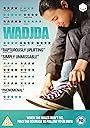
![Wadjda [DVD] [2012]](https://m.media-amazon.com/images/I/81EdeySltTL.jpg)

A rebellious Saudi Arabian girl hatches a plan to get her hands on the bicycle she craves in this coming-of-age story from first time director Haifaa Al-Mansour. Living within a conservative suburb of Riyadh, fun-loving eleven-year-old Wadjda (Waad Mohammed) has her heart set on a green bicycle so that she can beat the boys in their neighbourhood races. But when her mother (Reem Abdullah) forbids it, anticipating a reaction from a society that disapproves of women riding bicycles, an enterprising Wadjda decides to raise the money herself by entering a local Qur'an-reading competition that offers a cash prize. Review: Mobility, multidimensional, in “The Magic Kingdom”… - …where some dreams can still come true. Haifaa al-Mansour is from a town in the Saudi heartland, Al Zulfi. The town was the site of the Battle of Sabilla, in 1929, when Ibn Saud decisively crushed the forces of the Ikhwan. But it is the setting of Zulfi that I most remember, one of the loveliest in all Saudi Arabia, with the green oasis set against the mountains and the sands of the Al-Dahna, the strip of desert that connects the Nafud desert with the Rub Al-Khali. And I’d like to think that this beautiful setting inspired Ms. Al-Mansour to become Saudi Arabia’s first and most prominent female film director. “Wadjda” is her first feature length movie, released in 2013. It involves the straightforward aspirations of a 10-year old girl: if boys can ride and own bikes, then, why can’t I? Most places in the world this aspiration is readily fulfilled, but this is Saudi Arabia, where women (famously) cannot drive a car. And this is also a very real portion of Saudi Arabia not often featured in the media: the 10-year old girl, Wadjda, is from a lower middle-class family – hardly poor and deprived – but also where 800 SR (approximately $225), the purchase price for the bike, is not readily available. Men are deep in the background, playing supporting roles. The three principle characters are all women, with Wadjda being played by Waad Mohammed, her mother is played by Reem Abdullah, and the school principal, Ms. Hussa, played by Adh Kamel. In terms of “mobility,” it is important to realize that as recently as 2003, Saudi women were not allowed to appear in popular Saudi programs such as “Tash ma Tash.” They had to import Jordanian, Egyptian or Bahraini women for the female roles. Reem Abdullah is a Saudi, who commenced her career on “Tash ma Tash” in 2007. Adh Kamel is from Jeddah, the more liberal town in the Kingdom, and thus without the Nadji background, and was still able to play the evil school principal – the “enforcer” of morality – brilliantly. Kudos. The movie is filmed in Riyadh, a city whose population has grown at least 20 times in a single lifetime. But its “signature” skyscrapers, nor any other prominent feature, are ever shown. Rather, it is filmed in one of the endless non-descript neighborhoods in the suburban sprawl, where construction is still much in evidence. Aside from Wadjda’s central aspiration, other issues that are reflective of Saudi women’s concerns are included: will my husband take a second wife, particularly if I cannot produce a boy?; the hassles with drivers; should I take a job (like in a hospital) where I will have to interact with males that I am not related to?; youthful, arranged marriages; and lesbianism. Wadjda realizes that the only way she will be able to obtain the money for her bike is to join the Religious Club, participate in the Koran memorization contest, and win the top prize of 1000 SR. The movie makes it clear that at the beginning Wadjda knew very little about the Koran. In the finals, the evil school principal, whose heart may be softening a bit towards her “convert,” chose, ironically Verse 7 of the Sur’at al-Bakara for the recitation. “Great is the penalty they will incur…” in reference to those who falsely claim their allegiance to Allah. Al-Mansour also adds a nice touch by including the suggestion that the principal, Ms. Hussa might be less than pure herself, and even “getting a little on the side.” And the music is so well-done by Max Richter. The major problem I had with the film: where are all the cars?! Riyadh is one of the least bike-friendly cities on earth. I should know. I love to ride a bike. About two decades ago I, along with a small group of Western guys, would attempt bike rides early on Friday mornings, when the traffic is the least. That lasted about a month. We concluded it was simply too dangerous. Just too many “crazy drivers” out there. And that was not well-depicted in the film. Personally, I’d be on the side of squashing Wadjda’s aspiration, not because she is female, but because no one, male or female, for their safety, should be riding a bike in Riyadh! Still, “with a suspension of disbelief on the safety issue,” this is a great, 5-star, well-produced, Saudi film… and I would love a comment that would indicate I have not kept up with modern times, and there are now specially dedicated bike routes – well separated from motorized vehicles -that can be used in Riyadh, by both sexes! Review: Wadjda -- a delightful and insightful film about a girl in Saudi Arabia - This was a wonderful film about a girl in Saudi Arabia trying to exert her own identity within the constraints of her culture and religion. One of the things I loved about this film is that it was not preachy about the rights or wrongs about a religion -- it was a story of a girl and it was told without being judgmental. Wadjda could have been a girl anywhere in the world and her story could have been any girl's story about testing the boundaries, being confused about constraints because of gender, and feeling all the joys and frustrations that come with finding your place in the world. There was just enough humor and heartfelt emotion to make this a great movie, and it is even more amazing that the entire film was shot in Saudi Arabia. I loved this girl and found myself cheering her on as I would cheer on all girls who don't quit fit the gender-based roles all cultures have for girls in one form or another (or boys for that matter). There are so many women and girls all around the world who will easily identify with Wadjda.
| Customer Reviews | 4.6 out of 5 stars 592 Reviews |
| Format | PAL |
| Language | Arabic |
| Number Of Discs | 1 |
| Runtime | 1 hour and 37 minutes |
J**I
Mobility, multidimensional, in “The Magic Kingdom”…
…where some dreams can still come true. Haifaa al-Mansour is from a town in the Saudi heartland, Al Zulfi. The town was the site of the Battle of Sabilla, in 1929, when Ibn Saud decisively crushed the forces of the Ikhwan. But it is the setting of Zulfi that I most remember, one of the loveliest in all Saudi Arabia, with the green oasis set against the mountains and the sands of the Al-Dahna, the strip of desert that connects the Nafud desert with the Rub Al-Khali. And I’d like to think that this beautiful setting inspired Ms. Al-Mansour to become Saudi Arabia’s first and most prominent female film director. “Wadjda” is her first feature length movie, released in 2013. It involves the straightforward aspirations of a 10-year old girl: if boys can ride and own bikes, then, why can’t I? Most places in the world this aspiration is readily fulfilled, but this is Saudi Arabia, where women (famously) cannot drive a car. And this is also a very real portion of Saudi Arabia not often featured in the media: the 10-year old girl, Wadjda, is from a lower middle-class family – hardly poor and deprived – but also where 800 SR (approximately $225), the purchase price for the bike, is not readily available. Men are deep in the background, playing supporting roles. The three principle characters are all women, with Wadjda being played by Waad Mohammed, her mother is played by Reem Abdullah, and the school principal, Ms. Hussa, played by Adh Kamel. In terms of “mobility,” it is important to realize that as recently as 2003, Saudi women were not allowed to appear in popular Saudi programs such as “Tash ma Tash.” They had to import Jordanian, Egyptian or Bahraini women for the female roles. Reem Abdullah is a Saudi, who commenced her career on “Tash ma Tash” in 2007. Adh Kamel is from Jeddah, the more liberal town in the Kingdom, and thus without the Nadji background, and was still able to play the evil school principal – the “enforcer” of morality – brilliantly. Kudos. The movie is filmed in Riyadh, a city whose population has grown at least 20 times in a single lifetime. But its “signature” skyscrapers, nor any other prominent feature, are ever shown. Rather, it is filmed in one of the endless non-descript neighborhoods in the suburban sprawl, where construction is still much in evidence. Aside from Wadjda’s central aspiration, other issues that are reflective of Saudi women’s concerns are included: will my husband take a second wife, particularly if I cannot produce a boy?; the hassles with drivers; should I take a job (like in a hospital) where I will have to interact with males that I am not related to?; youthful, arranged marriages; and lesbianism. Wadjda realizes that the only way she will be able to obtain the money for her bike is to join the Religious Club, participate in the Koran memorization contest, and win the top prize of 1000 SR. The movie makes it clear that at the beginning Wadjda knew very little about the Koran. In the finals, the evil school principal, whose heart may be softening a bit towards her “convert,” chose, ironically Verse 7 of the Sur’at al-Bakara for the recitation. “Great is the penalty they will incur…” in reference to those who falsely claim their allegiance to Allah. Al-Mansour also adds a nice touch by including the suggestion that the principal, Ms. Hussa might be less than pure herself, and even “getting a little on the side.” And the music is so well-done by Max Richter. The major problem I had with the film: where are all the cars?! Riyadh is one of the least bike-friendly cities on earth. I should know. I love to ride a bike. About two decades ago I, along with a small group of Western guys, would attempt bike rides early on Friday mornings, when the traffic is the least. That lasted about a month. We concluded it was simply too dangerous. Just too many “crazy drivers” out there. And that was not well-depicted in the film. Personally, I’d be on the side of squashing Wadjda’s aspiration, not because she is female, but because no one, male or female, for their safety, should be riding a bike in Riyadh! Still, “with a suspension of disbelief on the safety issue,” this is a great, 5-star, well-produced, Saudi film… and I would love a comment that would indicate I have not kept up with modern times, and there are now specially dedicated bike routes – well separated from motorized vehicles -that can be used in Riyadh, by both sexes!
C**L
Wadjda -- a delightful and insightful film about a girl in Saudi Arabia
This was a wonderful film about a girl in Saudi Arabia trying to exert her own identity within the constraints of her culture and religion. One of the things I loved about this film is that it was not preachy about the rights or wrongs about a religion -- it was a story of a girl and it was told without being judgmental. Wadjda could have been a girl anywhere in the world and her story could have been any girl's story about testing the boundaries, being confused about constraints because of gender, and feeling all the joys and frustrations that come with finding your place in the world. There was just enough humor and heartfelt emotion to make this a great movie, and it is even more amazing that the entire film was shot in Saudi Arabia. I loved this girl and found myself cheering her on as I would cheer on all girls who don't quit fit the gender-based roles all cultures have for girls in one form or another (or boys for that matter). There are so many women and girls all around the world who will easily identify with Wadjda.
P**.
Loved it. Rare film that tells the story about a young girl living in Saudi Arabia.
This movie was at the Indie theaters for what seemed like about two weeks where we saw it and loved it. It was a "Wow!" for us. It tells the story of a young 10 yr. old Saudi girl who wants to own and ride a bicycle. She longs to have more freedom, but she lives very much in her home culture. The film does not draw conclusions for you or judge the culture, but offers some views of women in Saudi life that are rarely seen, The young actress did such a fine job with this role. This story was beautifully written and filmed by a woman director in Saudi Arabia, which is worthy of its' own story. Loved it.
A**E
A film everyone in the world should see.
This is the first film made in Saudi Arabia and the first ever made by a woman as well. I'm so grateful for her little masterpiece--her story which carries so much potential impact in bringing awareness to the reality of women in Saudi Arabia. This film doesn't focus on the most brutal aspects of the kingdom but in telling a quieter story and one that has points of real intersection for others in the world to connect with makes it especially powerful. It's a compelling piece of work, it's a very important film, and it's quite a display of talent as a cinematic work of art. Watch it.
K**H
Ripening In Enlightenment
"Wadjda" was written and directed by Haifaa al-Mansour who is an Arab and Muslim. Haifaa is also the first Arab "to direct a feature length film" that takes place in Saudi Arabia. The examination of one person fitting into a society, in this instance, the Muslim culture of modern Riyadh in Saudi Arabia, is a tutorial. The onlooker to Wadjda's values and desires which are pensive and insecure are analyzed against conflicts for a result that equals optimum solubility. This is a brilliant film for an American to see. The film is centered on Wadjda(Waad Mohammed), a young girl who lives in Riyadh with her mother(Reem Abdullah). It is a conservative metropolis. Religious protocol and modern living-struggles and enticements-are fused in a positive, and progressive civil and upscale city. Wadjda(Wud-dja, or Waw-djah) first appears in a school auditorium singing with her classmates Muslim song. The students are wearing slim long black dress robes(abayas). Wadjda is told to repeat the first two lines of the song. Next, Wadjda's mother and Wadjda are observed in a clean light colored apartment. In the next frames Wadjda is back in the school yard. Ms. Hussa(Ahd) is confronting Wadjda about her reluctance to wear a head scarf. Not long after this, we are introduced to Abdullah(Abdullahrahman Al Juhani), a boy of Wadjda's age, who is also a significant part of Wadjda's coming of age positivity. Each of Wadjda's meetings provides small conflicts and different stratas of society and these relationships are grown in continuing struggles of moody impressions but expose a key season of Wadjda's summery radiance. There is a passage that intervenes between her rebellious inclinations and acceptance of ancient wisdoms. This kind of portrayal, the study of an individual development within moral codes and pressures of desire amongst well-defined characters, who are crafted with on location detail is an exposure of atoms under an electron microscope. Wadjda's swathe of cognizance magnifies this Arab culture of Riyadh pristinely. As knowledge accumulates under our discursive eye, Wadjda's singing of passages of the Quran is a realization of subtle inspiration: in a mature state the movie has morphed from a predicament of unsettling discipline into grace as Wadjda listens to the words of the text without being upbraided or humiliated. Likewise, Abdullah who wears a white skullcap(taqiyah) does not cultivate avarice or gluttony towards Wadjda, who wants to ride a bicycle like Abdullah. Wadjda's father, who is going to take on a new wife, despite his non-dedication to Wadjda's mother, is loving in a profound way. His chauvanism is an intellectually compelled motivation (obviously falsely in terms of fairness to his wife's feelings), but is rooted in his desire for a son. It is hinted that Wadjda's mother is physically incapable of giving birth to child, at least safely. In Wadjda's and Abdullah's pursuit of excitable activities there is a radius of energy which dilutes girl/boy issues. Wadjda is a happy and go lucky girl. Wadjda does not practice affectation in her outwardly demeanor. She is pure in play, though the viewer gets to witness an understanding between Wadjda and Abdullah that's divine. As regards the freedom of the people, the average citizen; the non-heavy handed and fair civil and government authority is a proponent for Wadjda's brothers and sisters to practice patience and tolerance. Wadjda's vested interest in herself isn't religious slackness, and morals here are didactic but charmingly augmenting.
P**R
groundbreaking movie...definitely one americans ought to see
Wadjda, at ten, in Saudi Arabia, doesnt start out as a serious competitor for the top religious recitation prize at her madrassa. No, she wears high top sneakers undernear her required robe and refuses to veil her face and secretly learns to rides a bicycle, even though her mother fears she will somehow thereby lose her virginity. Her mother is facing her own fears regarding Wadjda's father, being unable to bear him another child, let alone a son, and on top of this soon loses her chaperoned ride to her job. it is only when Wadjda learns that there is a 1000 riyal prize for the top recitation -- more than enough to purchase her own bicycle! --- does she decide to become apparently devout. What happens is stirring, heartbreaking and something to cheer about all at one time. a first time movie from a new director, at least in SA filmmaking, this is a must see.
R**N
A good story that suffers from very slow pacing
This is a good story that suffers from extremely slow pacing. Compressing the story by 15-30 minutes would have made a much better film. Still all-in-all this is a very good first effort by the Saudi female director who had never before directed any film, and had to deal with all types of problems and challenges of filming in a very religiously conservative country that seems to go out of its way to make things difficult for professional women in their society. My wife and I actually enjoyed the "making of" special features more then the film itself. Given all the issues endured by the German production crew, and the Saudi female director trying to make the film, it is amazing that the project got completed at all. Waad Mohammed, the young actress lead in the film, is very good and believable considering she had no acting experience prior to the making of this film. Worth a look.
L**M
Beautifully told story
Yes, this movie came from Saudi Arabia, a country without movie theaters; and yes, this is the first full length movie by director Haifaa al-Mansour; and yes, she is a female director. All of those points would be intriguing enough to make one want to see the movie, but if you never knew any of that, you would still thoroughly enjoy this movie. It gives us a window into the lives of women in Saudi Arabia without being heavy handed, while telling the story of a delightful, resourceful young girl, Wadjda,{sorry! I can't get my computer to stop changing W-a-d-j-d-a to Wadjda even though I've tried about 10 times!) dedicating herself to and achieving a personal goal. I'm sure it is the first of many. W-a-d-j-d-a is a powerful story that is gently told with humor and universal truths that are very recognizable despite being in a setting that is unfamiliar to the American viewer. I have seen this movie twice and both times the men in the group have truly enjoyed the movie because it is so well done, however, I do believe the women in the group felt an extra special affinity to the movie and the amazing accomplishments of the director, Haifaa al-Mansour.
Trustpilot
3 weeks ago
1 day ago