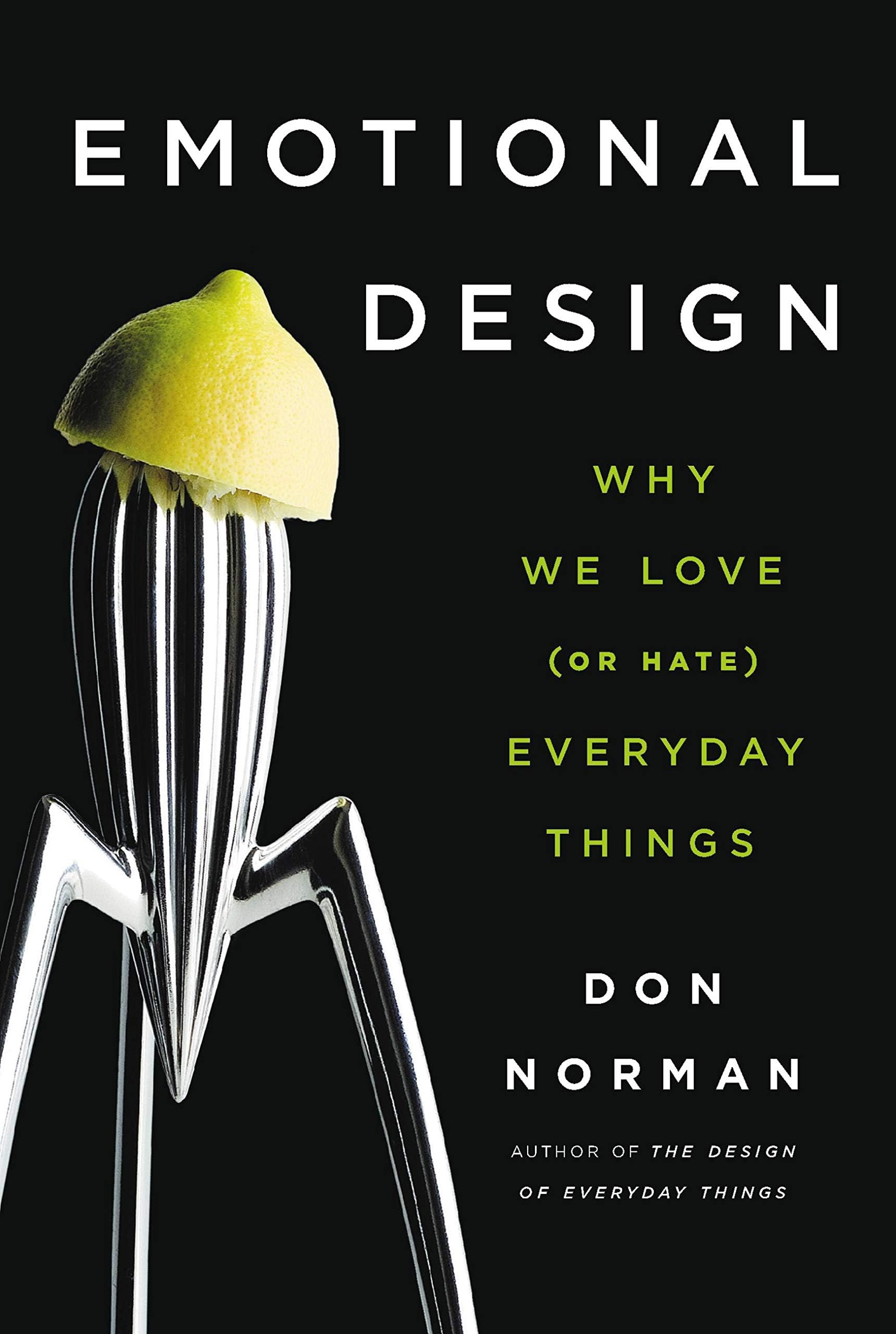
Emotional Design: Why We Love (or Hate) Everyday Things
Product ID: 3837231
Desertcart purchases this item on your behalf and handles shipping, customs, and support to Portugal.
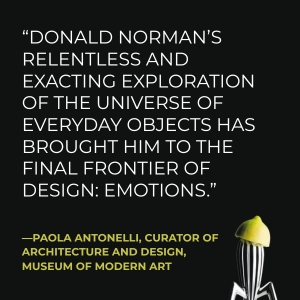
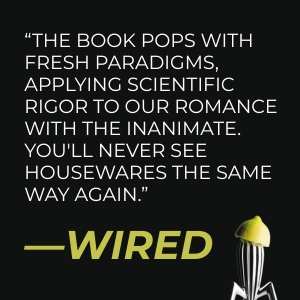
Why attractive things work better―and other crucial insights into human-centered design. “You'll never see housewares the same way again.”― Wired Emotions are inseparable from how we humans think, choose, and act. In Emotional Design , cognitive scientist Don Norman shows how the principles of human psychology apply to the invention and design of new technologies and products. Building on his seminal book The Design of Everyday Things , Norman takes his thinking several steps farther, showing that successful design must incorporate not just what users need, but must address our minds by attending to our visceral reactions, to our behavioral choices, and to the stories we want the things in our lives to tell others about ourselves. Good human-centered design isn't just about making effective tools that are straightforward to use; it's about making affective tools that mesh well with our emotions and help us express our identities and support our social lives. From roller coasters to robots, sports cars to smart phones, attractive things work better. Whether designer or consumer, user or inventor, this book is the definitive guide to making Norman's insights work for you. Review: Simple, wonderful, insightful, great book by a great thinker and scientist. See other resources, too. - I've been thumbing through this book for the last month, and I have to say that I love it. I've admired Donald Norman, one of the greatest living cognitive scientists, from afar for over 20 years. He was seemingly afforded "guru" status when he visited the University of Colorado's Institute of Cognitive Science in the mid `80s - an esteemed, accessible and entertaining cognitive/computer scientist (and also a cantankerous one) who had pioneered the human factors movement. His entertaining and friendly style was informed by creative, deep, empirical, theoretical work in cognitive science. I came to trust his insights whenever I dabbled in "usability" and "human factors" issues. (Trust me--there are plenty of people who think they understand these things, but Norman is the real deal who delivers the necessary stuff... Check out his masterpiece, "The Design of Everyday Things."). By the time I arrived at UCSD in the late 90s, he had already left our university for Apple Computer, but he seems to have left an indelible, positive stamp on the place. His photo hangs outside of our Francis Crick Conference Room as one of the great scientists who worked here. The current book shows that "attractive things work better" (which is the title of one of Norman's classic essays). Norman dabbles in cognitive, emotional, behavioral and neural science as he makes his key points, showing that "works better" is a multifaceted psychological, emotional, and neural concept. The thesis is much like the ones that permeate clinical psychology in the form of Cognitive-Behavioral therapies (e.g., Beck & Ellis). However, the ideas contained herein inform product design, product choice, and product ownership. The chapter on "three levels of behavioral design: visceral, behavioral, and reflective" is at the heart of this book (as described by other reviewers), and the one that sticks with me the most. If you are interested in a quick tour of "emotional design", read that chapter and look at the striking yet simple pictures throughout the book. Read some of Norman's amusing stories about objects that he owns... Then, if you are hooked, read the whole book. I recommend that readers check out some of Norman's interviews and podcasts that coincide with the release of the book. On Norman's website, there is a section titled interviews. Follow the link for NPR's WHYY interview - it is great stuff. Or watch brief the video accompanying the Benjamin Franklin award in Computer and Cogntive Science. Or watch one of the podcasts. Any of these things will help to bring the key design concepts, and Norman's insightful universe, to life. I use these things in the Cognitive Psychology courses that I teach, and I find that they get students talking, and excited, about the interface between congnition, emotion and design. Great book! Review: An absolute classic - One of my all time favorite books on product design. I highly recommend it.



| Best Sellers Rank | #243,426 in Books ( See Top 100 in Books ) #7 in Design History & Criticism #33 in Marketing & Consumer Behavior #64 in Medical Cognitive Psychology |
| Customer Reviews | 4.4 out of 5 stars 961 Reviews |
D**D
Simple, wonderful, insightful, great book by a great thinker and scientist. See other resources, too.
I've been thumbing through this book for the last month, and I have to say that I love it. I've admired Donald Norman, one of the greatest living cognitive scientists, from afar for over 20 years. He was seemingly afforded "guru" status when he visited the University of Colorado's Institute of Cognitive Science in the mid `80s - an esteemed, accessible and entertaining cognitive/computer scientist (and also a cantankerous one) who had pioneered the human factors movement. His entertaining and friendly style was informed by creative, deep, empirical, theoretical work in cognitive science. I came to trust his insights whenever I dabbled in "usability" and "human factors" issues. (Trust me--there are plenty of people who think they understand these things, but Norman is the real deal who delivers the necessary stuff... Check out his masterpiece, "The Design of Everyday Things."). By the time I arrived at UCSD in the late 90s, he had already left our university for Apple Computer, but he seems to have left an indelible, positive stamp on the place. His photo hangs outside of our Francis Crick Conference Room as one of the great scientists who worked here. The current book shows that "attractive things work better" (which is the title of one of Norman's classic essays). Norman dabbles in cognitive, emotional, behavioral and neural science as he makes his key points, showing that "works better" is a multifaceted psychological, emotional, and neural concept. The thesis is much like the ones that permeate clinical psychology in the form of Cognitive-Behavioral therapies (e.g., Beck & Ellis). However, the ideas contained herein inform product design, product choice, and product ownership. The chapter on "three levels of behavioral design: visceral, behavioral, and reflective" is at the heart of this book (as described by other reviewers), and the one that sticks with me the most. If you are interested in a quick tour of "emotional design", read that chapter and look at the striking yet simple pictures throughout the book. Read some of Norman's amusing stories about objects that he owns... Then, if you are hooked, read the whole book. I recommend that readers check out some of Norman's interviews and podcasts that coincide with the release of the book. On Norman's website, there is a section titled interviews. Follow the link for NPR's WHYY interview - it is great stuff. Or watch brief the video accompanying the Benjamin Franklin award in Computer and Cogntive Science. Or watch one of the podcasts. Any of these things will help to bring the key design concepts, and Norman's insightful universe, to life. I use these things in the Cognitive Psychology courses that I teach, and I find that they get students talking, and excited, about the interface between congnition, emotion and design. Great book!
M**D
An absolute classic
One of my all time favorite books on product design. I highly recommend it.
H**Y
Great book, good read
This book is for the most part, a very good distillation of what is good and bad about product design of all kinds. It's subtly humorous and very detailed in its dissection of what makes up a user experience. It ties in very well actually with Alan Cooper's book on software design and vice versa. It's well thought out and adequately concise for the range of topics it covers. The only problem I really had with this book, was Norman's obsession with robots. The robot section gets a little agonizing to read through, especially with his unsubstantiated claim that they must have human-like emotions. Though his definition of 'robot emotions' technically drifts from that of our own, calling it that is just too close to the general term. If there's one thing I don't need, it's an angry robot. Otherwise though, I found it helpful to my work and enjoyable to read.
T**.
Loved it
If you are a design junky this should be required reading. Much of this also applies to art making. Being an artist myself, this sounded interesting. Talks mainly about the discussion of form vs. function and how our emotions play a role in what we perceive to be a well-designed object. Kind of changed my perspective on the objects around me and why I liked certain objects I used on a regular basis and why some I didn't like as much. If you need a reason to understand why you love your favorite teapot or despise the only can opener in your house, this book may help...and may make you buy a new can opener.
R**.
Such a refreshing read!
Compelling and full of imagination - animating in a whole new way the ordinary objects that occupy my everyday space. Such a refreshing read.
S**S
Older Visual Arts Book With Very Few Visuals?!!?
To be clear, while I’m an extremely visual & highly creative person, I’m not a design student or professional. However, I came across this and thought it could be interesting and useful in much of the work I do. So imagine my surprise & disappointment when I open it and discover that it only has maybe a dozen small, somewhat poor quality black and white photos or illustrations in the entire book! I did not expect a book about an extremely visual medium to have so many words and so few visual examples! Upon further examination I also notice it was written in 2004, so while the cover may look chic and modern, many of the “cutting edge” examples referenced inside are not. Will probably keep to peruse at some point & will adjust my rating then to reflect any changes in my opinion.
M**Y
Don Norman Strikes Again
I love Don Norman. He is great at taking high level concepts and bringing them down so even someone without design experience can enjoy and learn from them. He has a slide in his house… must I say more?
E**V
The book can be used as a reference guide to design new products
As an experienced engineer, it's my job to constantly design new products or enhance existing ones. I intuitively knew most of the things discussed in the book. However, book's value is in the way material is structured and presented, so it can be used almost as a reference guide for designing anything from kitchenware to software applications. Here are my key takeaways: - There are two types of design approaches: enhancing an existing product, or innovating a totally new product. Predicting the next "killer app" is impossible, so product innovation by doing traditional analysis simply doesn't work. Enhancing existing product works by carefully observing users behavior, and identifying pain points. Asking users about pain points is a common mistake. - Classification into visceral, behavioral, and reflective aspects. - Classification into designer, user, and system image models of a product. - Properties of product trust: reliance, confidence, and integrity. - Gamification, enticement, novelty, owner's status, special experience. - Examples of good and bad products: door keys, batteries, juice squeezer, car dashboard, teapots, bottled water The book provoked me to contemplate purchases I've made in the past, and what prompted them: "want" or "need". Did they survive the passage of time? Did they became reflective? I'm deducting one star because the book could be organized a little bit better, and be more concise. Few concepts are repeated several times across the text almost verbatim. Especially discussion of visceral, behavioral, and reflective.
A**A
Very good book for students of Product Design Innovation
Very good book for students of Product Design Innovation. My highly recommended!
A**R
One of the best design books I've come across.
When I read The Design of Everyday Things (Also by Donald Norman), I thought I discovered design gold. This book, then is a design gold mine. It deals with what Norman calls the final frontier of design - Emotion. The book is extremely enjoyable to read and connects to the human parts of the reader - not the one that does the thinking, but the one that does the feeling. It's interesting to know how we are affected by the objects we surround ourselves with and also how our brains function while choosing which objects to surround ourselves with. Norman presents three levels of processing of our brains- the visceral, the behavioral and the reflective and how they all are interconnected and involved in our decisions and choices and in the way we perceive the world. The first five chapters of the book are very enjoyable to read and know, not just for designers, but also for anyone who is interested in knowing the way they function in life. The sixth and seventh chapter are somewhat different and feel slightly disconnected from the overall context of the book - why we love or hate everyday things. These chapters discuss whether or not machines and robots should have emotions or not. It feels that way because probably we aren't used to imagining machines or robots that have emotions on an everyday basis. It still seems to far out in the future. The research is fantastic, the writing and structuring of the book is brilliant. Though I wish there were more photographs of things mentioned in the book. It is one of those books which I would be re-reading again and again because it pulls my design-heart-strings. [I ordered a paperback 2005 edition of this book by Basic Books, the printing and binding were good, the pages slightly yellowed, and the corners bent while shipping (I assume).]
C**A
Diseño emocional
Excelente libro que incluye paradigmas teóricas para hacer investigación con base en los tres niveles de procesamiento emocional. Muy recomendable, muy interesante y con bastantes ejemplos que dan cuenta de la teoría propuesta.
M**S
Kalitesiz Kusurlu Baskı!
Ürünün 181-197 arasındaki sayfaları ters basılmış!?!? Hayatımda böyle bir şey görmedim. Gerçek bir baskı olduğunu düşünmüyorum. Kapağı da çok kalitesiz, resmen kağıt gibi. Yapıştırılan yerler belli oluyor. Kapağının köşelerinde beyazlıklar, aşınmalar var Üzerinde de bozulmalar var.
M**T
Go get this
Its was a super deal and the product look fine. A bunch of year then im looking for this book. Thanks a lot!
Trustpilot
2 weeks ago
1 month ago