
Buy anything from 5,000+ international stores. One checkout price. No surprise fees. Join 2M+ shoppers on Desertcart.
Desertcart purchases this item on your behalf and handles shipping, customs, and support to Portugal.
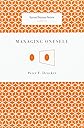
Managing Oneself (Harvard Business Review Classics) [Drucker, Peter F.] on desertcart.com. *FREE* shipping on qualifying offers. Managing Oneself (Harvard Business Review Classics) Review: Don't stop at Reading: You need to DO in order to get full value from this book! - A lot of people seem to have some misconceptions about this book, so I figured I'd chime in with my thoughts: * Yes, this is more like a pamplet. But so what? It's only like $8. And partnered with a small Moleskine notebook it fits in your laptop bag or backpack without taking up too much space. Perfect for business trips or vacations. * The book gives you the ONE thing that is (imo) most important to succeed, so much more than tons of other crappy "self-help novels." It explains to you the importance of taking a step back, looking in the mirror, and developing your own metric driven approach to Managing Yourself. * If done correctly, this is the LAST "self-help" book you'll ever have to buy. Screw Tony Robbins or that scam artist Tay Lopez, or any other similar scam artists. Here's how I've *interpreted* this book and what I've done since I bought it a few years ago: I made a Google Calendar with a notification to pop up every 3-months for me to check the list of goals that I created on a Google Docs page. I also use a Moleskine journal for daily/weekly thoughts. But every 3 months I look at the goals, figure out how I've done since then, and what I can do to be more successful, and/or what did/didn't work, and how to either avoid the things that didn't work, or do more of the things that did work. Here are some of the results: * I went from making $48,000/year in 2014 to making $110,000/year (+ bonuses) in 2017. I was able to do this because I constantly looked into ways to learn more about my job/industry, and also switching jobs twice when opportunities arose. I know this isn't "millionaire" territory or anything like that, but it's still a pretty good leap for someone in my field :) And it didn't come easy, there were tons of sacrifices, late nights staying at the office, working on projects, etc. But I credit checking my goals and doing more to manage myself as a huge contributor. I also reread this book from time to time on long flights or at least once a year. * I started doing yoga and I no longer have back pain (caused by being too sedentary at the office) * I got into powerlifting and have been hitting PRs almost every week * I've earned 3 certifications related to my career since 2015. I plan on doing 1 every year (if I can find relevant ones). * I generally have more time to go hiking, longboarding, surfing, snowboarding, etc. I've really come to have a good system during the week, which allows me to have fun on the weekend. * I also have been reading a lot more, mostly fiction books and business-case related books. I hope this book and this advice helps you out. I highly recommend it, but it's not just a book you read and forget about. YOU need to set up systems where you can check your progress, and make "course-corrections" as needed in order to accomplish your goals. It is A LOT of work! But anyone who tells you they have an "easy" system is likely either lying to you and/or a scam artist. Review: Great article on self life management - This is not a book in the true sense, but an article printed in form of a small book. The size should not diminish in any way the quality of the writing. This is a small gem that one has a look at in a time of reflection. If you read it you will learn something from it because it has that ability to stir your mind and discover a fresh view. In essence the principles of self management are: know your own strength, know how you perform (method of learning and delivery) and personal values. You also have to know where you belong. This seems simple but it is difficult to realise that knowledge in practice. One other aspect discussed in this book is the question of personal contribution that you bring to the organisation, a favourite topic for Peter Drucker. Following from that, it is interesting to consider one's responsibility for managing the relationship with others. Finally, I found valuable the consideration for a career in the second life half. Now that I read that it makes sense to me. The discourse is short, sharp and practical. I think it is very useful for people who consider a second career in their life as a planned venture not as a move to better employment opportunities Overall, great article, but I give it four stars because it is not a book. It should be made clear in the introduction somewhere that it is just that.
| Best Sellers Rank | #28,281 in Books ( See Top 100 in Books ) #150 in Motivational Management & Leadership #186 in Business Management (Books) #294 in Leadership & Motivation |
| Customer Reviews | 4.4 4.4 out of 5 stars (7,650) |
| Dimensions | 4 x 0.5 x 6.5 inches |
| Edition | 1st |
| ISBN-10 | 142212312X |
| ISBN-13 | 978-1422123126 |
| Item Weight | 2.01 ounces |
| Language | English |
| Print length | 72 pages |
| Publication date | January 7, 2008 |
| Publisher | Harvard Business Press |
T**H
Don't stop at Reading: You need to DO in order to get full value from this book!
A lot of people seem to have some misconceptions about this book, so I figured I'd chime in with my thoughts: * Yes, this is more like a pamplet. But so what? It's only like $8. And partnered with a small Moleskine notebook it fits in your laptop bag or backpack without taking up too much space. Perfect for business trips or vacations. * The book gives you the ONE thing that is (imo) most important to succeed, so much more than tons of other crappy "self-help novels." It explains to you the importance of taking a step back, looking in the mirror, and developing your own metric driven approach to Managing Yourself. * If done correctly, this is the LAST "self-help" book you'll ever have to buy. Screw Tony Robbins or that scam artist Tay Lopez, or any other similar scam artists. Here's how I've *interpreted* this book and what I've done since I bought it a few years ago: I made a Google Calendar with a notification to pop up every 3-months for me to check the list of goals that I created on a Google Docs page. I also use a Moleskine journal for daily/weekly thoughts. But every 3 months I look at the goals, figure out how I've done since then, and what I can do to be more successful, and/or what did/didn't work, and how to either avoid the things that didn't work, or do more of the things that did work. Here are some of the results: * I went from making $48,000/year in 2014 to making $110,000/year (+ bonuses) in 2017. I was able to do this because I constantly looked into ways to learn more about my job/industry, and also switching jobs twice when opportunities arose. I know this isn't "millionaire" territory or anything like that, but it's still a pretty good leap for someone in my field :) And it didn't come easy, there were tons of sacrifices, late nights staying at the office, working on projects, etc. But I credit checking my goals and doing more to manage myself as a huge contributor. I also reread this book from time to time on long flights or at least once a year. * I started doing yoga and I no longer have back pain (caused by being too sedentary at the office) * I got into powerlifting and have been hitting PRs almost every week * I've earned 3 certifications related to my career since 2015. I plan on doing 1 every year (if I can find relevant ones). * I generally have more time to go hiking, longboarding, surfing, snowboarding, etc. I've really come to have a good system during the week, which allows me to have fun on the weekend. * I also have been reading a lot more, mostly fiction books and business-case related books. I hope this book and this advice helps you out. I highly recommend it, but it's not just a book you read and forget about. YOU need to set up systems where you can check your progress, and make "course-corrections" as needed in order to accomplish your goals. It is A LOT of work! But anyone who tells you they have an "easy" system is likely either lying to you and/or a scam artist.
K**B
Great article on self life management
This is not a book in the true sense, but an article printed in form of a small book. The size should not diminish in any way the quality of the writing. This is a small gem that one has a look at in a time of reflection. If you read it you will learn something from it because it has that ability to stir your mind and discover a fresh view. In essence the principles of self management are: know your own strength, know how you perform (method of learning and delivery) and personal values. You also have to know where you belong. This seems simple but it is difficult to realise that knowledge in practice. One other aspect discussed in this book is the question of personal contribution that you bring to the organisation, a favourite topic for Peter Drucker. Following from that, it is interesting to consider one's responsibility for managing the relationship with others. Finally, I found valuable the consideration for a career in the second life half. Now that I read that it makes sense to me. The discourse is short, sharp and practical. I think it is very useful for people who consider a second career in their life as a planned venture not as a move to better employment opportunities Overall, great article, but I give it four stars because it is not a book. It should be made clear in the introduction somewhere that it is just that.
X**N
Why didn’t I read this sooner?
Maybe because it’s a relatively quick read, so it became one of these kindle books that I bought ‘on a whim’ thinking that it will be good for a rainy afternoon. Almost two years after I bought it, on a rainy afternoon when I was particularly frustrated with my life and work, I read it. The book felt like wisdom from the heavens, addressed directly to me personally. I wish I had read this as soon as I bought it, as it may very well have led me to make better decisions about my life. Not only that, it may very well have made me a more effective manager. Now that I am in the mode of ‘starting over’, this book has a huge impact on letting me know how I should think about my own development and career. If you are the type of person who finds that life is full of choices but there don’t seem to be enough time to explore all the options, this book will give you very clear-headed advice. All within the span of an hour, you will feel yourself powered up.
V**R
One thing you should know…
Definitely a good read, its worth your time. Its short and sweet, ends with an introduction to the authors other works. If you’re someone that wants to get into the meat of your future endeavors without the appetizer, by all means look up the other works. If you want to take your time as a patient, self-paced consumer and wanting a full course meal starting with an appetizer, get this.
T**S
short and okay
I probably should have bought a full book, but this isnt worth even 5 dollars on the kindle. Basically he says "we are all knowledge workers and have to manage ourselves" He talks about how you need to figure out your strengths and where you fit into organizations and then gravitate in your career to that area. All pretty acceptable information if I had read it on a blog and hadnt paid 5 dollars for it. Id say this is worth buying if you have unlimited money and unlimited time, otherwise, skip this "book"
C**L
Excelente. Livro maravilhoso. Uma pérola no que se refere ao autoconhecimento e autodesenvolvimento. Vale ler e tomar notas. Colocar em prática. Pois são dicas para a vida. Muda totalmente nossa maneira de encarar nossos pontos fortes e deficiências.
S**I
Short read but a very very good read! Its like a bible for self-improvement lol I have scribbled all over the book with notes and highlighters! A great, short and very informative read to add to your collection
P**.
This booklet is an excellent start and guide for the adventure of managing oneself. Drucker provides rare examples of well-known historic figures who managed themselves, e.g. Napoleon, da Vinci, Mozart. These examples show that there is a difference between self-management and successful self-management. Kierkegaard, Drucker’s most preferred philosopher, taught us that we have to live our lives forward and understand it only backward, in the hindsight. The famous Abraham H. Maslow wrote in his book “Motivation and Personality” first published in 1954 that according to extensive experiments probably 5% to 30% of the population in USA are making their own decisions which is a key indicator for self-management. If we sharpen the question to “how many are applying systematic self-management” the percentage is pretty low. At the same time young people, adult people and even people moving towards retirement need self-management skills without knowing where to get it and how to apply it. Very often famous self-help books are more esoteric and spiritual compared to techniques derived from proven practices of management. Drucker recommends the following steps: Identify and develop your strengths with regular reviews within 9-12 months and subsequent tuning. According to Drucker such a feedback analysis is by no means new, it was invented in the 14th century and applied by John Calvin and Ignatius of Loyola 150 years later. Analyze how do you perform, e.g. are you a reader or listener? Find out how to do you learn, because teachers do not know that for every person, every person is different. You have to transform what is taught into your personal learning system. One of the best ways to learn is teaching including the feedback analysis. Define and sharpen your value system. Drucker recommends the mirror test: “I refuse to see a pimp in the mirror in the morning when I shave.” You should avoid working in an organization or in an environment which is contrary to your values and principles. It is important to know where you belong and where you do not belong. It is closely linked with your value system. Understand and develop your contributions – what is expected from you and what do you consider as your best possible contribution. Strive for performance and wherever possible for excellence. Take responsibility for your relationships. Freedom without responsibility does not work. As you expect that your environment takes care of you, you have to care about your specific environment. Freedom and responsibility are mutually intertwined. Prepare yourself for the second half of your life, be on time. The lead time is longer than you think. My experience is: 10-15 years. Drucker describes several ways how to do it. According to my experiences this is an excellent agenda to start with. Peter Drucker provides details of his personal development resp. self-management in his excellent book “Managing the Non-Profit-Organization” published in 1990. In his excellent book “Management – Revised Edition – revised and updated by Joseph Maciariello” published in 2008, three years after Peter Drucker passed away, you find updates in Part X – New Demands on the Individual. There are other serious sources I can recommend in addition to this book: How to get Control of your Time and your Life by Alan Lakein, How will you measure your Life by Prof. Clayton M. Christensen, Total Leadership by Prof. Stewart Friedman and See You at the Top by Zig Ziglar. Philosophical views are excellently covered by Seneca in his essay “On the shortness of life”, by Marc Aurel in his “Meditations”, by Balthasar Gracian in his “Art of worldly wisdom”, by Khalil Gibran in his “Prophet” and by Antoine de Saint Exupery in his “The Little Prince”.
A**O
Es breve pero el contenido es bastante interesante.
W**L
The first article on Managing Oneself is truly priceless advice: It really makes you think whether you are 25, 35 of 45 this are the questions you should ask yourself in order to be happy and productive. The second article is about the manager everyone would like to work with: helpful and effective. So now you know why :-) Peter Drucker was a journalist so he knows how to write well and entertaining without fluff.
Trustpilot
2 weeks ago
4 days ago