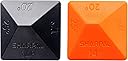
🔪 Sharpen like a pro, never miss the edge!
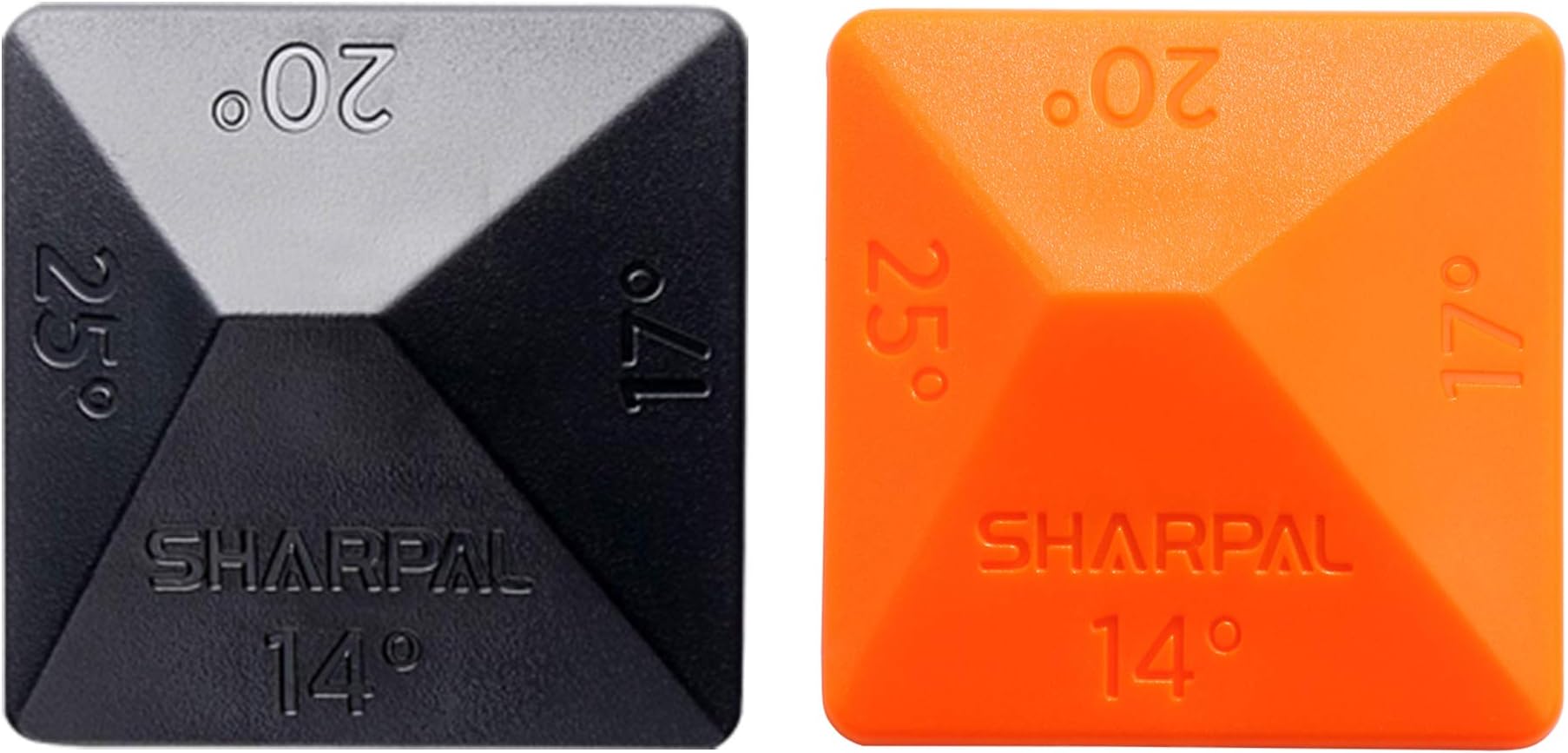
The SHARPAL 196N Angle Pyramid Whetstone Sharpener is a dual-pack sharpening guide featuring 4 universal angles (14°, 17°, 20°, 25°) designed to deliver precise, consistent blade edges. With a magnetic base for diamond stones and an anti-slip rubber pad for traditional stones, it ensures stability and accuracy across all sharpening surfaces. Lightweight and compact, it’s perfect for both novice and expert sharpeners aiming for professional results.


| ASIN | B07R76TJ61 |
| Best Sellers Rank | #6,787 in Tools & Home Improvement ( See Top 100 in Tools & Home Improvement ) #11 in Sharpening Stones |
| Brand | SHARPAL |
| Color | Black and Orange |
| Customer Reviews | 4.3 4.3 out of 5 stars (4,249) |
| Date First Available | April 26, 2019 |
| Global Trade Identification Number | 00814744020237 |
| Grit Type | Extra Fine |
| Item Weight | 0.635 ounces |
| Item model number | SHP196N |
| Manufacturer | Sharpal |
| Material | Plastic |
| Number of Items | 1 |
| Product Dimensions | 3.14"L x 1.6"W x 0.3"H |
| UPC | 814744020237 |
F**R
Useful tool for both new and experienced sharpeners
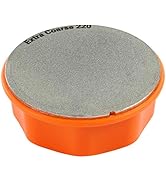
The two guides included in the Sharpal 196N package are excellent tools for finding the correct angle to use when sharpening a knife on a diamond plate or a sharpening stone. Even an experienced sharpener sometimes needs a guide. The orange pyramid guide has an embedded magnet that will allow the guide to attach and stay put on most diamond sharpening plates (also called whetstones). My pictures show the orange guide on a Sharpal 162N diamond whetstone. (Note that the 162N whetstone comes with the orange guide included.) However, many brands of diamond coated whetstones have the diamonds embedded in a layer on a steel plate, so the orange guide should work just fine with them. To use the orange guide, select the angle you want for the knife, then put the guide on the diamond whetstone with that angle facing the long side of the whetstone. Diamond whetstones can be used to sharpen a knife by putting the knife on the stone at the selected angle, then maintaining that angle while moving the knife in a "slicing" motion across the whetstone, as though you were trying to slice off the diamond coating. The amount of pressure on the whetstone is four pounds or less. If you have a kitchen scale, you can get a feel for how much force is equal to four pounds. (Believe me, it isn't much.) When in doubt, use less force and go across the stone more times. Do about 8-10 strokes on one side, then flip the knife over and do 8-10 strokes on the other edge. Most people will use the same hand for both sides of the knife, which means you would relocate the orange guide to the other end of the whetstone. Some ambidextrous folks can simply switch hands to sharpen the other edge of the knife. My photo shows 20° selected for use. Most western knives would use a 20° angle. Use a 14° angle for most Japanese-style knives (Shun, MAC, Tojiro, Dalstrong, etc.). The 17° guide might be more appropriate for a Global. If unsure, consult the description for the particular knife at the manufacturer's website or wherever the knife was purchased. Check to see if there is an Amazon description, too. The 25° angle is appropriate for cleavers and some chef knives. This larger angle will not get the edge as sharp as a narrower angle, but the edge will be more difficult to roll over, if you are using a lot of force during your cutting activities. The black guide is shown on a 3000 grit Pride Abrasive water stone. It has a rubbery bottom that helps prevent the guide from slipping on the stone. Most water stones require you to pull the edge across the stone by having the top of the knife moving forward and the sharp edge trailing behind. In other words, you are dragging the edge away from the stone surface, not trying to slice off the top of the water stone - many brands of water stones are soft enough that you actually would cut into the stone. So, to use the black guide, you need to put the knife on the desired angle and observe how the knife looks relative to the stone. Then you lift the knife off the guide while maintaining that angle, put the knife on the stone and dragging the edge across the stone. I realize that this description may not adequately explain the process, so I suggest that you watch some online videos. You can search for videos by Peter Nowlan that I watched when I first began sharpening. Peter does not use angle guides, but you can learn the basic techniques and incorporate the angle guide into your own process.
A**R
Works as expected!
Very useful.
C**M
Two Pyramids, Four Angles Each. Made in China.
Very handy for free-hand sharpening. Two pyramids: one with a magnet for magnetic surfaces and one with rubber backing for all other sharpening surfaces. Made in China.
M**L
Guides maintain consistent sharpening angles.
Helpful guide to set and maintain the same angle while using a sharpening stone. Helps to maintain consistency.
I**W
Useful for getting setting proper sharpening angle, but appear to scratch the side of the blade
The rubber based one stays put on the stone so it's easy to use. Hard to really be sure the knife is properly set against the block, and once moving it's easy to wobble the knife edge and not maintain the correct angle. But biggest issue is they appear to scratch the knife. Our nice expensive Japanese steel knife has lots of little scratches along the blade that I don't believe are from the stone, they appear to be from these blocks.
A**.
A very useful little aide for sharpening cutting tools!
These Sharpal 196N ANGLE PYRAMID Whetstone sharpening angle guides are very useful for in concert with whetstone's. I destroyed edges of knives and cutting tools many times over the years until I discovered angle guides and the different angles required on different knives and tools. I ordered these for use when sharpening chisels and gouges on whetstones. They take the guess work out of getting the angle correct for the knife or tool you are sharpening on a stone. You simply place the guide at one end of the stone, lay the blade against the correct and which is facing the opposite end of the stone and follow through while maintaining that angle. It will seem a bit odd at first but, becomes natural quickly. This simple little aide not only saves much frustration but, saves a lot of time in the sharpening process once you start using them. You achieve a sharper edge much quicker. You only need to know which angle is required for the knife or tool you are sharpening to make this work perfectly. The Sharpal 196N ANGLE PYRAMID Whetstone guides are a useful tool that can be stored or carried anywhere. I consider them a very good value for the cost!
A**3
Works great on my 6000 & 1000 grit stone.
Very cool device. I use it for the kitchen knives, all my EDCs, and pruners.
J**T
Simple, yet useful tool.
Angle guides are really useful to a sharpening newbie, practically a necessity. This was the most cost efficient set I could find. Just 2 little pyramids (one with magnets, one with anti slip base) each with the same 4 angles, 14°, 17°, 20°, and 25°. No tricks or tips, just drop the guide in place and go. My only issues were the bases on these guides. The magnet in the orange one was very weak, and it would easily move around when bumped. I immediately pulled the magnet out and replaced it with stronger neodymium magnets, held in place by epoxy. The anti-slip pad on the black one makes it sit a little higher than it should, which is fine for larger blades, but doesn't allow narrow blades much contact to the ramp (not a big deal since I use the orange one mainly).
C**N
sencillo y útil, bien para acostumbrarse a tomar angulos
W**T
Simple, rugged, exact angle device to make consistent sharpening for a variety of edged tools. Covers, 12,17, 20, and 25 angled edges to sharpen or hone, kitchen knives, hunting knives and axes. Great for beginners and old fogies alike. The user has only to hold the angle in passing along or into their chosen sharpener to be consistent in achieving a sharp tool. I was quite impressed. One device can be stabilized via a magnet while the other grips the surface dependent upon the device. Beginning to think Sharpal knows what this process is all about.
G**E
Funcional e prático
W**R
spielzeug
P**X
Comodissime piramidi per impostare l'angolo di molatura delle lame. Utili quando si deve rifare il filo da zero per avere un'idea sull'angolazione da tenere, altrimenti è sempre meglio seguire l'angolo del filo esistente. Contrariamente alle guide che si infilano sul coltello queste piramidi non accompagnano la lama durante la levigatura ma servono solo per impostare l'angolo di partenza, poi sta al polso fermo il compito di mantenerla. Questo fa sì che anche un neofita possa imparare veramente ad affilare a pietra e capire l'utilità degli angoli differenti su lame differenti. Al contrario la guida sulla lama dà sempre una angolazione standard da entrambi i lati e non permette di "giocare" con gli angoli e creare lame ad hoc per carne, pesce, verdure, ossa e cuochi mancini..
Trustpilot
1 month ago
1 month ago