❄️ Step into winter like a pro — grip, glide, and conquer every trail!
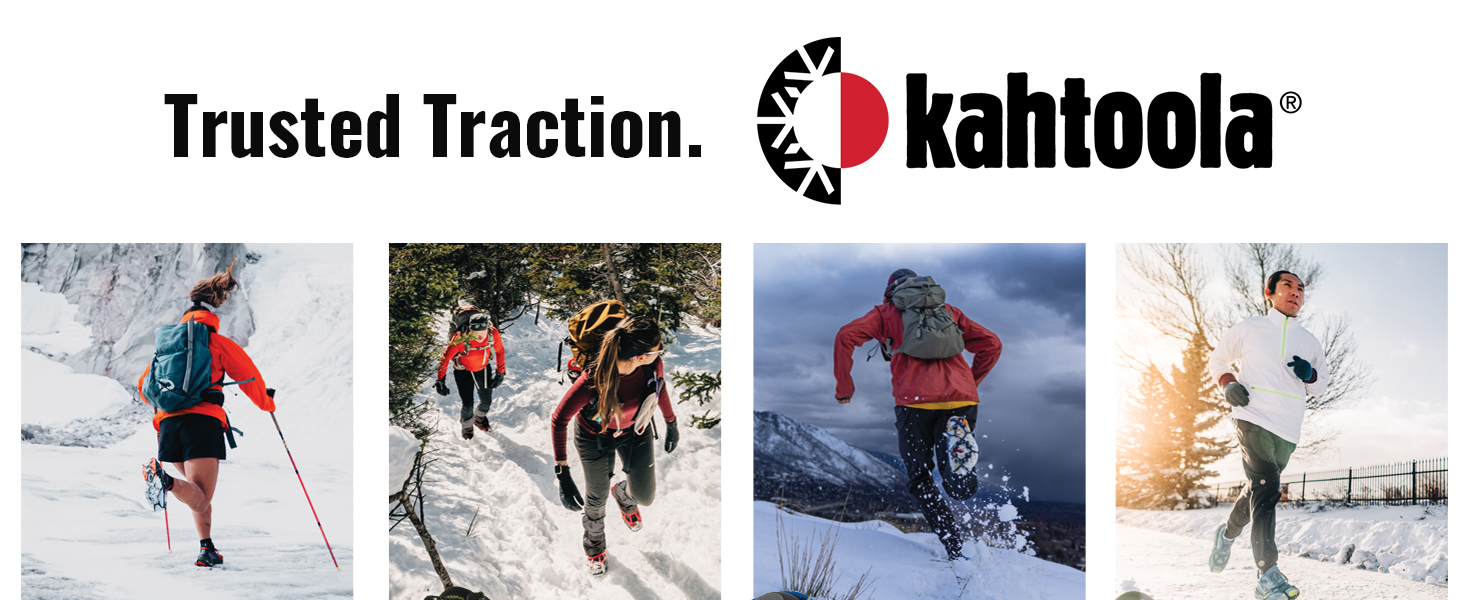
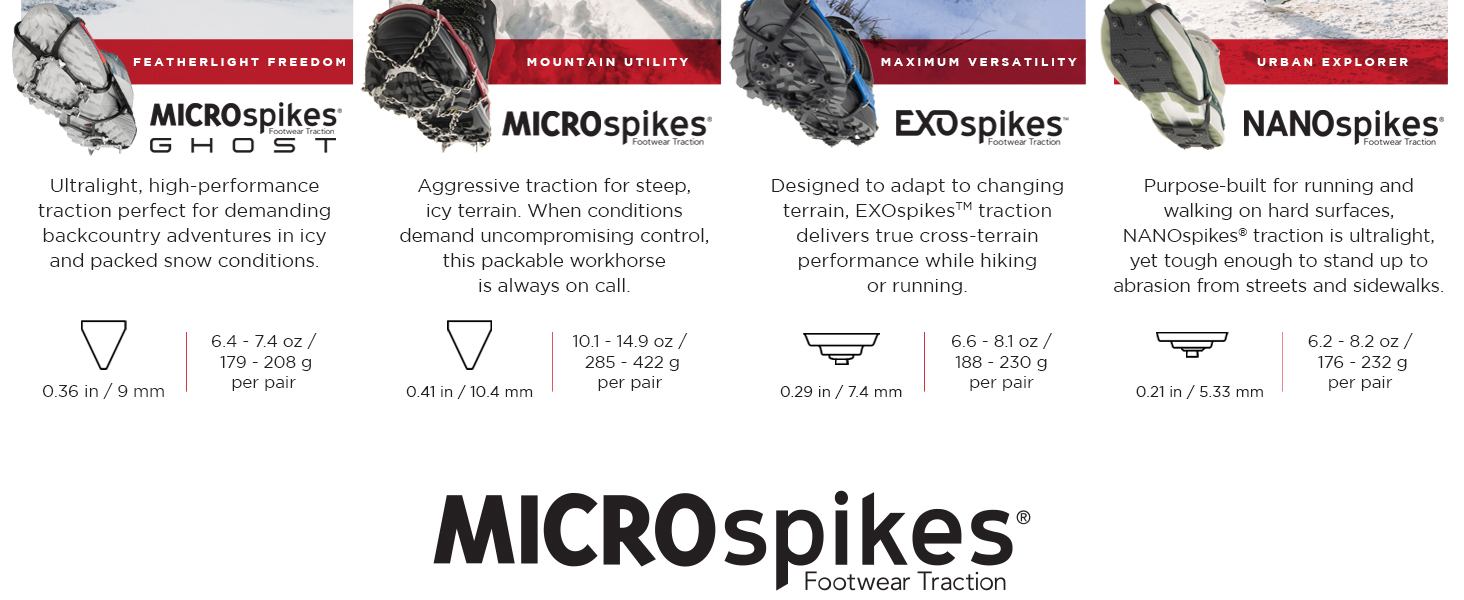
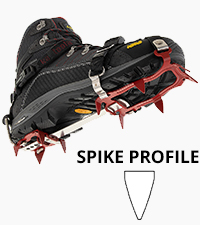
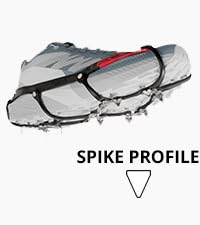
Kahtoola MICROspikes are premium winter traction devices featuring 12 corrosion-resistant stainless steel spikes per foot, designed for superior grip on ice, snow, and mixed terrain. Their patented elastomer harness with reinforced TPU inserts ensures a secure, flexible fit even in extreme cold down to -22°F (-30°C). Compact and lightweight, they pack down to just 5 x 3 x 2 inches, making them perfect for backcountry hiking, ice mountaineering, and trail running. Trusted by outdoor enthusiasts since 1999, MICROspikes come with a 2-year limited warranty and are engineered for durability, versatility, and unmatched winter traction.






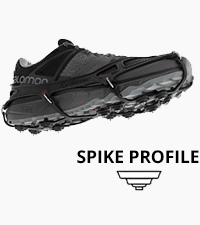

| ASIN | B00RXXKM50 |
| Best Sellers Rank | #7,668 in Clothing, Shoes & Jewelry ( See Top 100 in Clothing, Shoes & Jewelry ) #7 in Shoe Ice & Snow Grips |
| Brand Name | Kahtoola |
| Color | Black |
| Customer Reviews | 4.7 4.7 out of 5 stars (3,429) |
| Date First Available | July 23, 2013 |
| Global Trade Identification Number | 00855333000520 |
| Item Dimensions LxWxH | 9 x 5 x 0.04 inches |
| Item Package Dimensions L x W x H | 7.95 x 4.09 x 2.48 inches |
| Item Weight | 13 Ounces |
| Manufacturer | Kahtoola |
| Model Name | MICROspikes |
| Number of Items | 1 |
| Number of Pieces | 1 |
| Package Weight | 0.44 Kilograms |
| Part Number | KT02008 |
| Product Dimensions | 9"L x 5"W |
| Suggested Users | mens |
| UPC | 855333000520 855333000384 |
| Warranty Description | 2-Year Limited Warranty |
S**Q
The best thing invented for hiking since shoes!!
I AM A HUGE FAN OF THESE. I cannot say enough. I want to personally thank the company who makes this product. Let me get to the gist. I wear this product for almost all my hikes. Ice and snow is obvious, but these things work wonders on good old fashioned dirt. Walking up hills or switchbacks or walking back down for that matter have become a breeze. They are extremely durable. I also notice that they do well crossing wet river rock. The spikes have really held up. I also use these on rocky paths and they are good as new after I am done. In short, these MICROspikes are a must, and work on almost all terrain types, and I am very happy to own them. I am 6 foot and 215 pounds. I have worn them on about 10 hikes and counting and they still look brand new. Very high quality materials. They pack very small in a day pack, or you can hang them on the outside of your pack. Let me reiterate, you can wear these and excel on regular dirt trails. I have gotten many compliments on them when I wear them. Also when descending, I have found I no longer need my trekking poles. I use the trekking poles anyway, but my grip to the path is amazing. They are a luxury item but they give you tremendous flexibility in the type of hikes that you can do. They go on easy and come off easier. Just in case you are wondering. Here is a list of the top 5 must have items for most hikes. 1) Good pair of hiking boots. This is the most important piece of equipment you will buy, so choose carefully. 2) Back pack. There are a million to choose from but I personally use a Camelbak 3) Trekking Poles. Dont knock them until you try them. Once you go poles, you cant go back. 4) GPS tracking device - Many advantages to this 5) KAHTOOLA MICROSPIKES!! Happy Trails!
R**T
Superb! Bought Again & Again!
I’ve now purchased three pair of these spikes, one for my wife and two for me. And, I’d buy them a fourth time without hesitation. We own 45 acres of forest in Central New York. Our conditions range from dry (drought) to damp to muddy to frosty/icy to (last winter) 22 feet of snow. We’re walking over and on downed tree trunks, branches, and various tree tops and slash - whether they’re wet and slippery or icy and slick. Sometimes just hiking to the work site is a challenge. Frozen ground or just an inch of snow over ice can be a challenge. When the snow is deep we use snowshoes. When the ground is summery-soft we use logging boots. But, for those many, many icy frozen ground days we depend on these spikes. Heck, I even wear these spikes while shoveling my driveway at home. They fit on the boot very solidly and tightly. This makes them a bit challenging to put on properly. I put my wife’s on for her because her hands aren’t strong enough to do it comfortably. For my big, size 11, steel-toe chainsaw boots I use size XL - a size bigger than recommended. They’re still tight out on. But, they’re on rock solid and the minor struggle is well worth it. They’re not going anywhere. These spikes (on your shoes or boots) become an integral part of your foot. They’re super dependable, always there when you’re clawing your way up an icy slope or steadying a log to walk on. These spikes are truly excellent. They’re so well made and the stainless steel resists any rusting even though I just leave them on a mat for the snow and ice to melt. These spikes don’t get babied, they shrug it all off with ease. Buy these again? I have. Recommend to friends? I do repeatedly. I depend on these spikes and they always perform exceptionally. Don’t hesitate.
J**D
Excellent traction
These are game changers if you hike in snow and ice. I have used these a number of times in the past almost-year. They are easy to put on and make walking ice a breeze.
A**E
Good quality
Sturdy great on snow fits perfect Easy to walk works great on the tough ice No slipping And they feel comfortable
A**R
Microspikes crampon chains-and-spikes versus Yaktrax coiled wire springs? The difference is in the spikes!
இ Fuzzy Wuzzy's Summary: ѾѾѾѾѾ Highly recommended with warm fuzzies! As a longtime wearer of Yaktrax, I decided to give these a try during winter hikes high up in the Colorado Rockies (with mountain summits at 14,000 feet). Call me a Yaktrax convert, but having these spikes underneath your feet adds a HUGE increase in traction and confidence on slippery rocks and rough ledges with treacherous drop-offs, loose gravel, detritus and scree, all of which are covered with snow and ice during the winter. Now, during winter, I always pack my Microspikes, snowshoes, and ice axe whenever I am hiking up a snow-covered mountain. My Yaktrax have been relegated to more pedestrian city duties such as shoveling snow off of the driveway and sidewalk, walking the dog or walking around town on snowy days, etc. While I like these Microspikes more than Yaktrax when I am hiking on trails, scrambling up snow-covered boulders, or walking across any unpaved surface that is covered in snow and ice, the Yaktrax feel nicer when used in the city on paved surfaces. On paved surfaces, these Microspikes are far noisier than Yaktrax, which can detract from your peaceful enjoyment walking through a quiet snowy neighborhood. I do not run for exercise during cold snowy winters, so I cannot tell you how effective these Microspikes (or Yaktrax) are for running across snow-covered sidewalks. But both walking and running on paved surfaces will create more noisy clickety-clack sounds using these Microspikes when compared to wearing the coiled wire springs on Yaktrax. I can leave the Yaktrax on my shoes if I wanted to briefly walk inside a house while still wearing the shoes. I just take four plastic bags (e.g. grocery bags, making sure that the bags do not have small holes that could leak mud out), wrap two plastic bags double-layered around each shoe, tie the bags' handle loops around my ankles, and I then walk into the house with my shoes wrapped up. For example, while shoveling a lot of snow outside after a snowstorm, I have sometimes wrapped my Yaktrax-fitted shoes and walked into the house to drink some coffee or hot chocolate before going back outside to continue shoveling. Note that you can only safely walk inside a house wearing Yaktrax if the coiled wire springs have not started to unravel from the rubber frame; otherwise, any protruding wires can poke through the plastic bag and scratch your flooring. I would not wear these Microspikes inside any building because the spikes would tear up any hardwood, tile, carpeting that you walk across. If you take a bus or walk to work during the winter, the Yaktrax can be left on the shoes when you walk inside the bus or office building lobby, whereas Microspikes will tear up the carpeting or flooring inside the bus or office building. I have sometimes driven my car a short distance while the Yaktrax were still attached to my shoes. But I would not dare drive my car with the Microspikes still attached to my shoes. If you are deciding between Microspikes and Yaktrax, in my opinion, the coiled wire springs of Yaktrax makes them more quiet, nimble, and flexible for city use, and the chains-and-spikes approach of Microspikes are better and far more heavy-duty than Yaktrax when you go off-road/off-pavement on trails, frozen land, and mountains in the winter. The Yaktrax coils are also too fragile for frequently walking across rocky terrain or scrambling across boulders. So if you want optimum traction and maneuverability for both city and trail use, it helps to have both Yaktrax for the paved city and Microspikes for the unpaved trails. I like Yaktrax better for city use on paved areas covered in soft snow, but I sometimes still wear the Microspikes in the city if the snow has refrozen into ice on pavements since these spikes bite into the ice for FAR better traction on ice than the Yaktrax coils. Slipping and falling on hard ice can hurt and cause sprains or even break bones, and it can be especially dangerous during the winter if you injure yourself while hiking in the remote backcountry (always hike in the backcountry with other people or let other people know exactly where you are going). Depending upon how frequently you use these Microspikes (or the Hillsound crampons) to walk on concrete, rocks, and boulders, the crampon spikes will eventually wear down over time. And if you wear Microspikes when scrambling through boulders, the upper elastomer harness will also deteriorate over time due to being rubbed against rocks. It is possible for the metal chain links to be yanked out of the upper elastomer harness if you get the spikes and chains under your shoes caught on a rock, tree root or limb, or other obstruction, so you have to be a little careful where you are stepping in rough terrain. But when used on rocky or rough surfaces, the spikes are far more durable than the Yaktrax coils. Yaktrax are less expensive than these Microspikes. But Yaktrax are also not as durable as Microspikes and you will likely need to replace Yaktrax, due to its rubber frame and coiled springs wearing out, long before the metal spikes on these Microspikes wear out. These Microspikes are lighter in weight than heavy-duty metal-framed crampons, I can easily store them in a backpack or under the car seat, and I can attach these to hiking boots, or use these with trail running or jogging shoes. These Microspikes do feel better under your feet if your shoes have a thicker sole on them; i.e. they may not feel as comfortable if you attach them to dress shoes that have a thin leather or rubber sole. But these Microspikes are NOT a substitute for mountain/ice climbing crampons that use longer aggressive spikes with spikes also pointing forward. If you need to go up steep frozen rocks and ice, or if you need to climb vertically, you need to wear mountain/ice climbing crampons. These Microspikes work better on moderately sloped terrain covered in ice. Some other brands of slip-on crampons use a stiffer upper harness than the elastomer harness of these Microspikes, making them more difficult to put on and take off. With these Microspikes, you can use a single hand to slip the harness over the toe of your boot/shoe and then pull it around your heel. If you backpack and do winter camping, the harness on these Microspikes may still feel stiffer if they had been stored in sub-freezing weather prior to putting them on, both because the elastomer material stiffens up slightly and because your finger joints may also stiffen up :) Under sub-zero conditions, you can still put these on while wearing ski gloves, but it may require a little more effort than putting them on while indoors using your bare hands. Here is a quick tip for keeping your hands warmer while wearing ski gloves in sub-freezing weather. While you can also insert chemical or electrical hand warmer packs inside your ski gloves, I prefer to wear surgical gloves inside my ski gloves instead of using hand warmers that feel bulky inside gloves. You can wear either the stretchy form-fitting surgical gloves made of latex or nitrile, or the polyethylene plastic food handling/preparation gloves, and then wear the ski gloves over the latex/nitrile/plastic gloves. Wearing this inner glove also works with other kinds of gloves such as leather/suede driving gloves, it will retain far more of your hand's body heat than just wearing ski/leather/suede gloves alone, it helps keep your hands dry, and it keeps the interior of your ski gloves fresh by not absorbing your hands' sweat. Try smelling the inside of sweaty stinky ski gloves that have been used for shoveling snow, skiing, snowshoeing, or winter hiking ;-) Surgical gloves offer better grip than the poly gloves, which is useful if you need to swap memory cards or batteries in your camera in sub-freezing weather. I once dropped the battery from an SLR camera into soft knee-deep snow because I was wearing thick ski gloves while handling the camera, and it took a major excavation effort to find that battery again. Food handling poly gloves are less expensive than surgical gloves (a box of 500 costs less than $10), they are also great for use in the kitchen, and they retain your hands' heat just as well as surgical gloves. If you find yourself fumbling around trying to slip these Microspikes onto your shoes while wearing ski gloves, if you wear surgical or poly gloves underneath your ski gloves, you can take off the ski gloves while still having your hands covered with the surgical/poly gloves and have better grip on the Microspikes' harness. Even when the outside temperature is -10(F) with a -35 wind chill, my hands still feel warmer when I temporarily remove my ski gloves while still wearing the surgical/poly gloves than if my hands were totally exposed to the air. As long as the surgical/poly gloves do not tear, you can reuse them; I sometimes rinse out the interior with water to clean them of sweat residue and let them air-dry. I no longer buy chemical or electrical hand warmer packs, and I just keep extra pairs of surgical/poly gloves in my backpacks and in my car's glove compartment. You may still prefer hand warmer packs if your hands are highly sensitive to cold or if your hands cannot generate enough body heat inside the double-layered gloves. You can also wrap your feet in thin plastic in situations where your feet feel cold or the insides of your shoes get soaked by cold water. When I hike in the backcountry, I always keep several pairs of thin plastic bags in my backpack, both the thin produce bags that you load fruits and vegetables into at the grocery store and some plastic grocery bags that are used during check-out. If you feet are cold, or your socks or the inside of your shoes are soaked by cold water, dry out your feet, put each foot inside a produce bag, wear the sock over the produce bag, and then put your shoes back on. If you are camping during winter, wearing a produce bag inside your socks keep them toasty warm as you sleep, and you may wake up with your feet actually being damp from sweat. The plastic grocery bags that are used during store check-out can serve as makeshift galoshes to keep your shoes dry and clean when crossing a short stretch of mud or shallow water. Wrap one or two plastic grocery bags around each shoe, tie the bags' handle loops around the ankles, and then slowly walk through the mud or water. Do not do this on sloped or uneven ground since, by covering up the all-terrain soles of your shoes with the plastic bags, your shoes lose a lot of traction. Note that some previous product listings for these Kahtoola Microspikes gave the impression that a tote sack was included, but that is erroneous. This product does not include a tote bag with the package, but you can purchase a Kahtoola-branded tote sack separately. When I carry these in a backpack or in the car, I just use any small waterproof nylon or thick plastic bag to carry them. The bag that you carry these in should have a zipper, drawstring, or Velcro closure so that melted snow and mud do not leak out. Whatever bag or sack that you use to carry these Microspikes should be periodically rinsed with water since mud and dirt will accumulate inside the bag over time. You can help maintain the Microspikes' performance by rinsing them with water (or scrub clean snow into them) and letting them dry out in between uses. If you have never worn crampon devices or snowshoes before, before you wear these Microspikes (or Yaktrax) outside on slippery ice or sloped terrain, get yourself acclimated to how they feel under your shoes while walking on less slippery trails and pavement areas. These crampons do change how your shoes feel when standing and walking, although they do not change your gait as much as wearing snowshoes. These Microspikes are available in a red or black color. While the black color may color-coordinate better with most shoes, I like the red color because they are a little easier to spot inside a dark tent or dark car :) The sizing guide that is provided by Kahtoola worked well for me. I purchased a Medium-size and it fits both on my trail shoes and also on my bulkier winter boot. If your shoe size is right on the borderline of a size range, you may need to go up to the next larger size if you want to wear them on bigger boots. It depends upon how bulky your shoes are. But the elastomer harness stays on with a better snug fit when it is stretched tight onto the shoe. Having the harness fit looser on your shoe/boot may be okay if you are just walking around the city or on flat smooth trails. But if you are going hiking on sloped trails, with various tree roots and rocks on the ground, you would want them to fit tighter on your shoes. November 25 2013 update: There is a newer updated model of these Microspikes that is significantly improved: Kahtoola MICROspikes Traction System (Updated Model) . This older model of Microspikes has two spikes under the heel area whereas that newer updated model now has four spikes under the heel, and the pairs of spikes are connected by better plates that give an improved feel and stability compared to this older Microspikes model. If my review helped you to make an informed buying decision, please click the [Yes] button below. If not, please offer suggestions for how I can improve this review. If you have questions, please ask.
D**O
High quality. Come with a bag to store the microspikes which is very convenient
D**0
Ces crampons sont très efficacent en randonnées sur neige et sur glace, facile à mettre et à ôter. Peu encombrants et légers
C**N
Conseiller par un spécialiste : peut vous sauver la vie en vacances dans les zones de grand froid (Islande en hivers )
R**H
Durability, Fit, Grip, Safety, Stability, all of the above. These are quite aggressive allowing for great traction on ice and slippery trails . These are my 3th pair of Kahtoola’s after returning a cheaper pair that broke several years ago. A little pricier than I’d like to pay but hey, you get what you pay for right? It’s the only crampon/ icer I would own
G**O
Una solución realmente práctica para aquellos que vamos a correr a la montaña y sospechamos que podemos encontrarnos con neveros, o hielo. Son ligeros, ocupan poco y en un momento dado te pueden salvar de una situación comprometida, o sencillamente disfrutar en una zona donde normalmente hubieras pasado algo de miedo. Sencillos también de poner, aunque con las manos heladas nunca es fácil manipular nada. La inversión merece la pena.
Trustpilot
3 weeks ago
3 weeks ago