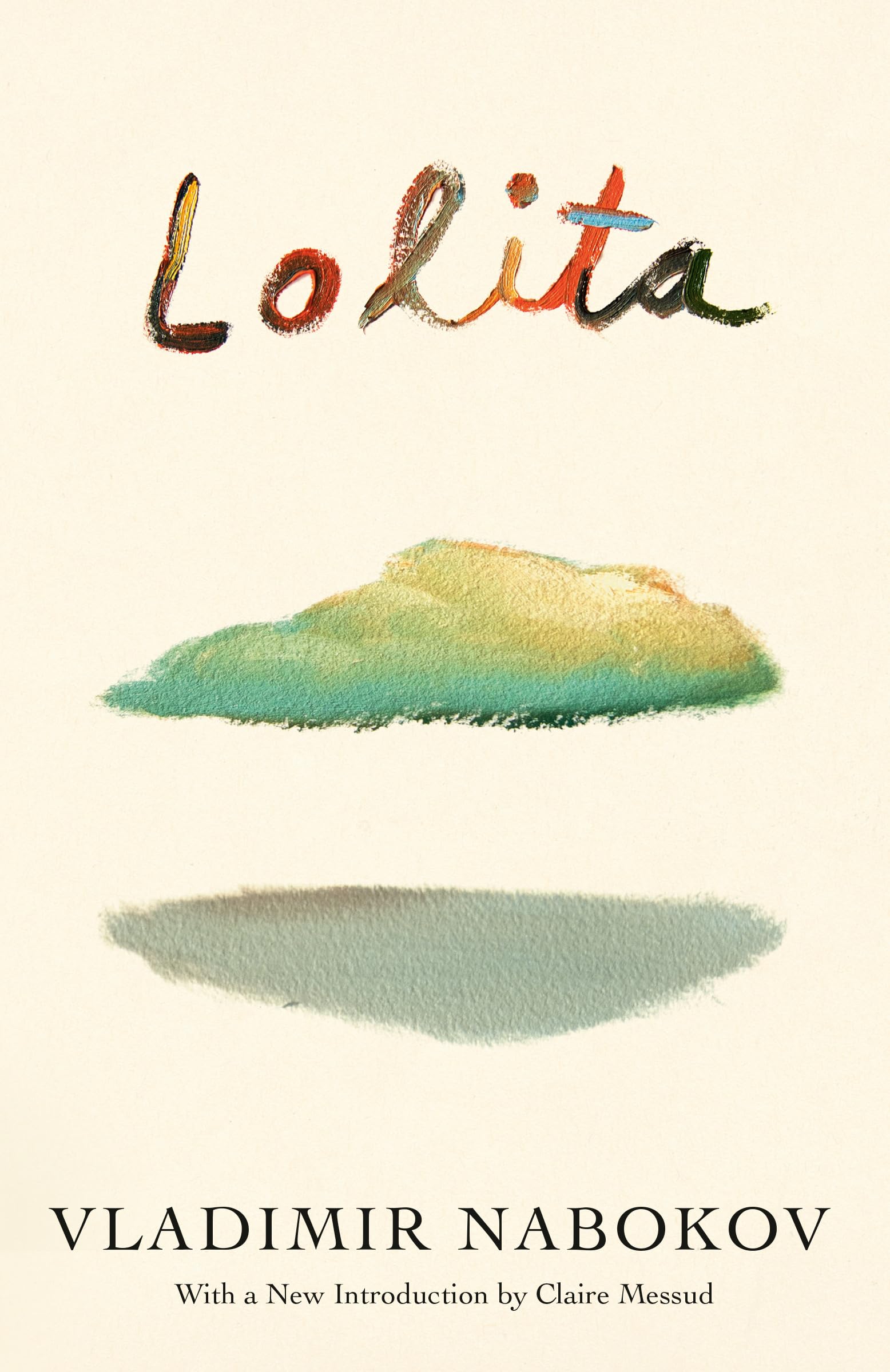
📖 Unlock the darkly poetic classic that everyone’s whispering about.
Lolita (Vintage International) by Vladimir Nabokov is a provocative and masterfully written novel blending poetic language with a complex psychological narrative. Celebrated as a literary classic, it explores controversial themes through the troubled mind of Humbert Humbert, set against a vivid American backdrop. With over 13,000 reviews and a strong rating, it remains a must-read for those seeking a challenging and unforgettable literary experience.
| ASIN | 0679723161 |
| Best Sellers Rank | 1,045,121 in Books ( See Top 100 in Books ) 145 in Fiction Classics (Books) 644 in Literary Fiction (Books) 1,764 in Contemporary Fiction (Books) |
| Customer reviews | 4.1 4.1 out of 5 stars (13,272) |
| Dimensions | 13.34 x 1.75 x 20.32 cm |
| Edition | 2nd ed. |
| ISBN-10 | 9780679723165 |
| ISBN-13 | 978-0679723165 |
| Item weight | 272 g |
| Language | English |
| Print length | 336 pages |
| Publication date | 1 Mar. 1989 |
| Publisher | Vintage Books USA |
S**E
Provocative, Thought-Provoking, and Darkly Compelling
Lolita remains one of the most striking and controversial novels in modern literature. Nabokov’s prose is poetic, precise, and captivating, drawing the reader into a complex, unsettling story. The book challenges readers with its provocative subject matter while showcasing Nabokov’s brilliance as a writer. A darkly compelling and unforgettable read that continues to spark discussion and admiration.
M**R
Look at this tangle of thorns...
This is the only book I have ever loved and bitterly hated at the exact same time. Vladimir Nabokov, a Russian writer born at the close of the 19th century, undoubtedly penned one of the most beautifully written English language novels of all time. Reading Lolita is like tasting the seductive dark chocolate of Knipschildt’s La Madeline au Truffe with a Balthazar bottle of 2009 Bordeaux from Chateau Margaux while watching the sun set over the Mediterranean. Your senses are utterly overloaded. His magical turn of phrase, synesthetic detail and masterful imagery work to completely capture the heart of the reader. It is bewitching. Indeed, he plays with language like a game of chess, flirting with the intricacies and complexities, weaving patterns through our minds and forcing us to entangle our own emotions within the story. Nabokov was actually an acclaimed chess composer, and Humbert Humbert, his tortured protagonist, finds some solace in the elegant game. First and foremost, Lolita is a work of art, a poignant celebration of language. Though there may be no obvious moral, as Nabokov himself insists in the afterword, the novel is so emotionally powerful because it forces us to make a connection between the romantic, primeval force of love and the dark territory of pedophilia. It is a sensuous exploration of human desire and the human heart. A masterful foreword penned by the inspired invention of Dr John Ray sets up the premise of the story by introducing it as the memoirs of the disturbed academic, Humbert Humbert, who recently died in jail. By doing this we can continue reading with the comforting knowledge that he is eventually caught. We really have two Humbert Humberts to deal with, the one living out the events and the one recounting them to us years later. This lends a reserved and thoughtful tone to the narrative, so that some of the most shocking moments are delivered so matter-of-factly they seem, well, clinical. Humbert is obsessed with his disturbing concept of “nymphets”, young girls with a certain innocence, grace and vulnerability. He even fantasizes about ruling over a sort of Lord of the Flies type island of nymphets he can presumably exploit to his heart’s content. But, ay, there’s the rub. The thing about Humbert is that he is a man of fantasies. He is not a lunatic, a criminal, or a psychopath, but a troubled academic tortured by his poetic dreams. These dreams suddenly and fortuitously come true when chance sees him become the tenant of glamorous and desperate widow, Charlotte Haze. She just happens to have a daughter . . . Lolita. Through almost no effort on his part Charlotte falls for him and they are married before you can say, “hang on a wee minute.” He now has the opportunity to get to her little girl. The most shocking moment of the novel, and one of any novel I have ever read, is when Charlotte finds his diary and discovers his secret. She rushes out the house to deliver a handful of urgent letters in such a state of hysteria and despair that she doesn’t notice the car hurtling towards her. She is killed instantly, and Humbert becomes Lolita’s guardian. The rapidity and cold delivery of this event makes it all the more frightening. This is a tragedy related in a monotone. Humbert continually references Dante’s eternal love for Beatrice in the triumph, The Divine Comedy, which began when the latter was only eight years old, younger even than Lolita, but he seems to forget that Dante was the same age as Beatrice, not three decades her senior. After their first encounter he famously wrote, “La Vita Nuova: Ecce Deus fortior me, qui veniens dominabitur mihi: Behold, a deity stronger than I; who coming, shall rule over me.” Perhaps this is the comparison, because this is precisely what happens to Humbert. Lolita is an utterly omnipotent deity in total control of his heart, the thing is, she just couldn’t care less. Even so, a more fitting comparison would be Sade’s Justine, the notorious twelve-year old pauper who is subjected to a horrific decade of sexual abuse. Written by the even more notorious Marquis de Sade, the book has been banned and censored countless times, and its author spent half his life behind bars as well as his name becoming the origin of ‘sadism’. Some legacy. After Charlotte’s death in Lolita, it is here that Humbert moves into the realm of crime, tearing the helpless and now utterly vulnerable girl from her old life and embarking on a nomadic road trip across the US as he fulfills his fantasies . . . This gives rise to some truly beautiful exploration of the American countryside, of the raw majesty of the land. It seems to contrast so poignantly with Humbert’s worshipful idolisation of his Lolita, who submits to his sexual fantasies but remains utterly unengaged emotionally. Her cold and childlike indifference, stubbornness and desire to rebel just makes it all so much more horrific. She is like a shell. And it is utterly heartbreaking. What we must remember is that he is not being driven by lust or sadism or rage or greed or any other immoral and dangerous desire, but by something even more destructive . . . love. Naturally, Lolita became notorious as soon it was published in 1959, and Nabokov was fully aware it would be, “I have to tread carefully. I have to speak in a whisper.” However, this book could hardly be further from the trashy genre of erotica or the debasing allure of pornography. No, it is a story about a man in love. The oldest most well-known story there is. Humbert is not simply a sadistic pervert, indeed he urges the reader throughout the novel to hear him out, to see beyond social convention and the sanctimonious laws of society. At one point when I was beginning to grimace in discomfort and revulsion, the episode in which he first considers fully taking advantage of Lolita, he writes, “Oh, do not scowl at me, reader.” Then comes the pleading insistence that we do not cast the book aside. It is surreal. Nabokov, as much as his complex poet-pervert creation, is reaching through the decades and speaking directly to us. It is a powerful feat of persuasion and I for one was wholly persuaded. The prose is truly beautiful. “Cold spiders of panic crawled down my back” . . . What is it about Nabokov’s writing? I have asked myself this many times and keep coming back to the elegance and grace of chess . . . Humbert’s arrival in the US is perhaps the first pawn being moved, Charlotte’s death the first check, his arrest, the final checkmate, and the opponents, well, the opponents can only be his heart and his head. Throughout the entire novel a ferocious internal battle rages within him between his insatiable desire and his cold, academic reason. Who wins? In a way, neither. Desire triumphs in the sense that he essentially kidnaps Lolita and she is utterly at his mercy, but his morality, something that he undoubtedly does possess, battles him every step of the way. The guilt, the crippling remorse, not once is his conscience at peace. The whole concept of Lolita is so horrific, so immoral, so naturally repulsive to us, it can cloud a simple truth. The truth is, this is a masterpiece. The sheer beauty of the artwork is in the details, in the small scenes and snapshots of such intensity, the very nerves of the book, each delivering a sharp spike of feeling, whether it is horror, mirth, revulsion or shock. Yes, this is the most sensuous and powerful exploration of human desire I have ever read. "I am thinking of aurochs and angels, the secret of durable pigments, prophetic sonnets, the refuge of art. And this is the only immortality you and I may share, my Lolita."
J**S
Well written disturbing book
From the very first line the narrator of Lolita, Humbert drags the reader into his world. Due to the subject matter of this book I was initially unsure how to begin reading this. I wondered if the subject of Paedophilia would be taken as seriously in Lolita as it is today. I wondered if Nabokov was going to manipulate the reader into sympathising with a Paedophile or if the relationship between a Paedophile and a 12 year old girl was going to somehow be presented as a legitimate love story. More puzzlingly I wondered how on earth people how had read this could describe it as a page turner given the disturbing subject matter. So it was with curiosity and interpretation that I began to read Lolita and as soon as I did I couldn't put it down and I began to indeed find it a `page turner'. A simple review of Lolita is not going to give the book justice in anyway and will not demonstrate the beauty of the writing, the clever wordplay or that at points the reader has to look beyond parts of the narrative which are sometimes an illusion and try to see what the actual words are telling you. Lolita has an unreliable narrator, a VERY unreliable narrator. The way Humbert is describes Lolita anyone would imagine that the object of his affection is some long limbed goddess. But of course Lolita is not. If you or I saw Lolita walking down the street all we would see is a normal looking 12 year old girl, but as the book is told through Humbert's eyes so the reader sees Lolita as seen by him. While Humbert (because of how his Paedophile mind works) might perceive that Lolita is often a willing participant in their relationship and will sometimes narrate the story this way, the reader is left with clues as to how Lolita really feels or how certain scenarios really did play out. Not everything is quite as it seems and what you are reading did not necessarily happen in quite the way you are being told. Lolita is a difficult character to pinpoint as she is only seen through Humbert's eyes, but at various points in the narrative I felt her voice came through very strongly. When her voice does come through I saw a very unhappy girl with no where else to go. Humbert does go into detail on how he has to manipulate, lie and threaten Lolita to get her to stay with him on the crazy road trip they embark on; I was not given the impression at any point that Lolita was a willing participant in all of this. 'At the hotel we had separate rooms, but in the middle of the night she came sobbing into mine, and we made it up very gently. You see, she had absolutely nowhere else to go.' There are no `sex scenes' but the narrative surrounding these events and the odd comment from both Humbert and Lolita have given me the illusion of thinking I have read more in this regard than I actually have. 'And I catch myself thinking today that our long journey.......was no more to us than a collection of dog-eared maps, ruined tour books, old tyres, and her sobs in the night - every night, every night - the moment I feigned sleep.' I am sure many people will disagree with me but I think the point of the beautiful prose was to keep me reading and turning the pages rather then to get me to `sympathise' with Humbert. If the book had been written with a sparse realistic narrative I am sure I would have stopped reading within a couple of chapters. This is not a story of redemption. Although Humbert acknowledges at the end that he `destroyed something' in Lolita he is never really sorry. Do not read this expecting a moral tale. 'I loved you. I was a pentapod monster, but I loved you. I was despicable and brutal, and turpid, and everything, mas je t'aimais. Je t'aimais! And there were times when I knew how you felt, and it was hell to know it, my little one. Lolita girl, brave Dolly Schiller'. The above are my garbled thoughts and the parts which I think I will take away from it. It's the kind of book which demands a re-read as I am sure that many parts of it went right over my head. If I was going to criticise I would say that towards the end, the book did linger quite a bit and became drawn out.
A**R
Really popular book, maybe I didn’t ‘get’ it.
I’m working my way through a great swath of classic literature and given the huge attention this book has received I thought I’d include it while I was going through the Russian novelists. As it happened though, either this novel wasn’t nearly as profound as academics seem to consider it to be, or I’m dumber than I thought I was, because I saw nothing particularly significant or profound in it. Nabokov’s command of English is precise, well embellished and pleasing to read, (impressively so, given his native Russian tongue), but I don’t feel as though I gained anything from having read Lolita. Perhaps it just doesn’t suit my incentives for reading, and that’s fine. If you read literature in an attempt to draw ideas from the texts then- as far as I can tell- this isn’t worth your time. On the other hand, if you are more emotionally malleable and enjoy immersing yourself in elaborate descriptions and ‘feeling’ your way through a narrative along with the characters, I think you’d likely get a lot more from it than I did. It ended up being a chore for me.
K**N
Genius and tragedy, unerring in it's ability to pull you in
S**L
Vladimir Nabokov’s Lolita is one of those rare novels that challenges, disturbs, and fascinates all at once. The prose is dazzling—every sentence feels crafted with precision and musicality. Nabokov’s command of language transforms an uncomfortable subject into a haunting exploration of obsession, morality, and manipulation.That said, this is not an easy read. The story’s disturbing core makes it emotionally taxing, and readers should be prepared for intense discomfort. But beyond the shock lies a novel of stunning psychological depth and literary genius. Lolita is both a portrait of human darkness and a testament to the power of art to capture the complexity of the human mind.I’d recommend it to readers interested in classic literature, moral ambiguity, and linguistic artistry—but not to those seeking light entertainment.
L**O
Un gran escritor, un placer estético sensual literario… en donde las palabras justifican la perversidad… Humbert Humbert es ya un icono de la historia de la literatura, un anarquista perverso que a través de su abuso, le dio a las ninfulas ese icónico nombre que ahora utilizamos como parte del lenguaje Lolita… Lo li ta
B**.
the size is smaller than usual book size, the cover is sticky and poorly made. pages are too thin. simply, a bad quality. go buy from another brand if you can
M**N
... und das einzige, an dessen Ende sie "jedes Mal weint." Unbestreitbar ein Klassiker der Weltliteratur und Nabokov einer der bedeutendsten Autoren des 20. Jahrhunderts... hat das Buch ein Thema, das auch Nicht-Pädophile Männer, Möchtegern-Lolitas und Missbrauchsopfer erschüttern mag und besser als manches Ratgeberbuch die verzweifelte Obsession eines Pädophilen erlebbar macht. Ein Jeder sollte sich seinen Dämonen stellen ! Trotz lustvollem, sprachgewaltigem und detailreichem Voyeurismus (".... ihre braune Rose schmeckte nach Blut...") ist es ein zutiefst moralisches Buch, zeigt es doch das unausweichliche Scheitern des alten Mannes und die Zerstörung des geliebten Mädchens. Unverbesserlichen Möchtegern-Pädophilen (...laut Wikipedia finden 5-10% aller Männer Mädchen unter 14 besonders sexy und sogar 1 % aller Männer Mädchen unter 9.., aber nur wenige davon sind auch Täter. Hätten die meisten dieser Männer allerdings die Wahl zwischen ... Niki Minaj und einer 11.jährigen "Lolita", sähe diese Statistik wohl anders aus. Eher verlieben sich da schon Kinder in einzelne Erwachsene - besonders, wenn sie schon früh, wie Lolita von dem Autor "Quilty", also von Romanen, Bühnenstücken, Filmen ... von Hollywood oder heute: den sozialen Medien "wachgeküsst" wurden - aber all dies bleibt meist ungelebt. Allerdings sind sie durchaus ein Wirschaftsfaktor.) sei Fragosos "Tiger, Tiger" empfohlen. "Bild"-Leser sollten bedenken, daß Dolores Haze kein "sexy" Teenager ist - wie vielleicht die Freundinnen ihrer Töchter etc... - keine "American Beauty", sondern sie ist, wie z.B. "Maddie" Ziegler, die Tänzerin aus den "Sia"-Musikvideoclips "Chandellier" und "Elastik Heart", 12 Jahre alt. Für die zahlreicheren Teen-Verehrer gibt es den erotischen Erotikfilm von Adrian Lyne, der auch "9 1/2 Wochen" und "Untreu" zu verantworten hat, mit einer 17-jährigen Schauspielerin in der Titelrolle. Ein Schlüssel zu Humberts/Quiltys und Lolitas Reise wäre, die Nymphe Lolita als mythologische Figur zu sehen, als Dämon, als "Lilith" - die erste Frau Adams im Paradies, die manche auch für die Schlange im biblischen Paradies halten - oder als Märchenfigur, Rowlings Hexe Lily - Harrys Mutter - oder Andersens Meerjungfrau, an denen die Helden reifen oder ... wie im Humbert Humberts und Claire Quiltys Fall scheitern. (Einige Ideen aus dieser Rezension stammen aus Michael Maars Buch "Warum Nabokow Harry Potter gemocht hätte".) Ich sehe es als ein Märchen für Erwachsene an. Anstatt als Altherren-Erotikroman getarnt, funktionierte es auch im "Fantasy"-Kostüm: Lolita als Baumnymphe, Quilty als "Pan", ihr Gatte und Vater und H.H. ist nicht der Gehörnte, sondern ein griechischer Halbgott, Held oder besser ... Anti-Prometheus, in Liebe entbrannt (...und die Liebe zu einem Naturgeist in Nymphengestalt ist nicht platonisch. Das Mädchen ist ja auch nicht gerade als klug oder talentiert beschrieben). Die Verfilmung wäre dann... mit Megan Fox, Mickey Rourke und Bill Murray. Dolores Haze, frei übersetzt "Schmerzensqual", ist ihm Inspiration (Schriftsteller zu sein) und Strafe in Einem. Dieser Prometheus schenkt uns nicht das Licht der Erkenntnis, er löscht es aus und zeigt uns den verlorenen Ursprung aller schöpferischer Kraft (.. und ich hoffe mal, der ist nicht Masturbation). Ich könnte mir auch eine alttestamentarische Version denken: Kain und Abel, gespielt von Sam & Dean, den "Winchester"-Brüdern aus "Supernatural", finden das verlorene Paradies und treffen dort auf ihre Stiefmutter Lilith, einen Peter Pan in Mädchengestalt. Der Rest ist bekannt... Wer doch lieber nur den Ekel oder die verbotenen Wonnen des Kinderschändens hautnah miterleben möchte: Nabokov schildert explizit in "Der Zauberer" auf den letzten Seiten, was in "Lolita" nur angedeutet bleibt. Dennoch gibt es keine Hinweise darauf, daß das Genie und der treue Ehemann Nabokow selbst ähnliche Leidenschaften hatte. Bret Easton Ellis ist privat ja auch nicht notwendigerweise ein Mörder und J.K. Rowling nicht Helga Hufflepuff (Sie hält sich aber für Hermine Granger..). Es ist eher wahrscheinlich, daß das Thema das - ähnlich wie heute - größte Tabuthema der amerikanischen Gesellschaft der 50er Jahre ins Licht rücken und somit für den nach Amerika emigrierten Nabokov Weltruhm und Reichtum sichern sollte. Und - in Verbindung mit Stanley Kubricks Film - ist das ja auch gelungen. Wird mit dem stärksten Tabu beschützt, was wir auch am stärksten begehren ? Ein homosexueller Humbert und ein 12-jähriger Knabe hätten als Roman ähnlich funktioniert, aber Nabokov einen Vergleich mit "Der Tod in Venedig" seines verhassten Konkurrenten Thomas Mann eingebracht. Und er hatte vielleicht auch tatsächlich eine prägende erotische Erinnerung an eine eigene Jugendliebe (..beschrieben in seinem ersten Roman "Maschenka") in seiner russischen Heimat einfließen lassen. Im 19. Jahrhundert verliebten sich 12-jährige Jungs noch in gleichaltrige Mädchen (... welches einigen Mädchen gefällt. Die Maschenka in seinem Erstlingswerk wird allerdings als 15-jährige geschildert.). Heute ist es eher das aktuelle "Transformers"-Girl oder gleich 100 MILFs im WWW. Wäre Nabokov heute 12, er liebte womöglich Raven Darkholme / Mystique, eine nackte blaue Hollywood X-Men Kriegerin, verkörpert von Jennifer Lawrence. Seine Lolita des 21. Jahrhunderts würde dann sicher kein Kind mehr sein müssen. Mein persönlicher Blickwinkel auf das Buch ist, daß mit dem Enden der paradiesgleichen Kindheit verwirrende - und gefährliche - Dinge einhergehen. Der Erfolg des Romanes beweist: Daran ist bisher weder objektiv noch in der Kunst allumfassend gearbeitet worden. Aber "Lolita" war ein Anfang. Ich finde aber auch, einen Skandal war das Buch zu keiner Zeit wert. Die grob geschätzten 10 - 100 Millionen echten Pädophilen auf der Welt sind nicht die Haupt-Zielgruppe dieses Werks (viele können eh kaum lesen etc. man google hierzu mal Bilder zu "Kindsbraut") sondern es zielt auf die ambivalenten Gefühle jedes Mannes, dem so ein Mädchen irgendwie als liebreizend auffällt und auf seine Schamgefühle deswegen. Dennoch ist ein Buch über eine solche tragische Liebesgeschichte, sei es zwischen Nymphe und Faun/Satyr - besser noch: Paradies-Lilith im "Dreier" mit Kain und Abel als die biblische Entsprechung... - oder eben dem junggebliebenen Professor und der 12-jährigen "White Trash"-Göre interessanter und weniger absurd als z.B. die Romanze zwischen dem Schulmädchen Bella und dem immerhin 86 Jahre älteren, eiskalten Untoten Edward (... oder die finanziell erfolgreichste Kino-Schmonzette aller Zeiten, Avatar, zwischen einem Krüppel, der per Esoterik-WLAN in einer entseelten schlumpfblauen Hülle eine ebenso blaue vollbusige, 3 Meter große Pocahontas-Alienamazone stalkt). Es ist dennoch ein Kompliment an beide Werke, im Zusammenhang mit "Lolita" genannt zu werden !!! Literarisch ist Lolita das "Moby Dick" des 20. Jahrhunderts. (Stief-)Papis, Lehrer und interessierte Erwachsene: Laßt, dermaßen intellektuell gewappnet, "das fünfbeinige Ungeheuer" H.H. ein Wochenende lang euer Avatar sein, weint gemeinsam mit der verdienten Halbmilliardärin Mrs. Rowling und seht am Ende der - idealerweise kathartischen - Reise kleine 12-jährige Mädchen wieder als das an, das sie sind: Keine Manga-Lolitas, keine Theodor Storm'schen Kindsbräute, keine mythologischen Nymphen, Undinen oder Naturgeister. Das alles sind nur Projektionen einer offensichtlich unsinnigen, aber verblüffend häufig vorhandenen Männerfantasie. Kein drittes Geschlecht existiert, sondern ein zweites Glied ist da manchen Männern noch nicht abgefallen, ein kleiner erotischer Blinddarm. Kleine Mädchen sind einfach nur Kinder.
Trustpilot
2 months ago
1 week ago