We remain fully operational. Our teams are working around the clock to ensure your deliveries continue safely.

DOWNLOAD THE APP


Customer Services
Copyright © 2025 Desertcart Holdings Limited
DOWNLOAD THE APP
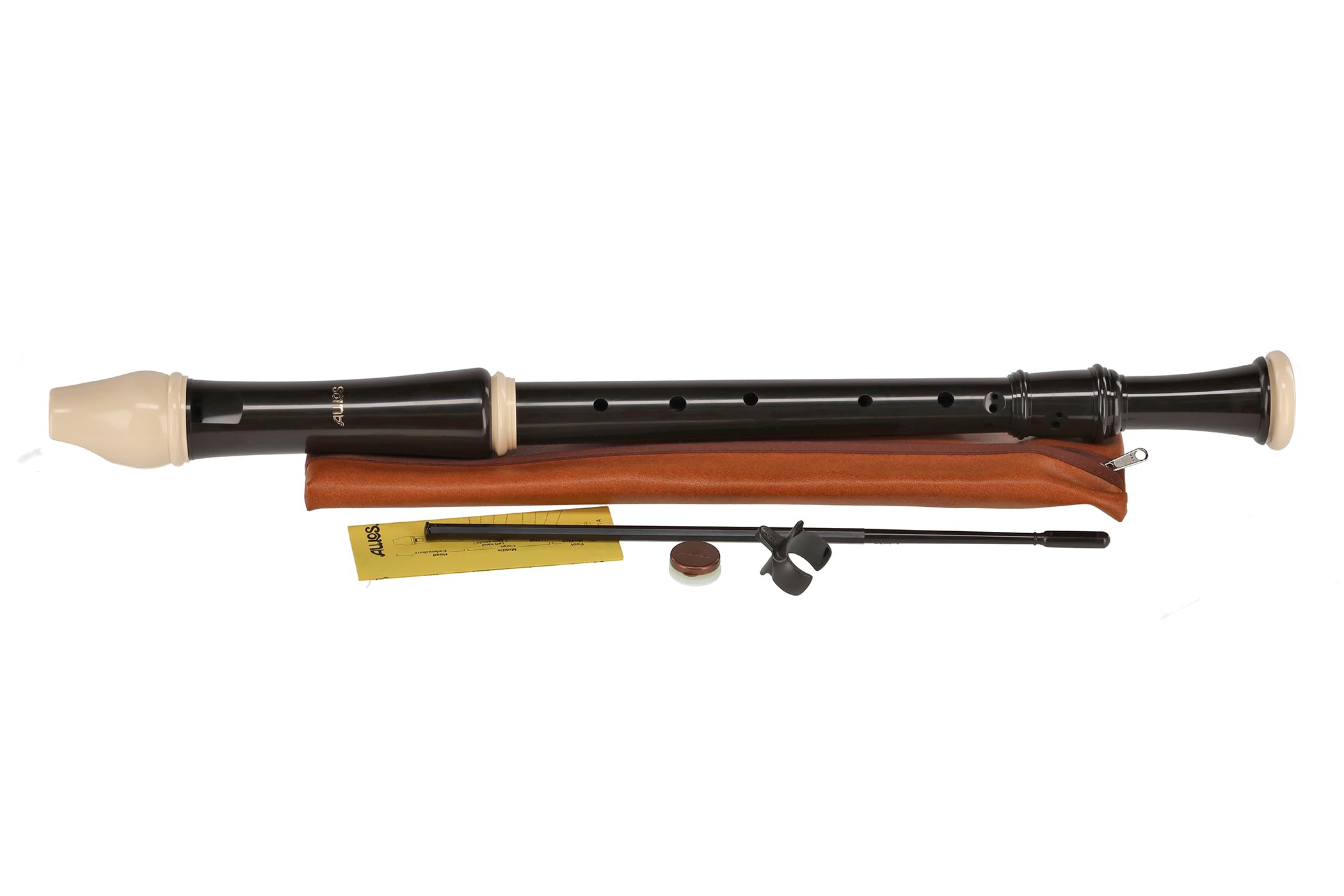
🎶 Elevate your sound with the sleek tenor that fits your hands and lifestyle!
The Aulos C-tenor recorder is a lightweight, durable ABS plastic instrument designed for beginner to intermediate players, especially younger musicians. Featuring Baroque fingering and a curved windway for improved intonation, it delivers a rich, clear tenor tone. The package includes a leatherette carrying bag, cleaning rod, joint grease, and fingering chart, making it a complete, ready-to-play solution that combines classic sound with modern convenience.
| ASIN | B00GQNRVKC |
| Best Sellers Rank | #42,083 in Musical Instruments ( See Top 100 in Musical Instruments ) #115 in Recorders (Musical Instruments) |
| Body Material | Abs Plastic |
| Color Name | brown/ivory colored |
| Customer Reviews | 4.5 4.5 out of 5 stars (405) |
| Date First Available | July 16, 2004 |
| Instrument Key | C |
| Is Discontinued By Manufacturer | No |
| Item Weight | 12.6 ounces |
| Item model number | 211A |
| Material Type | Abs Plastic |
| Musical Style | world-music |
| Product Dimensions | 24 x 1.75 x 1.75 inches |
| Proficiency Level | Beginner |
| Scale Length | inches |
| Size | Robin |
M**.
Nice instrument.
I just started fooling around with recorders again after I haven't touched one for 53 years (the 4th grade). Irish whistles too. Wood ones from iVolga are really nice sounding. Anyway, I recently purchased a Yamaha YRN-302B II, a Yamaha 402 B Ecodear, and a Woodnote Garklein, which I think is total garbage, and probably a cheapo counterfeit somebody switched that I unfortunately ended up with. Anyway, the Yamaha recorders are legitimate and are quite nice, and I especially like the Ecodear alto, but this Aulos 211A tenor is really, I think, a bit nicer looking, simply because it has a unique design with subtle differences that make it stand out as far as looks go. It's not overly done with white (ivory colored) accents like most Yamaha recorders are. Very subtle, very classy looking. It also has a nice mellow tone, but I really could not judge against a Yamaha tenor, because I do not own one. Because of it's size, it's going to take a bit of time to get my breath control in order, but I am making progress fairly quickly. Just don't expect to come directly from another size and dive right in. It is a bit of a curve as far as breath control goes. It's much trickier transitioning between octaves and right now, I'm getting a bunch of squealing. That's totally on me. It just takes time, practice, and very, very subtle changes in breath. I'm sorted at how little breath this recorder requires as compared to the others I've been playing with in the last few weeks. I'm sure an intermediate player would have no problem whatsoever. As far as fingering goes, I'm 6'2" and have the necessary finger reach for such an instrument. This one seems no more difficult to transition from than going from a Soprano to an alto did for me. I rather like the fact that there are no moving parts on this one. I really hate moving parts like keys, because, guess what? Moving parts wear, they make a bit of noise, and moving parts can break! I'm not sure, but would imagine the keys on other recorders have some kind of felt sealing pad on them too that will need replacement. Without keys, this recorder will truly last a lifetime with no maintenance other than keeping it clean. I would highly recommend this recorder. As a novice to the tenor, I feel it's something you can easily grow into, provided you have the necessary finger reach. It seems to be very well made and is also very classy looking. It comes with a snap-on thumb rest should you require one, and also a cleaning rod and joint lube. The zipper pouch is quite nice too. One thing I wish it came with is a plug that holds the mouthpiece and the end bell together in the bag as Yamahas do, however it does have end caps for the main body tube. There is a felt divider for mouthpiece and the bell sewn into the pouch.
D**Y
Aulos A211 Tenor Recorder
I bought this recorder a month ago and I enjoy it very much! I have played a German-fingered Hohner wooden soprano (the cheap one) for over a year, and of course I like the sound of a wooden recorder better, but I had two problems with it: first, I could never really play C# and D# well enough because it doesn't have double-holes. I know that baroque sopranos do, but the holes may be too small for my fingers to close one hole easily. Anyway, I don't have this problem with Aulos A211A, I could take C# and D# almost from the first day of playing, which means I can play along with almost any melody! Also, remember that other tenor recorders have a C/C# key, which means (as I understand) that you won't be able to play both C and C# in one melody. With this one, you can play anything you like. Secondly, the wooden recorder (I have two-pieced one) falls apart if you don't play for two days because wood gets dryer. I call it 'recorder jealousy', maybe you don't have this with more expensive wooden recorders? If someone could tell me, I would be grateful. Anyway, the Aulos is always ready to play - it's plastic so it doesn't matter if you don't play for weeks. I always wanted to have a lower recorder, and tenor's just good for me. You don't have to learn much new fingering after having played a soprano recorder because it's in C too. After having played piano for a couple of years it wasn't so hard for me to reach the holes with the fingers, the only problem being the G (a bit hard for the fourth finger of the left hand to reach that hole fast). As you all know, the only problem is that it doesn't hold water at all, as all plastic recorders don't. But I'm very glad I bought this recorder at a great price and I really enjoy it! A pretty case it comes in is worth mentioning too, of course.
D**L
Happy with my purchase
This recorder is touted as being easier for smaller hands, and I think that's fair. I was considering buying a different brand but didn't want to struggle too much playing a regular sized tenor because I'm a beginner recorder player. I do have prior music education with piano. This Aulos recorder is very well made. You really can't go wrong with Aulos. The color is listed as brown, which I really didn't care for because I just prefer black and ivory. But it actually just looks black, but like a "creamy" black if that makes sense. I have a comparison photo with my Harmony alto which is true black. But alone, the Aulos does look just black. My hands are 6.5 inches long with a spread span of about 7 inches. At the moment I'm barely able to keep the bottom holes closed on this tenor but I suspect with time I'll get better. I can't reliably play low C YET but I'm sure it's in tune, it's Aulos and I trust the brand. I'm about 5ft 3in so it feels a bit awkward for my right hand holding it down that far. Overall I'm really glad i got this tenor and not the longer one I was gonna go with. Maybe later on I will when I advance. For now though, I'm quite satisfied with this one and may just stick with this one.
A**L
Very well presented. Very nice tone. Sounds very pleasant and in tune. It is indeed easier to play compared to other plastic tenors like the Aulos Symphony or the Yamaha. I have small hands and I can tell the difference quite clearly, it is a dream for me.
T**E
Ich besitze bereits eine Tenorholzflöte und habe mir diese sozusagen als "Backup fürs Grobe" gekauft. Außerdem sollte man eine Holzflöte ja wegen der Feuchtigkeit nicht stundenlang spielen, da lohnt sich ein Zweitinstrument auf jeden Fall. Von allen Kunststoffflöten, die ich habe, würde ich diese als (im Vergleich zum Holzpendant) beste bezeichnen. Die Flöte klingt warm und voll, nicht schrill in den Höhen und trotzdem definiert. Die Tiefen sind gut, vor allem da die kurzmensurigen Holz-Standard-Tenöre in den tiefen Lagen auch nicht viel besser klingen. Die Flöte ist weich genug, um im Ensemble mitzutragen, aber auch fürs Solospiel ausreichend geeignet. Ich würde den Klang irgendwo bei Palisander verordnen. Es ist ja nicht das Holz das schwingt, sondern die Rauheit des Flöteninneren, die durch Verwirbelnden den Klang beeinflusst (daher werden Kunststoffflöten eher unterschätzt, weil viele Laien analog zu einer Plastikgeige denken, die vom Schwingungsverhalten physikalisch nicht gut klingen kann, was bei Flöten aber gar keine Rolle spielt.) Durch den größeren Windkanal im Vergleich zu Alt und Sopran macht auch das Kondenswasser geringere Probleme, ein bisschen Spülwasser, und das Problem ist gelöst. Wie in einer anderen Rezension beschrieben, finden sich bei genauerem Hinsehen tatsächlich bei jedem Loch feine Nähte in der Kunststoffoberfläche. Es sind aber keine Risse, sondern kommt wohl vom Guss- bzw. Pressvorgang, wo der Kunststoff unterhalb des Loches wieder zusammenläuft. Vermutlich lässt sich das fertigungstechnisch nicht verhindern. Ich habe mich für eine Flöte ohne Klappen entschieden, weil hier überhaupt die meisten Probleme bei Kunststoffflöten auftreten. Einziger Kritikpunkt wäre die Nachhaltigkeit der Flöte. Während eine Birnenholzflöte nach ein paar Jahren verblasen ist und kompostiert werden kann, hält diese wahrscheinlich irgendwo eingegraben für 27000 Jahre ...
S**E
Excellente flûte à bec Tenor. Elle m'a réconcilié avec les ténors du fait de sa facilité de jeu, de son et de souffle. L'écart des doigts est à peine (1cm en moyenne même pas) plus grand que celui d'une alto. C'est quand même exceptionelle de la part de Aulos d'avoir réussi ce coup de maître sans changer la tonalité de l'instrument.
C**N
Anche questo flauto l'ho comprato usato ed era in perfette condizioni. Del resto i flauti in resina ABS sono lavabili e non ci sono problemi di nessun genere. Direi che il rapporto qualità prezzo è comunque buono anche per il nuovo. Non penso che siano convenienti le alternative a basso costo. Che io sappia i tenore in plastica decenti sono i due Aulos e lo Yamaha. Questo è il modello meno costoso dei tre, l'unico senza le chiavi Do/Do#. Non penso sia una pecca: i tenore si fanno con le chiavi o senza. Vorrei tagliare la testa al toro: il tenore è suonabile per un adulto normodotato, semmai ci possono essere preferenze personali, ma a mio parere le chiavi rendono lo strumento più complesso. Se il flauto è economico lo sono anche le chiavi. Le chiavi si possono rompere. Chiudere un doppio foro è diverso da premere due chiavi. Io ho preferito la massima semplicità ed economia e lo strumento acquistato mi piace. Nella custodia in similpelle ho trovato la tavola delle diteggiature che comprende anche alcune diteggiature alternative che sono utili per eseguire i trilli. L'aggeggio per reggere lo strumento con il pollice destro è a incastro e può essere posizionato in maniera regolabile. Il suono mi sembra buono e dopo un po' di esercizio sono riuscito a completare la seconda ottava. Comunque si suona agevolmente in tutto il registro medio Sol-Sol, mentre i bassi sono, com'è naturale, più difficili. Sugli acuti ci vuole un po' di pazienza. L'estensione è molto bella per chi deve suonare lentamente perché o non è abbastanza agile da divertirsi con flauti più corti o non ama infastidire il prossimo con un registro alto troppo acuto.
R**L
This tenor flute was as described. Sounded great but my problem is that my hands and fingers could not reach every hole perfectly. An online review said it was made for smaller hands but it was still too big for mine.
Trustpilot
1 month ago
1 week ago