🚗 Transform your garage into a rock-solid masterpiece—because your space deserves the best!
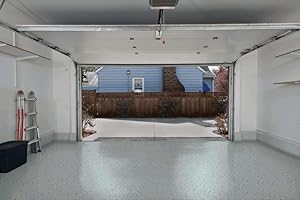
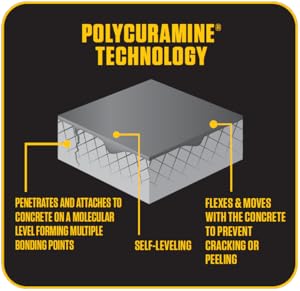
Rust-Oleum 293513 RockSolid Polycuramine Garage Floor Coating is a premium 2.5 car kit designed for interior concrete surfaces. Featuring a patented polycuramine formula that is 20 times stronger than epoxy, it offers a durable, high-gloss terrazzo finish resistant to chemicals, cracking, and hot tire pickup. The low odor, low VOC coating is walk-on ready in 8-10 hours and vehicle-ready within 24 hours, covering up to 500 sq. ft. per kit. Ideal for garages, basements, and workshops, it combines professional-grade performance with easy application for a showroom-quality floor that lasts.

| ASIN | B06XJ17JVD |
| ASIN | B06XJ17JVD |
| Batteries Included? | No |
| Batteries Required? | No |
| Color | Gray |
| Coverage | 500 square feet |
| Customer Reviews | 3.9 3.9 out of 5 stars (1,517) |
| Customer reviews | 3.9 3.9 out of 5 stars (1,517) |
| Date First Available | 3 November 2017 |
| Date First Available | 3 November 2017 |
| Finish | High-Gloss |
| Included components | (2) Pre-Tinted Polycuramine Burst Pouch, (2) Foam Rollers, Concrete Etch, Decorative Chips, Instructions |
| Is Discontinued By Manufacturer | No |
| Item Package Quantity | 1 |
| Item Weight | 7.17 Kilograms |
| Item model number | 293513 |
| Item model number | 293513 |
| Manufacturer | Rust-Oleum |
| Manufacturer | Rust-Oleum |
| Part number | 293513 |
| Product Dimensions | 21.29 x 33.66 x 23.83 cm; 7.17 kg |
| Product Dimensions | 21.29 x 33.66 x 23.83 cm; 7.17 kg |
| Size | 2.5 Car |
| Special Features | Washable |
| Specific uses | Interior/Exterior |
| Style | 2.5 Car Kit |
M**I
I, like everyone else, researched this process for weeks before deciding on the Rest-Oleum Rock Solid Garage Kit (the 20X version) in light gray. After reading many many reviews about the problems where people ran out of product or the coat was too thin or they could see color of the concrete below due to being too thin of a coat, rollers falling apart etc., I decided I did not want those issues so I started doing some math. My 2 car garage is exactly 410 Sq feet. There are a couple of nooks so it is not exactly square but I meticulously measured everything to make sure I had exact sq. ft. numbers I was trying to cover. From the comments of others, I deduced I would need two full 2.5 garage kits (4 burst pouches) to get the coverage I wanted. Preparation was a bear for me. The concrete is almost 60 years old and there were plenty of cracks and a lot of the rocks in the old cement that were just under the surface popped so I had significant pitting. They must have used a percentage of an inferior type of stone that was black and very soft. When I was doing my prep, the pitting was all because of these softer stones that seemed to have just turned to a black dust when I scraped during my process of fixing and leveling. To make matters worse, 20 years ago, I used an epoxy paint so I had that to deal with. I did not want to go thru the process of grinding the entire floor so I used my portable hand grinder with a grinding wheel and then really tuff sanding disks (about 40 grit I would say) to grind out the cracks and pits as best I could. I used self-leveling cement primed with the Self leveling solution that is supposed to help the cement adhere to existing cement in the cracks and pits then sanded that cement work when it dried using the grinder to get everything level. Perfect is the enemy of good so I decided I would use the Rust-Oleum Re-Coat Primer, to save time. I degreased the rest of the floor with Simple Green and got on my hands and knees and scrubbed the heck out of it hard with brushes and sponges to get every trace of dirt, spider poops, any oil etc. off. When I was satisfied with the cleaning and restoration, I used about 1.75 gallons of the Re-Coat primer and followed the instructions and let that dry overnight. In my mind I wanted to use 100% of the 2 Epoxy Kits that I bought the next day. I wanted a surefire method to evenly coat the floor with my 2 kits so I used a pencil to split and clearly mark my 410 Sq ft int 4 exact 103 Square foot sections. My thinking was I would use 100% of a burst bag in each quadrant area. This worked great for me so you might want to consider doing something similar. I used the foam rollers that came with the kit and had no trouble with them. In fact, I used the same roller for all 4 burst bags with no issues until literally the last 3 square feet where it started to come apart but it finished like a champ. That roller gave its all for me. I had gone out and purchased a 3 pack of top quality purdy 3/8 inch nap rollers just in case the foam rollers were really the disaster everyone claimed but I never used the nap rollers but I will for future painting projects. In my case the temperature was about 55 degrees so that may be why the epoxy never even came close to getting tacky. I used a 2 ½ inch brush to cut in the edges. I basically followed the Video instructions, kneaded the burst bags for a good 3 minutes, cut the pouch corner and poured directly from the pouch in 2 or 3 inch ribbons. The rollers basically pushed around a “puddle” of Epoxy. It filled in 95% of the imperfections as I went and used up the entire pouch in that 103 square foot section. As I was rolling my goal was to do more pushing and pulling of the puddle than “painting” and there was no roller noise one gets when painting say a wall where you hear the paint “ripping” off the roller. It was mostly silent so keep that in mind. I was not sure how heavy a flake I wanted but I did read this stuff is not designed for a full flake or even a heavy flake but I was clueless how much I would actually need and the last thing I wanted was to run out of flakes and have 80% flaked one way and the remaining looking like I ran low etc... So I purchased 2 more pounds of the Black and White flakes, took all 4 bags of flakes from both kits and emptied the blue and grey chips from the kits and my black and white extra chips and mixed them all together in a 12 x 12 box. So my flake is a custom blend of the kit flakes with the black and whites mixed and its awesome. I think each blue flake bag in the kit was ½ pound so I had a total of about 4 pounds of flakes total to use. I ended up with about 3/4 pound extra at the end and I got the exact flake density and colors I wanted as I went. For me, since the air temperature was on the lower range for the application it worked out pretty good. I got a nice slow cure. For a hot minute I actually got a bit nervous it was not going to cure correctly. I finished at 6 PM and checked it after 2 hours, 4 hours, 6 hours and even at 6 hours it was still like I just rolled it out so I was having a heart attack something went wrong. I went to bed and the low temperature that night was 49 degrees and got up and checked it at 8:00 AM (14 hours post completion) and it was still slightly tacky but firming nicely. Certainly, no way was I going to walk on it per Rust-Oleum’s claims of walking on it in 10 hours… No way for me. It warmed up to the mid 70’s during the day and by about 11AM it seemed much firmer but I could still take my fingernail and push into it and it was soft yet. By 4 PM it seemed set up pretty good. I made the mistake of walking on it with my socks and I noticed that the moisture from my feet was actually leaving like ghost prints on the shine and I have about 3 foot prints where the gloss is slightly marred with the outline of my foot and toes. Fortunately, I detected this right away and let it cure overnight again in the warmer temps before messing with it any further. Next day it was truly “Rock Solid” this stuff is tuff as nails hard and you cannot even scratch it but don’t under estimate cure time in cooler conditions or you will damage all your hard work. I think it turned out awesome and I enclosed a couple pictures. The wife and I had two other couples over last night for dinner and everyone was in awe of my project. I can truly say this is one of the most satisfying projects I have done in a long time.
P**C
As all other reviews have said - prep is most important. My garage was polished concrete 28 years old. Some oil stains and very few minor cracks. Lots of shiny surfaces. I have a 4 car garage and used 2 boxes of 2.5 glossy gray polycuramine. I was so paranoid about usage from other reviews, I could have and should have put on a little heavier in the beginning. I had 1/4 of the fourth bag left over. Total of 720 sq. feet. I power washed, grinded the floor with a 4 1/2 hand masonry wheel on oil and shinny spots. Spent several hours doing this. Then I acid etched and power washed again. I still had a few spots that needed grinding and did them and then power washed again. I used a blow dryer to remover the fine concrete dust from tough up spots. I had 4 fans going x 48 hours to ensure that concrete was dried out properly. Definitely have attest one other person to help with application - their job - paint 3" trim strips around perimeter and snowflake the chips ( meaning literally throwing the chips up in the air - not outward - but upward and allowing them to float - snowflake - back to the concrete surface). Easy to do and fun. Think fairy dust! This is happening while the other guy (me) pours 2" strip across the 4'x4' working space and then rollers it in. The included rubber rollers worked fine. I used purdy 3/8"nap rollers for clear coat - these worked well also. I used one rubber roller per bag - they usually started coming apart at the end of the bag. The 2 of us finished application in 2 hours. Had plenty of time for application. I did set timer on my apple watch for 3 minutes for the mix and then set timer for 1 hour for application. Usually done in 35 minutes per bag. Once I saw how much application covered per bag and realized we had plenty of time - low stress once process got going. . I had no bubbles and only 5-6 quarter sized voids in whole garage. Didn't see until next morning when polycuramine was hard. Definitely ok for foot traffic next morning. Temperatures ranged 60-78 degrees over the 24 hour period. No car parking until 48 hours. Then when I backed out - where tires sat - some cloudy tread marks that did not wipe away. At 48 hours applied clear coat with anti-skid - one bag covered whole 4 car garage - stirring every 10 minutes to keep mixed. Next morning saw where I missed some spots - very hard to see unless have right angle. Really need to move around to see shiny vs cloud clear coat surface. Be diligent about this. I had to do a second coat the next day (which was fine with me) to cover missed areas. No missed areas this time. Overall, prep was most work. Application fun and easy with a buddy to help. Looks amazing.
F**O
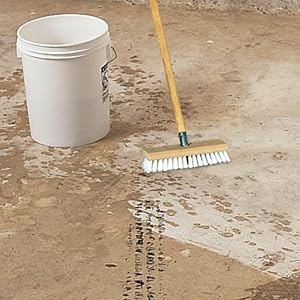
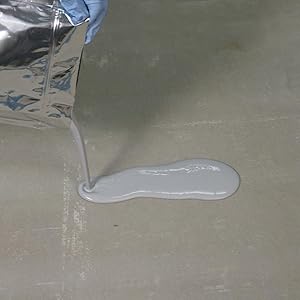
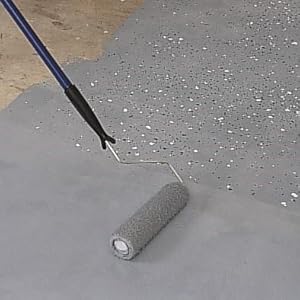
I give this 4 out of 5 stars only because I believe Rust-Oleum should provide 10% more epoxy in these bags to ensure coverage is possible for the suggested area. The finished product is very nice. Shipping was very fast and at $167, this is the cheapest price I’ve seen yet for the 2.5 car kit (normally $214 in my local stores). There are tons of videos and explanations on how to apply epoxy floor coating, but I wanted to share my experience as well in case something I did differently might help someone else. This is my third time using this product specifically and I wanted to pass a long some of what I’ve learned so far. Before beginning, check all your supplies. The kit should come with two bags of epoxy sealed ( I have purchased these where they bags are slightly leaking, make sure to return and get a new one if that’s the case), two rollers, two bags of flake coloring and two bags of floor etching. If you’re using a clear coat be sure to check that kit as well. Sometimes items will be missing from kits or the contents will be damaged. 1) vacuum the floor/cracks and wipe any easily removable contaminants from the floor before etching the concrete. prep is key! I did not use the acid etching method for my floor, since I’ve heard mixed results on that. Instead, I prefer to use an angle grinder with a 4inch cement grinding blade and a dust shroud with shop vacuum attachment (see pictures). The first time I did one of these floors I used a big floor buffer and was never able to grind through everything (oil spots), couldn’t get in the corners, and even with the shop vacuum attached to the floor buffer it still created a lot of dust. For the rental fee of the floor buffer you can own an angle grinder with all the necessary attachments (minus the vacuum probably). The dust shroud I used on the angle grinder really does capture 99% of all dust as advertised and it took me 4-5hrs to angle grind one garage spot. Aim for the same whitish color everywhere on the the cement after grinding; any dark spots indicate an area that might have had an oil spill or other contamination and you should do your best to remove this dark area. 2) check floor temperature using an infrared laser thermometer. Harbor freight sells these for $18-60 typically depending which one you want. See picture. Be sure the floor temperature is above 55F is my suggestion. Some people might feel comfortable with lower temps but it will slow or even stop the curing process depending how low the temperature is. I have a garage heater I used to help control the temperatures for this job. Ambient temperature was 74F while the coldest spot on the floor was near 65F for reference. Outside the garage was near 40F. Humidity should remain below 85% according to Rust-Oleum; mine ranged 61-72% from what I saw. 3) use the Rust-Oleum Concrete Patch Repair kit epoxy. It comes in a small whiteish box and you can see how far one 24oz kit went in the photos I’ve uploaded. I mixed this epoxy with a putty knife in an old shoe box and used that as my trough for the mixed epoxy while I moved around the garage. If I had wanted to fill all the cracks between the cement slabs for this one garage spot I probably would’ve needed 3-4 more kits. This crack filler product does a great job, but at $1 per ounce it is expensive. I filled cracks up to 1/2 inch wide and deep for this particular epoxy coating and did not fill the cracks between the cement slabs to save some money. (Filling cracks prevents wasting the floor epoxy which will flow into cracks very easily.) Once the filler epoxy has hardened (~8-20hrs depending on your conditions) be sure to grind the filler epoxy to level it out and also to rough it up so the floor epoxy will stick to it next. 4) vacuum the entire floor area to be coated. I used a shop vacuum with squeegee attachment then a Dyson house vacuum with the motorized head to scrub the concrete pores. 5) wipe the entire floor with acetone and some rags. I’ve found this can pick up additional particulate that the vacuum misses. I allowed the acetone to dry for 12 hours with fans running while looking for any dark spots in the cement (wet) before continuing. If you note a lot of moisture in your cement you may need to perform additional sealing of the concrete before epoxying the floor (see Rust-Oleum moisture stop). Water seeping in to the concrete from the underside can cause the floor epoxy to peal up over time and even to crack the concrete. To determine if there’s a moisture issue, Rust-Oleum suggests using a piece of plastic taped to the floor for 24hrs to see if moisture builds up under the plastic. 6) prepping the epoxy... make sure to have your paint roller ready and colored flake accessible. Before breaking the seal between epoxy A and B sides, I mixed around the contents of each separately in case they had become separated or built up in one corner inside the bags (these can sit on the shelf for years in a store). Then, on the floor, slowly roll part A side of the bag (like you’d roll a sleeping bag) toward part B and you should feel the seal in the middle “pop” open and both parts will begin mixing. Very important to mix for the suggested minimum time 3-4 minutes... I add one extra minute of mix time to be sure. Roll the bags around, press the edges, do your best to make sure parts A and B are completely mixed together. 7) Start at the furthest point from where you plan to exit the area after coating the floor. Cut the corner of the bag off to allow a small opening to pour from. Pour a line of the epoxy three fingers wide a few inches from the wall. I worked from the back of the garage to the front so I was doing 10ft wide sections at a time. The roller will absorb a bit at first, but then will act more like a squeegee pushing the epoxy around. Avoid pushing any epoxy into deep cracks as this will waste a lot of material. Attempt to keep the same thickness of epoxy in all areas of the floor to avoid discoloration. I was able to complete one 10x20 foot garage area with one bag of epoxy, but I note it appears thin in a couple spots (different color grey finish when dry) due to thin spots most likely. Unfortunately, I believe for perfect coverage, 2.5-3 bags are needed in a 20x20 garage depending on how many pours and pits the concrete has. If you want the color flake, I suggest laying 4-5 feet of epoxy on the floor in front of you, then throwing the flake (throw up and let it fall on the epoxy rather than throwing down. It will disperse more evenly this way) 8) leave the garage closed and check back in 8hours. If it is still tacky (not gummy) then check back in another 4-5hrs. I had a little on my paint roller still so I was able to check that for tackiness before I went back to the garage (trying to keep the heat in the garage). After 12hrs my epoxy was hard enough to walk on. I crawled around and used my hands to search for any sticky spots at this point. The first time I used this product I believe it was not mixed long enough before applying and/or the floor was not completely ground down and the epoxy did not cure in 60% of the floor. We had to use grinders and acetone to remove this area and then grind/rough up the cured spots before applying a new coat of epoxy. 9) once the epoxy is cured, I chose to add the Rock Solid clear coat for added strength/durability. Since the cement has been coated the pours are sealed and one bag of clear will cover a 20x20 garage floor nicely. After mixing the Part A and B for the clear, I decided to add the provided anti slip additive. I cut the top of the bag open completely and poured in the additive. I worked it around in the bag a bit before starting to pour it out around the floor. Be sure to continue to stir the additive as you’re pouring, or it will all settle to the bottom. Similar to laying the first epoxy coating. Note, This will spread much easier over the already epoxied floor, so you don’t need to pour as much out as you did initially when coating the floor. 10) wait 8-12hours and check back on the curing floor. Solid is goo, tacky is okay, gummy might 11) I wait a full weekend before moving everything heavy (tool chests) back on the floor just in case some spots are still curing. Good luck! EDIT: if you are applying the Rock Solid Clear, I have recently found better results to throw the anti slip additive on the floor (similar to throwing the colored flakes) rather than adding it to the clear epoxy while it’s in the bag. This prevents clumping of the anti skid material when the clear coat hardens.
S**M
While researching about doing epoxy on my own, there were good suggestions about Rust-Oleum products. I’ve only used their paint products before, so wanted to try this based on that trust. Preparing my garage was the challenging part and took almost 2 weeks. The best part is they’ve included a complete step by step tutorial video in the Amazon product page itself which is super helpful. I just followed that video and this is my first time doing an epoxy but the results are pretty good. The kit is awesome and includes etching chemical, rollers, decorative chips and 2 pouches of polycuramine epoxy product. I’ve a 2 car garage with a size of approximately 450-460 sqft. Though they mentioned 1 kit covers 500 sqft, I bought 2 since there’re some extra areas and corners in my garage. But turns out I had to use 3 pouches in total to cover the entire garage. The dry time is really quick as they mentioned. Please note that there’s no need of a clear topcoat as they suggested. This product itself is glossy enough and holds good adhesion. I was able to complete the application for the full garage in less than half a day. After it’s completely dried, I washed it with water and it isn’t that slippery while wet. It’s also easy to clean with just water. They’ve claimed this polycuramine product is 20x stronger than epoxy. I’m hoping to see the results in a longer run. But overall it’s a great product for DIY epoxy project to upgrade the garage for a valuable price.
G**S
The finished product is very nice and it does hide imperfections so I am happy with the results. I did 3 sections of our basement floor (over 600 sq ft), over 3 separate events a few weeks apart. I learned some lessons after the first application and suggest anyone take heed. - Floor prep is paramount. There is etch included, which will work great if you are doing an area that can be hosed off. I understand it is mostly for bare concrete. Previously coated concrete needs to be ground down some. I used an angle grinder with dust shroud, dust extractor and grinding blade. At the very least use a scraper, wire brush and sandpaper. There’s lots of prep work on your hands and knees. The concrete itself needs to be sound and unbroken. I used some fast cure patch and hydraulic cement for some last minute touch ups. - Use a primer. The Rustoluem primer for previously sealed concrete worked well because the grey color tinted the floor if you decide to only do one coat. If you use a different color than grey or a different primer, use 2 coats of the epoxy paint. - Preplan your work. Once you mix the 2 parts the clock starts ticking. Have everything you need laid out. - Get yourself some spiked shoes and a squeegee on a pole. It’s too time consuming to use the method the instructions call for. The usage time of the paint is really only 45 mins - 1 hour. To try and dump, paint and flake each 4’x4’ area (as recommended) is not realistic to have enough time to use all the paint and cover even 200 square feet, which is really the limit on each mixture. With the spiked shoes, you can cut in the entire area, then dump the mix over the 200 sq ft and use the squeegee to spread it out evenly. Then use the supplied paint roller to back roll the entire area for a more uniform finish. Finally spread the flakes over the whole area if it’s your only or second coat. This is a much more efficient method to apply the paint and will give you plenty of time to work, as well as a more even application of paint and flakes. The cost of the spiked shoes and squeegee was about $30, but well worth it. - 2 coats are needed for complete coverage of 200 square feet, about a day apart. You can get away with one if you have a good primer applied which closely matches the color of the epoxy paint (see above). - Use a respirator and ventilate the area after application. This paint stinks for hours! - Have a work area set up immediately adjacent to the area being painted. This will help control keeping the paint from going where you don’t want it. Mineral spirits worked great to clean up everything. I have to mention Rustloum’s customer service. They helped me out a lot via email correspondence with how to fix my first application ending up with very noticeable dark areas. Very helpful and I recommend contacting them with any questions or concerns.
Trustpilot
1 month ago
1 month ago