Desert Online General Trading LLC
Dubai, United Arab Emirates
Desert Online General Trading LLC
Dubai, United Arab Emirates

Full description not available

G**D
heartrending and fantastic!
An amazing read which grabs you and draws you in to the horrors which awaited women in Afghanistan through the ages. The hope which it is written with and the understanding that that hope has been dimmed recently makes it more than bittersweet.
B**N
Harsh reality of Afghan women
Nice story of two women living side by side with years apart. Story of courage and resilience. At times, it dragged, but overall, a good read.
C**E
Beautiful and brilliant
I was hooked on this book immediately. The reviews were great and it did not let me down. I loved every part of it! I am now a fan of Nadia Hashimi and will look to devour her other books!Pls read you will not be disappointed
A**R
Such a good read
I loved this book. I would highly recommend it especially if you’re interest in Afghanistan. Really good story. Couldn’t put it down and didn’t want their stories to end.
J**S
Heartbreaking in content but over-complicated in structure
The book is well written and, like the novels by Khaled Hosseini: The Kite Runner, and A Thousand Splendid Suns, it is both astonishing and heart breaking as the social and cultural mores of another world are opened up and the brutality and beauty of life is allowed to run riot. That said, I am not sure that the interweaving of two generations really worked for me. I am not sure why the two stories, woven through the book, didn't hang together for me - as the interweaving of separate lives through a novel is quite a common approach. I had to concentrate to work out which generation I was reading about. Perhaps the differences weren't sufficiently visible. The return to the past generation, at the end of some of the chapters, was a little manipulative; it didn't flow well. I ended up jumping chapters to complete the story of one woman (Rahima) and then going back through the book to read those chapters devoted to the life of the great great grandmother Shekiba. Either story, set by itself and developed into a single life journey would have worked better in my view.
A**R
a world of suppressed women
This story is told through generations of individual women whose lives were not their own in an unforgiving regime. Women who were intelligent but uneducated until or unless they managed to see that there were alternative options but for which they had to take great risks.
K**I
Heartbreakingly good
A beautiful tale that will stay long after in a readers mind. The characters spanning from different times weaves a story of the infamous Shekibah and her struggles of an Afghan woman and her bravery and courage she shows despite the hardships she endures. Her never ending optimism and tenacity in a patriarchal society is an inspiration to all.
J**T
Brilliant
Although a novel, it read like an autobiography. Totally absorbing, emotional and powerful. Gives an insight to the everyday lives of women and their children, living in communities controlled by tradition. Kite Runner, Thousand Splendid Suns, this is so much more!
J**D
This book will open your mind.
We hear about the treatment of women in some countries.Read it from a survivor point of view.If you like the KITE RUNNERYOU WILL LOVE THIS BOOK.
A**H
Muito interessante e leitura agradável
O livro descreve a vida de duas mulheres afgãs em uma sociedade machista. Traz características e a compreensão de uma cultura diferente da ocidental. É de fácil leitura e envolvente.
N**S
A powerful and sad description of the girls situation in Afghanistan
I loved the twist in the book about how girls can transform into boys in families without boys. Against all odds and despite the grim life that faces girls in Afghanistan, education and resilience give hope for a better future. I loved the way the 2 stories of a girl and her grand grand parent are narrated and how they keep the drama and the suspense in the story.
M**3
Nadia Hashimi has gifted the world with a wonderfully written, mesmerizing look into a fascinating family drama ...
In her debut novel, Nadia Hashimi has gifted the world with a wonderfully written, mesmerizing look into a fascinating family drama set in Afghanistan. The main protagonists are Rahima, a young 21st century Afghani girl and her great-great-grandmother Shekiba who lived in the early 20th century.The story shifts between the young women who share not only DNA, but the fact that both were allowed for awhile to dress and live as males. Under a custom called bacha posh, families who do not have sons or have a single son, may allow a daughter to have her hair cut in boy fashion, don boy’s clothing, be given the freedom of boys to attend school, play in the streets, do marketing and price haggling for the family, earn money for the family, freed from household chores, be favored by the father, and receive the best food at home. After the onset of puberty, the girl has to transition back to a traditional Afghani female. Wherein lies much of the poignancy of this exquisite story. Once they have tasted freedom, recognition and respect, the bacha posh can have difficulty adjusting back to their culture’s traditional female role.Rahima, allowed to become a bacha posh, is one of five daughters. Her outspoken, sharp-tongued maternal aunt, Khala Shaima, never married due to a physical deformity, visits the family frequently to urge that the Rahima and her sisters be allowed to attend school, that they are as worthy as boys. She also tells them many stories, including that of Shekiba, their great-great-grandmother. Although the girls are allowed to attend school for a short time, after an incident with boys harassing them in the streets, they ultimately end up homebound. Rahima’s father is not a good provider, had spent much of his young adulthood fighting with the mujahideen against the Russian occupiers. His re-entry to civilian life did not go well. Between his substance abuse and his lack of a son, he was an angry, bitter man. His continued alliance with the local warlord from his mujahideen days will have drastic consequences for his family.Shekiba was the daughter of a happily married couple. Her father was a farmer who could make any crop grow, a true man of the earth. He taught all of his children to read. Her mother, two brothers and a sister died in a cholera outbreak, leaving Shekiba and her father working the farm. After father dies, Shekiba tells no one and continues to work the farm on her own, dawning her burqa if anyone approaches the homestead. Eventually her deception is discovered, she is moved to her grandmother’s house in the family compound and treated worse than a servant. Her spirit is fatigued at times, but never defeated. Shekiba becomes a female dressed as a male in the king’s harem, just outside the palace. The king has learned not to trust male guards.The description of Shekiba’s life in the harem is interesting and very compelling. The prestige of the concubines, the size of their apartments, their wardrobes and jewelry, were determined by the favor they held with the king. For the most part, this was dependent on the number of male children the concubine bore. The same measure used for Afghani wives, actually. Despite the luxury and leisure afforded concubines, there was always a shadow of danger hanging over them in their silk and jewelry-laden prison. Displeasing the king could be deadly. There is a vivid description of a stoning of a concubine who has entertained another man.This story is fascinating. Not only is it beautifully written, but the two arcs of the story, Shekiba and Rahima, based a century apart, show the similarities and contrasts of the female role in Afghani society. Shekiba saw the beginnings of modernization for Afghanistan under King Amanullah and Queen Soraya which included the expansion of the roles for women in society (true historical characters). A century later, Rahima actually participates in the Afghani legislature as assistant to a female representative.King Amanullah’s efforts to modernize Afghanistan a century ago were met with resistance and rebellion, eventually forcing him into exile after less than a decade of rule.It is still an open question whether today’s efforts to modernize the country and expand the role of women in the Afghani culture will succeed. The message of this book is that through the indomitable nature of the human spirit, there is hope, no matter the external circumstances of one’s existence.I gave this book a 4.75/5.0 rating. I hated to put it down to work, eat, sleep, and actually read it while I was on the treadmill and bike at the gym. I have barely sketched the stories of these two women; there are many other characters in the book who are just as mesmerizing. The most intense focus is on the women, but the men’s stories are represented as well because more than anything else, this is a novel about family. The men’s fates are also shaped by cultural expectations and how they use the power endowed by their societal structure has consequences for everyone around them. Some choose to brutalize others with this power while other men choose kindness, empathy and love.
D**I
helps her mother with the house-hold chores and keeps her father happy with the delusion of having a son
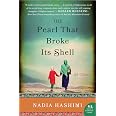
The Pearl That Broke Its Shell is Nadia Hashimi’s debut novel. Her fiction mostly portrays relationships and plight of women in war-struck Afghanistan. The Pearl That Broke Its Shell is a story of two young women who undergo various feats to overcome the tremendous challenges thrown in their face by their respective destinies. Though both of them are centuries apart in time, they are both forced to live a part of their lives posing as boy/man. The freedom that they tasted in the garb of opposite gender is something they could not have had experienced as a woman. This is a story of Rahima or Rahim-the bacha posh and Shekiba or Shekib- the woman-man guard of the royal palace.Rahima is second of four sisters in family of a drug-addict father who works for a war-lord in a war-struck Afghanistan. She is made to pose as bacha-posh, a boy, as her mother is not able to bear a son. The arrangement works well for everybody as Rahim, the bacha posh, helps her mother with the house-hold chores and keeps her father happy with the delusion of having a son. But this fairy-tale comes to an abrupt end when the war-lord for whom Rahima’s father works offers to marry Rahima. Her sister, Parwin, is also married to a cousin of the war-lord. Though the sisters live only a wall apart in their new homes, they hardly get to see each other while they struggle in their married lives.When Rahima’s aunt tells the girls about Shekiba, their great great grandother who has had an equally challenging life many centuries ago, Rahima draws inspiration from the story of her. Shekiba who had half of her disfigured due to an accident in her childhood, is abhorred by everybody around her. She is known to bring bad luck. But her life takes a turn when she land’s up in the royal palace. She dresses up as a man and guards the harem of King’s mistresses. She feels free walk about in pants and without the chador( the head scarf) but his freedom comes with a price.Though Rahima and Shekiba’s stories are depicted in different times, beautiful narration by the author ensures that the reader is smoothly transported between the eras and does not feel lost. One might feel sympathetic about these women but also praises their courage and perseverance. The subtle message that the plight of women in Afghanistan has not changed much over the centuries is not lost.Having read two of Hashimi’s novels, it’s easy to be assured that you will never be disappointed with her books. Reading the tales of hardships portrayed in her books sitting in a comfortable room makes you grateful for what you have. But you are also certain of change and progress by the optimism scattered in the stories. Rahima and Shekiba story of adversities and hope certainly deserves to be read.
Trustpilot
2 weeks ago
1 week ago