Desert Online General Trading LLC
Dubai, United Arab Emirates
Desert Online General Trading LLC
Dubai, United Arab Emirates
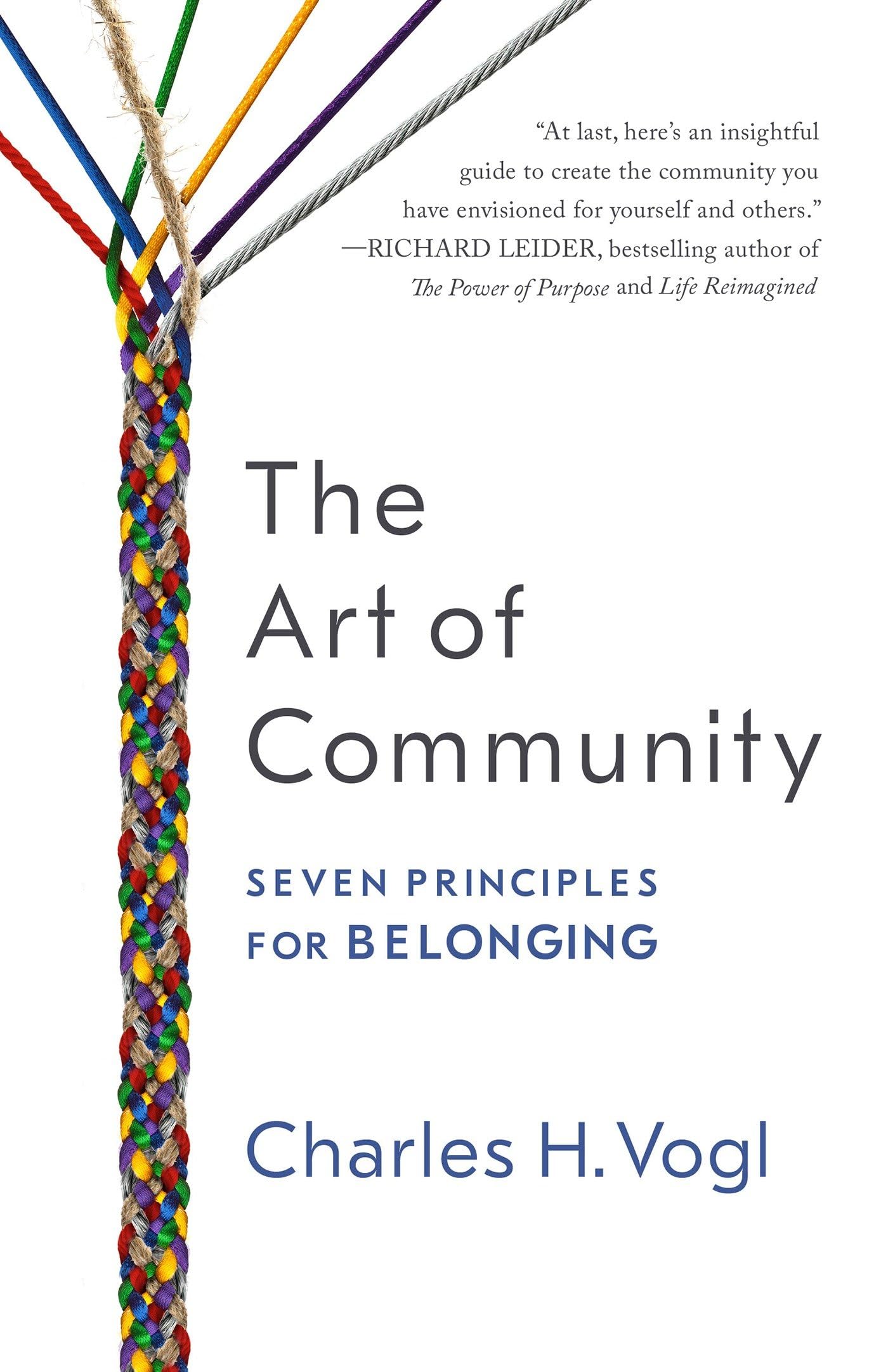
The Art of Community: Seven Principles for Belonging
S**B
A New age of Community is dawning
I just recommended this book today over lunch with a friend. She is a neighbor of mine who is constantly creating communities of her own. She's good at breaking down the barriers that separate people creating a space where connection and belonging can occur. As I left her driveway she handed me an invitation to her annual Octoberfest that she hosts. I recommended the book to her because I think it has the potential to take her raw and innate ability and make it more conscious and more effective.I sought out this book because I administer a facebook community and wanted to see if I could enhance the sense of belonging with the members. Charles Vogl has given me a road map to do so. For example, because of the Symbol principle and the Inner Ring principle I have selected a strategy to reward members for their contributions. It is my intention to create a greater sense of belonging and connection with those who are most active in the community. Anyone who runs a membership site must read this book. The book has given me practical (and fun) ideas I would not have thought about on my own.Lastly we are entering a new age. In my opinion, the "Information" age with its ability to digitally connect us has up until now made us all more isolated. There is a real hunger for deep connection and belonging. This book is a talisman of the coming of a new age of "Community". Vogl has collated the ancient wisdom of rituals and story telling and packaged it for the needs of the current age.
S**K
A guidepost for a more fulfilling society
The Art of Community brings clarity to the ethereal nuances that make strong communities. When I talk to many of my fellow organizers, they have various opinions on why certain communities thrive, but most have always said they only 'know a strong community when they see one'. Charles has done the hard work of distilling the practices that likely drive the success of these strong communities giving organizers a structure to draw from.However, his inclusion of the word 'Art' in the title is purposeful. The book is not a prescriptive set of steps to be followed. How to implement the principles and what exactly needs to get implemented is specific to the community. Charles talks at length about formal and informal implementations of the various principles and how they work in different ways to make a community successful. For example, he doesn't assert what values make a community successful, just that defined values, whatever they are, help members understand the community they're a part of.For any leader looking to create a lasting organization, group, or movement, Charles' book provides an excellent mental framework. It provides insight for avoiding internal problems and confusion of young communities, and explains how longstanding communities can fail to mature and atrophy. In our modern crises of community, it's a much needed guidepost towards a more fulfilling society.
L**E
A Little Difficult For An Introvert
It took me a little time to get into this book because I am an introvert. The book showed me many things I took for granted in community and the reason that I have left so many organizations that I belonged to at one time. I got nothing or little out of the relationship. As a pastor, it reminds me of things I need to do not only in the body but all of the groups functioning in the body.
L**S
Once you've read and understood the ideas and examples, you'll be far along to being able to do it-- to build community!
All my life (or at least since Jr. High School) I've been intensely interested in starting and fostering organizations, generally non-profit and intended to help others. I've done a number of things to foster success and growth which seemed fairly obvious (but seemingly aren't). Out of this interest and after an earlier undergraduate degree at Harvard and a M.A.in Economics at the Wharton School U. of Pennsylvania, I eventually returned to get a Ph.D.in Social Systems Sciences, an elaborate title for the study of organizations and management. Since then I've been a college professor teaching strategy, organizational development, management and qualitative research. Yet until this book by Charles Vogl, I never had a theory or framework for what I had long been doing and wanting to do better with organizations. Turns out that the central issue, not the only one of course but critical, is building community which I had been doing but without a full understanding of how the process worked. Charle's book has helped me understand the whole process much better and to immediately see many ways in which my former efforts, and hopefully my future ones, could be significantly improved. I'm grateful for his work and having found it and encourage anyone with this interest to read it and begin to apply the clearly described and exampled principles.
A**L
Good read
Good read
A**R
Short introduction
This book is short. It compiles a number of keys to building community with an eye to lessons from religious practices. O far prefer The Art of Gathering as a source for building community, though Vogl's inner rings and guardians are important reminders on how to maintain community.
D**A
This will change the way you approach any group of people!
I would recommend this book to anyone trying to gain a better understanding of what makes communities, whether this is a group of friends or a national organization, strong and meaningful. If you are the leader of a community or someone in search of a group you belong to, the elements of community that Charles Vogl lays out will stick with you. I began to think of the friend groups, student organizations and even social movements I consider myself to be a part of and tried to project the seven principles for belonging onto them. It became clear that the groups that made an effort to uphold some of these elements were the ones I felt the strongest sense of membership to. What I struggled with as I read through this was accepting that there is ultimately no magic formula to attaining strong bonds between people with shared values. Each community will grow with time on its own grounds and while there are principles to bear in mind while trying to strengthen a community, there will be trial and error. That applies to everything, but it is still hard to remember in a world that seems to hold on to instant gratification.
Trustpilot
2 months ago
3 weeks ago